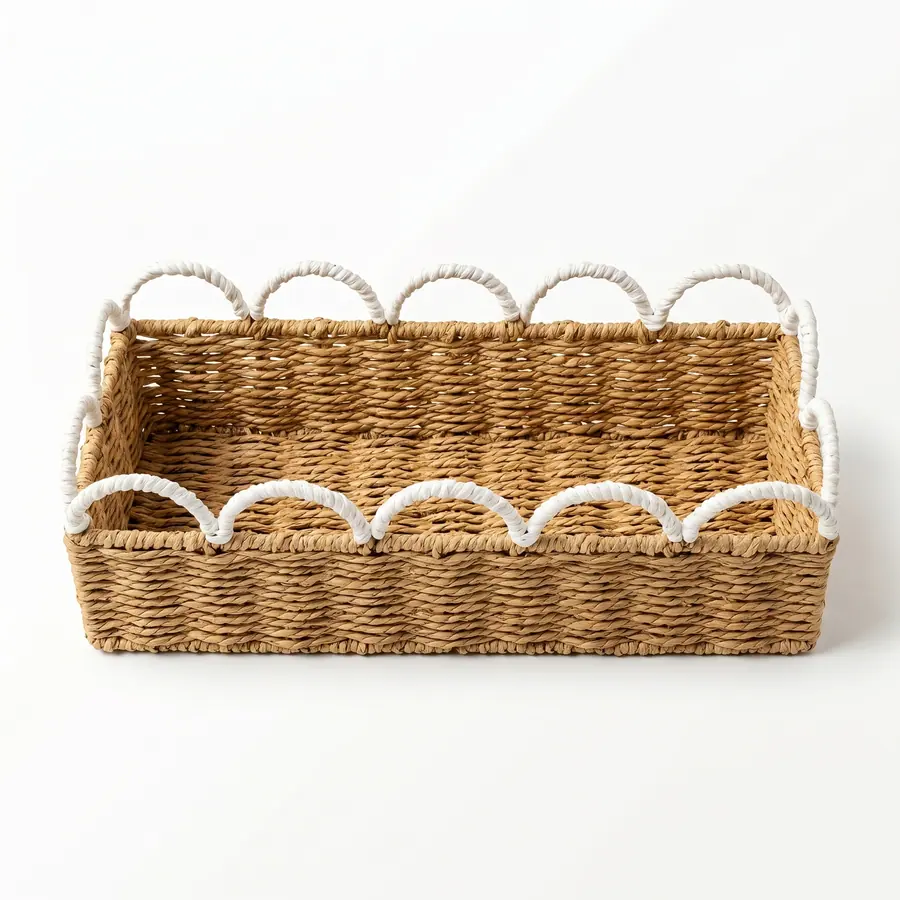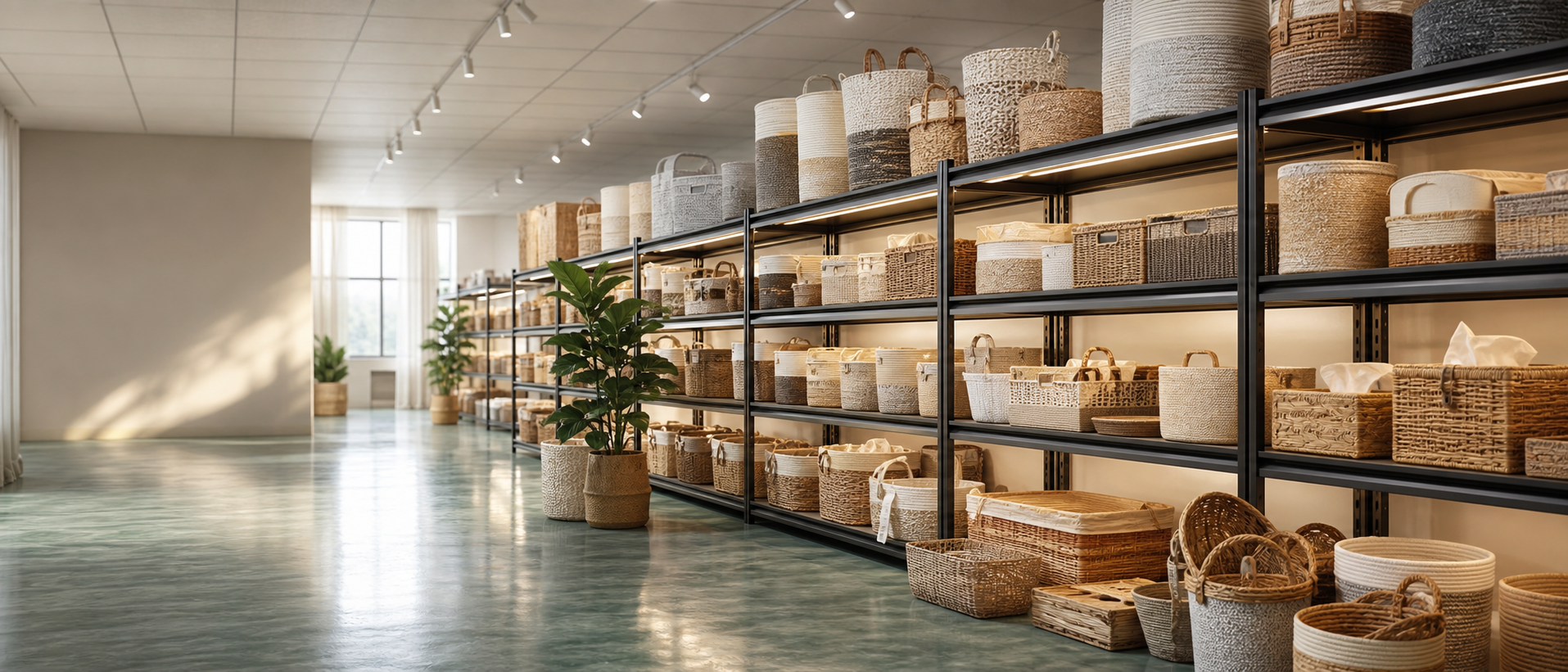
For a 2026 wholesale storage basket assortment, turn each visual direction into a product role, a comparison sample and a keep-or-remove decision. Warm neutrals, natural texture, desktop organization, nested sets and giftable trays are assortment planning hypotheses in this guide. They are not a market forecast or evidence of proven 2026 demand. Validate them against your own sales history, customer requests and channel requirements before committing to a range.
Give each direction a job
Start with the space and task the basket serves. A large storage piece, a shelf basket and a small desktop organizer should answer different needs. Browse home organization baskets for references, then write one sentence explaining why each proposed item belongs in your assortment. If two items serve the same purpose with only a small decorative difference, decide whether that variation earns a separate SKU.
Use this worksheet to turn broad ideas into testable choices:
| Planning hypothesis | Proposed assortment role | What to compare before selection |
|---|---|---|
| Warm neutral palette | Coordinated shelf and room storage | Body, rim, handle and label colors together |
| Visible natural texture | Main display basket | Material samples, weave appearance and finish variation |
| Desktop organization | Compact supporting item | Usable interior, intended contents and desk footprint |
| Nested utility | A set sold as one unit | Each basket's usable size, nesting clearance and packed arrangement |
| Giftable presentation | Tray or small basket | Filled view, trim, label position and protective packing |
Compare materials in the intended shape
A material name does not establish how a finished basket will look or perform. Ask for the proposed construction and a relevant sample rather than approving from a texture photograph alone. Compare paper rope, water hyacinth, cotton rope or mixed construction only where each is suitable for the intended design and confirmed by the supplier. Record the appearance you want, the variation you can accept and any use-related checks you need. Keep environmental or performance claims out of product copy unless supported for that item.
Specify the palette by component
Replace “warm beige” with a color reference and an instruction for each visible component. Identify which parts should match and which may contrast. Review the body, rim, handles, liner and label together under agreed viewing conditions. If a seasonal trim is optional, keep it separate from the base version so a color experiment does not silently change the whole assortment.
Move from exploration to approval
Use an early sample to choose the material and visual direction. Once selected, request the dimensions, construction and details needed for the actual selling unit. Review the packing arrangement after the SKU or set is defined. Label each sample with its purpose and revision; an attractive mood sample should not become the production reference by default.
Before requesting the next round, mark every idea as selected, awaiting evidence or removed. Record why an option was rejected, such as duplicated use, too many new components or unresolved packing. This keeps the same rejected direction from returning under a different trend name.
Send a defined assortment for quotation
Build a shortlist from the product catalog, with quantities by size and color, the destination market, target order timing and packing requirements. For a coordinated custom range, outline the shared rules through the OEM and ODM route. Submit the chosen references and unresolved questions through RFQ, asking the supplier to identify assumptions and price optional variations separately.