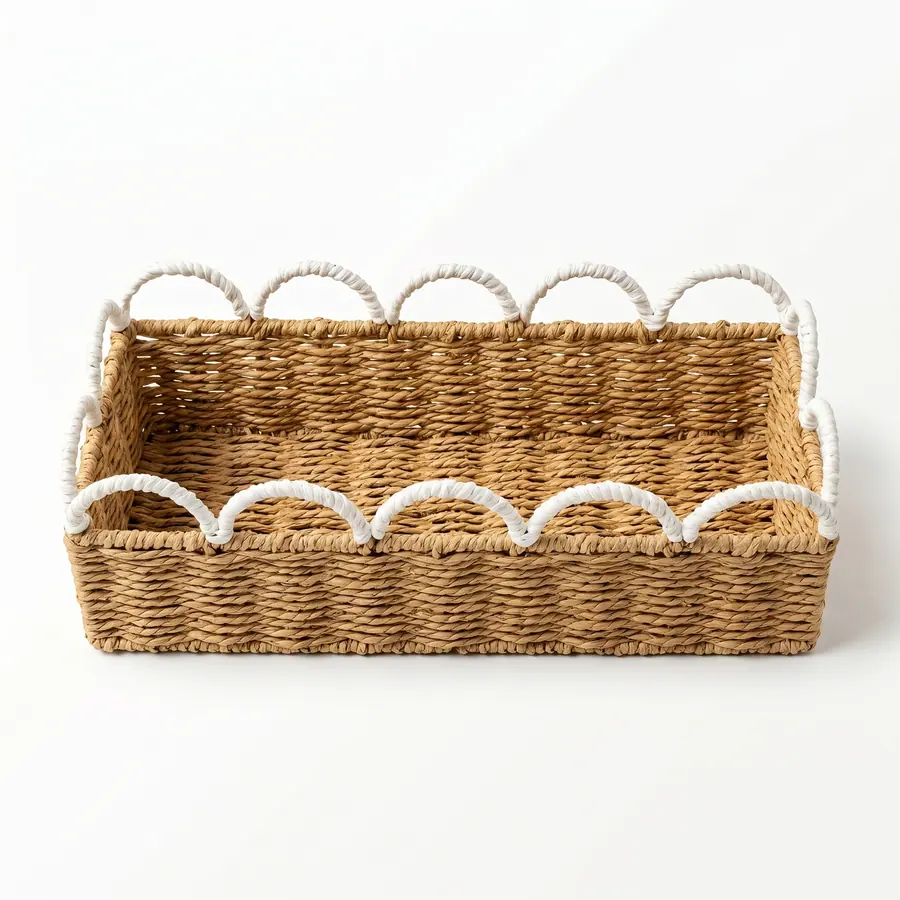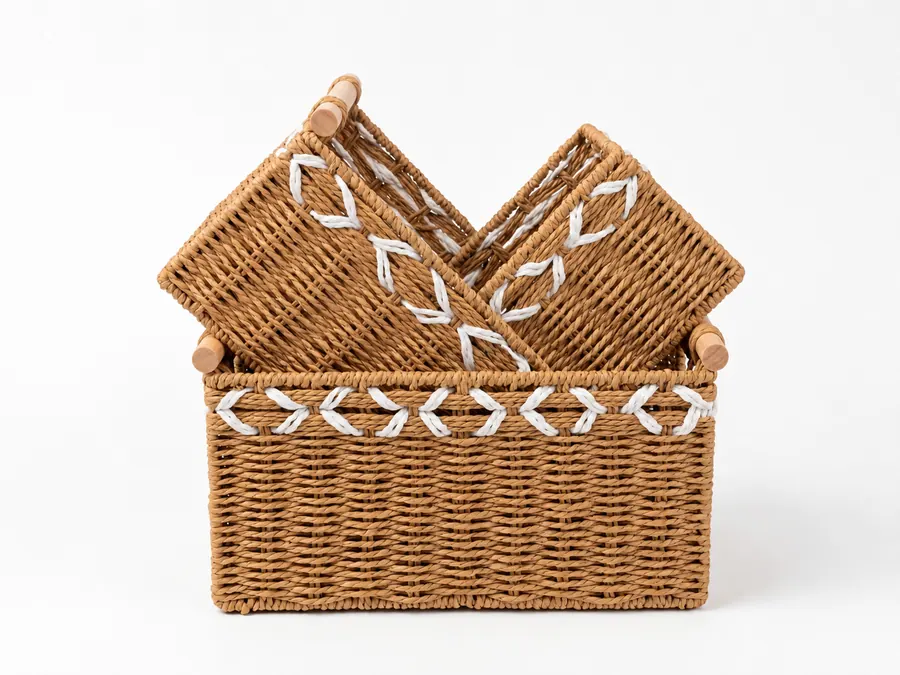
A braided paper basket quotation is useful only when it describes the same product, packing plan, and commercial basis that the buyer intends to order. A low unit price can hide a lighter structure, a different braid, fewer packing protections, or an incomplete labeling scope. Before comparing suppliers, turn the product idea into a controlled brief and mark every unknown as a question that needs a written answer.
This checklist is for importers, wholesalers, and private-label buyers evaluating paper rope storage baskets. It does not prescribe one universal tolerance, load, minimum order quantity, or inspection method. Those values depend on the design, intended use, destination, and contract. The objective is to make each variable visible before sample approval and purchase-order release.
1. Define the basket before evaluating the supplier
Start with the intended use, target retail position, and SKU architecture. A desktop organizer, shelf basket, nested set, gift container, and kids-room storage basket can look similar in a photograph while requiring different dimensions, rigidity, handles, lining, and packing. State whether the product is decorative storage or expected to carry a specified load. If it must fit a shelf, cube, insert, or retail fixture, distinguish the outside dimensions from the minimum usable inside dimensions.
Build one reference pack for every supplier. Include front, side, base, rim, handle, and interior views; an annotated drawing; the quantity by size and color; and a list of features that may not change. Use the paper rope basket category to identify relevant construction directions, but treat a catalog image as visual context rather than a complete specification. A supplier comparison is meaningful only after every candidate receives the same revision of the brief.
Supplier fit should be judged against the actual program. Ask candidates to identify what they can quote as drawn, what needs development, and what assumptions they have made. For a nested set, ask how the sizes sit together and how surfaces are protected. For a rectangular basket, review corners and wall alignment. For a round design, review rim shape and base stability. This project-specific review is more useful than collecting unrelated product photographs.
2. Specify paper rope, braid, frame, and finishing
The phrase "braided paper basket" does not define one construction. Record the paper rope specification or approved material sample, color reference, braid or weave pattern, visible density, internal frame, rim treatment, base construction, handle design, lid, and lining. If a contrasting stitch or decorative wrap is part of the design, specify its material, route, spacing, and approved appearance.
Separate appearance requirements from functional requirements. Appearance points can include weave direction, exposed frame areas, loose ends, surface marks, rim level, color relationship between components, and symmetry. Functional points can include basket stability, lid fit, nesting clearance, handle attachment, lining attachment, and the intended load check. The buyer must confirm the check method and acceptance threshold for any functional requirement; a product photograph cannot supply them.
Substitution control belongs in the specification. Require written approval before changing the paper rope, braid, frame, lining, label material, protective packing, or other defined component. When a proposed change affects appearance, dimensions, function, or pack-out, identify whether a revised sample is required. This prevents an informal material change from becoming an undocumented production standard.
3. Establish dimensions, measurement points, and tolerances
Dimensions are not actionable until the measuring method is clear. For each SKU, show outside length, width, and height and identify the exact points used. Add inside usable dimensions, rim opening, base footprint, handle drop, lid overlap, or nesting clearance when those values affect fit or merchandising. State whether the basket is measured empty, upright, and without hand pressure, and provide an annotated image for shapes that are easy to measure differently.
Do not copy a tolerance from another handmade product without reviewing the current structure. A practical range depends on basket size, frame, weave, finishing, and the buyer's fit requirement. Classify dimensions as critical or informational, agree on product-specific ranges after sample review, and record what happens when an inspected unit falls outside the range. For nesting sets, verify both the individual dimensions and whether the set assembles and separates without damaging the surfaces.
Shape deserves its own approval language. "Looks good" is too subjective for repeat orders. Use reference views and define observable defects such as rocking on a flat surface, a rim that prevents the lid from seating, corners that distort shelf fit, or a wall that blocks nesting. The approved sample helps communicate the target, while written measurement and appearance criteria explain how production units will be judged.
4. Turn the approved sample into a production reference
A sample is a decision gate, not simply a sales exhibit. Review material, construction, dimensions, shape, color, weave, rim, base, handles, lid, lining, branding, and pack-out. Record each comment against the relevant specification revision. Dated photographs and an annotated approval sheet reduce the risk that an email comment is separated from the physical sample it describes.
Use three possible outcomes: approved, approved with clearly recorded corrections, or revise and resubmit. Avoid approving a sample while leaving critical dimensions, color, artwork, or packing unresolved. If the sample is approved with corrections, specify how those corrections will be verified before production proceeds. Keep a controlled reference with the buyer and identify which reference the supplier will use.
Sampling should also test the proposed packing arrangement. A basket that looks correct before packing may rub, deform, or transfer color when nested or compressed. Ask for a pack-out photo or packing sample showing orientation, separators, inner protection, labels, and closure. The sample development guide provides a useful path for organizing feasibility, revision, and approval decisions.
5. Normalize MOQ, price, timing, and delivery terms
Minimum order quantity is a quotation variable, not a universal attribute of paper rope baskets. Ask for the quantity basis by SKU, size, and color, and ask which requirement drives the quoted minimum. Material preparation, custom color, frame or basket structure, labor allocation, packaging purchases, and assortment complexity may change the workable quantity. If the target is not feasible, compare specific alternatives such as fewer colors, shared materials, fewer sizes, or simpler packing rather than requesting an unexplained exception.
Require every quotation to state currency, unit-price basis, included retail and export packing, quantity basis, sample or development charges if applicable, payment terms, validity, and the point from which production timing is calculated. Timing should distinguish sample development, buyer approval, artwork readiness, material preparation, production, inspection, and shipment handover. A single lead-time number is ambiguous when the start conditions are missing.
For delivery terms, write the selected rule and named place or port, not a three-letter abbreviation alone. The International Chamber of Commerce overview of Incoterms rules explains that these rules clarify the tasks, costs, and risks allocated between seller and buyer. The purchase documents should also identify who arranges any testing or independent inspection and who pays the related cost. These details affect landed-cost comparison even when the unit prices appear close.
6. Design retail packing and export cartons together
Start packing design with the routes the basket will travel: production handling, export transport, warehouse storage, retail replenishment, and possibly parcel delivery. Confirm whether units are nested, packed individually, boxed as sets, or arranged in a mixed assortment. Identify surfaces most exposed to abrasion or pressure, including rims, corners, handles, decorative stitching, labels, lids, and lining edges.
The packing specification should state pieces per carton, orientation, nesting order, separators or sleeves, inner boxes where required, carton dimensions, net and gross weight, closure method, marks, and assortment rules. Ask the supplier to show the proposed arrangement before final quotation because a change in nesting or protection can affect both carton volume and unit cost. Confirm the required carton check method and acceptance criteria for the actual distribution plan rather than relying on a generic claim.
Retail information must be controlled at the same time. Provide final artwork and data for labels, hangtags, barcodes, SKU stickers, care wording, country-of-origin marking, and carton marks as applicable to the buyer's program and destination. Specify material, dimensions, color, position, attachment, and scan or visual approval where relevant. Responsibility for legal wording and market-specific compliance should be assigned in writing instead of inferred from a factory template.
7. Request inspection evidence tied to the specification
Useful inspection evidence answers defined acceptance questions. Prepare a checklist that maps each critical requirement to a method, sample basis, acceptance rule, and record. Typical visual records may include full-product views, close-ups of weave and finishing, dimension photographs, color comparison, label placement, barcode presentation, packing stages, carton marks, and selected closed cartons.
Paper rope programs may also require project-specific checks for surface abrasion, shape after packing pressure, handle attachment, lining attachment, or exposure to expected humidity conditions. The buyer must confirm whether each check is required, which method applies, and what result is acceptable. Do not replace those decisions with broad statements about strength, durability, safety, sustainability, or compliance.
Agree on inspection timing and escalation before production. Identify checks at incoming material review, first completed units, in-process production, final goods, and packed-carton stages as appropriate. State who can approve a deviation, whether rework or replacement evidence is required, and whether an independent inspection must occur before shipment release. The factory and quality-control overview can help buyers structure checkpoint discussions, but the purchase specification remains the controlling project document.
8. Use one importer comparison table
Send the same table to every shortlisted supplier. Require a direct answer, an assumption, or an exception in every row; a blank cell is not confirmation.
| Decision gate | Buyer input | Supplier response or evidence |
|---|---|---|
| Product use and SKU plan | Intended use, dimensions, quantities by size and color | Feasibility notes and quoted SKU basis |
| Paper rope and braid | Material sample or specification, color, braid or weave reference | Material close-up and stated construction |
| Frame and finishing | Frame, rim, base, handles, lid, lining, decorative details | Construction notes and multi-angle sample photos |
| Dimensions and shape | Measurement points, critical values, product-specific ranges | Annotated measurements and shape views |
| Sample approval | Revision number and acceptance checklist | Physical sample, dated photos, correction record |
| Branding | Final artwork, label and barcode requirements, positions | Artwork proof and branded sample evidence |
| Retail and export packing | Protection, nesting, pieces per carton, marks, assortment | Pack-out image, carton data, packing assumptions |
| Inspection | Check method, sample basis, acceptance rule, responsibility | Measurement, visual, packing, and agreed test records |
| Commercial basis | Currency, quantity, included packing, charges, payment, validity | Complete quotation with assumptions and exclusions |
| Delivery basis | Incoterms rule and named place or port, timing start point | Written delivery term and milestone schedule |
After the first quotations arrive, issue one consolidated clarification round. Update the brief when a decision changes and ask suppliers to quote the same revision. Do not combine the cheapest material line from one offer, the best packing line from another, and an unstated delivery assumption into a fictional comparison.
9. Copy this RFQ release checklist
Before sending the inquiry, confirm that the RFQ contains:
- reference images, an annotated drawing, intended use, and revision number;
- quantity by SKU, size, and color;
- paper rope, braid or weave, frame, rim, base, handle, lid, lining, and decorative details;
- outside and usable dimensions, measurement points, critical ranges, and shape criteria;
- color reference and rules for approving any component substitution;
- sample stages, approval owner, correction process, and retained references;
- label, hangtag, barcode, SKU sticker, marking, and final artwork requirements;
- unit and master packing, nesting plan, protection, pieces per carton, and assortment;
- inspection methods, acceptance rules, evidence, timing, and responsibility;
- currency, price basis, MOQ by variant, possible charges, payment terms, and quote validity;
- Incoterms rule with named place or port, destination, and milestone assumptions.
Submit the completed package through the structured RFQ form. Ask for alternatives only after the base option is fully described, and require each alternative to show its effect on construction, sample approval, MOQ, price, packing, or timing. The result is not merely a faster quote: it is a purchasing record that supports a defensible comparison and a cleaner handoff into sampling and production.