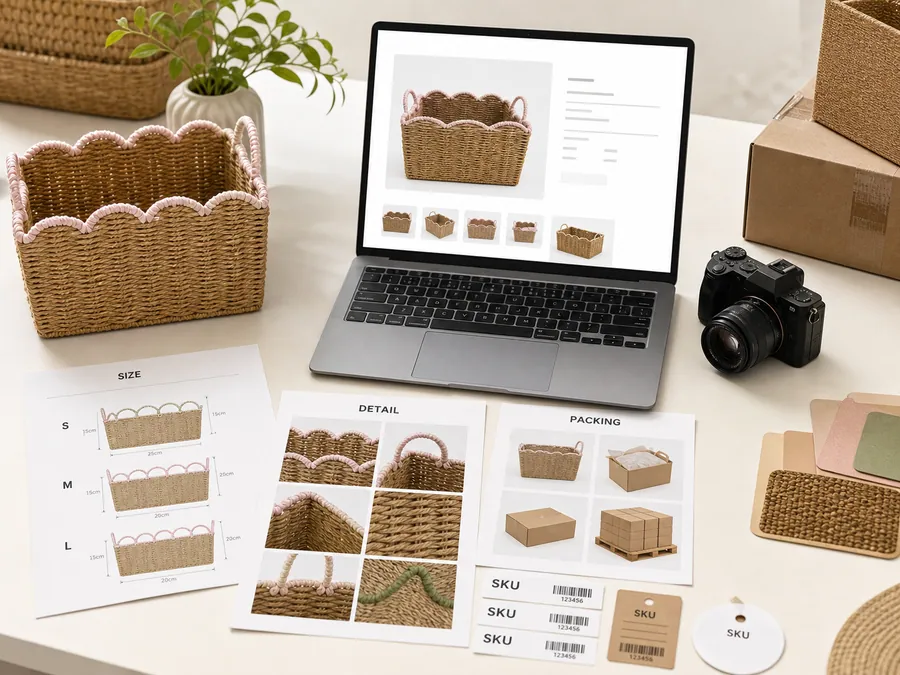
An ecommerce-ready woven basket program should enter production only after the listing record, approved sample, label data, barcode ownership, pack-out, and inspection photos all describe the same selling unit. A strong sample is not enough when the web team still lacks dimensions, angle photos, or packed-unit evidence.
This guide treats ecommerce readiness as a production gate. It does not invent universal test results, lead times, carton performance, or compliance outcomes; those remain buyer-confirmed project variables.
Lock the sellable unit before the sample is released
For ecommerce production readiness, this checkpoint focuses on single basket, nested set, color variant, bundle barcode. The online retail buyer should write the decision in buyer language and attach the reference that proves the intended result. If a supplier proposes a shortcut, the response should explain what changes in appearance, packing, sample approval, or commercial basis.
SKU sheet, listing draft, carton label, and invoice line use the same unit name. This is also where the buyer keeps evidence boundaries clear: project-specific load checks, tolerance ranges, compliance wording, and production timing are confirmed only when the method, owner, and acceptance rule are written for this exact program.
Build the listing photo shot list during sampling
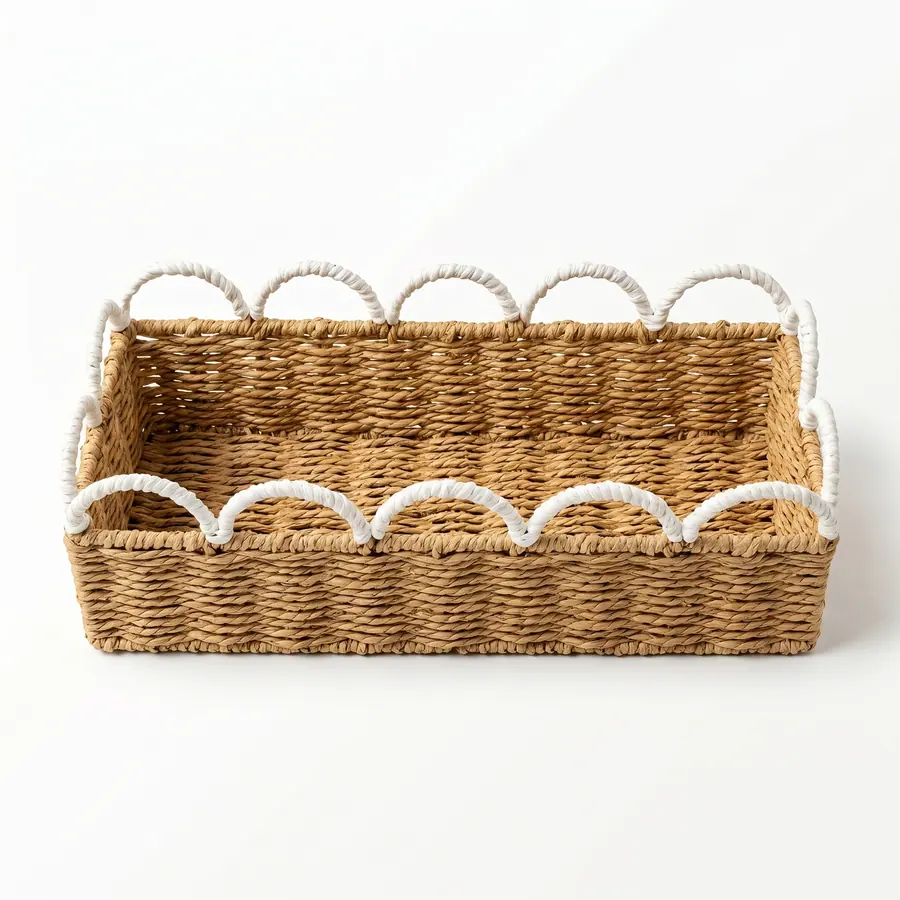
For ecommerce production readiness, this checkpoint focuses on front view, side view, inside view, base view, rim detail, packed unit. The online retail buyer should write the decision in buyer language and attach the reference that proves the intended result. If a supplier proposes a shortcut, the response should explain what changes in appearance, packing, sample approval, or commercial basis.
missing angles trigger a reshoot before bulk approval. This is also where the buyer keeps evidence boundaries clear: project-specific load checks, tolerance ranges, compliance wording, and production timing are confirmed only when the method, owner, and acceptance rule are written for this exact program.
For ecommerce launch record, the internal links in this article support distinct decisions rather than a generic reading path. Use the linked category or guide pages to clarify references, then keep the article's commercial path and RFQ step explicit in the buyer brief.
Freeze SKU labels and barcode responsibilities
For ecommerce production readiness, this checkpoint focuses on identifier owner, artwork file, label location, scan evidence. The online retail buyer should write the decision in buyer language and attach the reference that proves the intended result. If a supplier proposes a shortcut, the response should explain what changes in appearance, packing, sample approval, or commercial basis.
no label file moves into production without physical placement proof. This is also where the buyer keeps evidence boundaries clear: project-specific load checks, tolerance ranges, compliance wording, and production timing are confirmed only when the method, owner, and acceptance rule are written for this exact program.
Quote the ecommerce pack-out as part of the basket
For ecommerce production readiness, this checkpoint focuses on unit bag, sleeve, separator, carton quantity, carton marks. The online retail buyer should write the decision in buyer language and attach the reference that proves the intended result. If a supplier proposes a shortcut, the response should explain what changes in appearance, packing, sample approval, or commercial basis.
generic export carton language is rejected as incomplete. This is also where the buyer keeps evidence boundaries clear: project-specific load checks, tolerance ranges, compliance wording, and production timing are confirmed only when the method, owner, and acceptance rule are written for this exact program.
| Launch gate | Evidence to attach | Decision owner |
|---|---|---|
| single basket | nested set, color variant | SKU sheet |
| front view | side view, inside view | missing angles trigger a reshoot before bulk approval |
| identifier owner | artwork file, label location | no label file moves into production without physical placement proof |
| unit bag | sleeve, separator | generic export carton language is rejected as incomplete |
| dimension photo | label view, detail close-up | inspection records answer the exact listing and packing questions |
Connect QC photos to product-page promises
For ecommerce production readiness, this checkpoint focuses on dimension photo, label view, detail close-up, packed carton image. The online retail buyer should write the decision in buyer language and attach the reference that proves the intended result. If a supplier proposes a shortcut, the response should explain what changes in appearance, packing, sample approval, or commercial basis.
inspection records answer the exact listing and packing questions. This is also where the buyer keeps evidence boundaries clear: project-specific load checks, tolerance ranges, compliance wording, and production timing are confirmed only when the method, owner, and acceptance rule are written for this exact program.
Release only one production-ready RFQ revision
For ecommerce production readiness, this checkpoint focuses on final data file, sample photos, artwork, packing table, open exceptions. The online retail buyer should write the decision in buyer language and attach the reference that proves the intended result. If a supplier proposes a shortcut, the response should explain what changes in appearance, packing, sample approval, or commercial basis.
supplier replies with assumptions instead of filling gaps silently. This is also where the buyer keeps evidence boundaries clear: project-specific load checks, tolerance ranges, compliance wording, and production timing are confirmed only when the method, owner, and acceptance rule are written for this exact program.
Before release, the online retail buyer should send one file containing the selected references, the decisions above, quantities by variant, destination market, artwork status, pack-out expectations, inspection evidence, and unresolved questions. Submit the controlled request through structured RFQ form; if the commercial path is not the final inquiry page, use it for selection and then move the confirmed brief to RFQ.
A useful ecommerce production readiness record is narrow. It answers the manifest question for this article and points to other pages only when the buyer needs a different decision, such as material selection, factory checks, sample development, or quote comparison. That focus helps avoid cannibalizing adjacent sourcing guides.
Final ecommerce production release notes
For ecommerce basket launch control, the buyer should run a final listing simulation before production starts. Open the draft product page, compare the visible dimensions with the sample measurement sheet, check that the packed-unit photo matches the quoted protection, and confirm that the barcode or SKU label is represented in the same place as the physical sample. This exercise catches mismatches that a normal basket specification can miss.
The release file should also name the team that owns future listing changes. If a product title, label, pack count, or carton mark changes after the supplier has quoted, the buyer should treat that as a revision and ask whether cost, timing, or approval evidence changes. That discipline is especially important for online programs because a late listing change can affect photography, label printing, warehouse receiving, and customer-service records at the same time.
A practical ecommerce example is a two-piece woven basket set with one product page, one set barcode, and a packed-unit photograph. The buyer should not let the supplier start bulk work while the listing team still debates whether the pieces will be sold separately. The RFQ revision should show the set name, the image angles, the label location, the carton count, and the photo evidence expected from final inspection.
The buyer should also preserve a launch exception log for ecommerce production readiness. If a sample photo is accepted although one angle is missing, or if a barcode file is still waiting for internal approval, the exception should have an owner and a closing date. Production can then move only when the open item is genuinely low risk or formally resolved. This prevents ecommerce urgency from becoming undocumented production permission.
For the ecommerce release route, compare visual references in the product catalog, organize approval evidence with the sample development guide, check production evidence against the factory QC overview, and submit the locked launch file through the structured RFQ form.