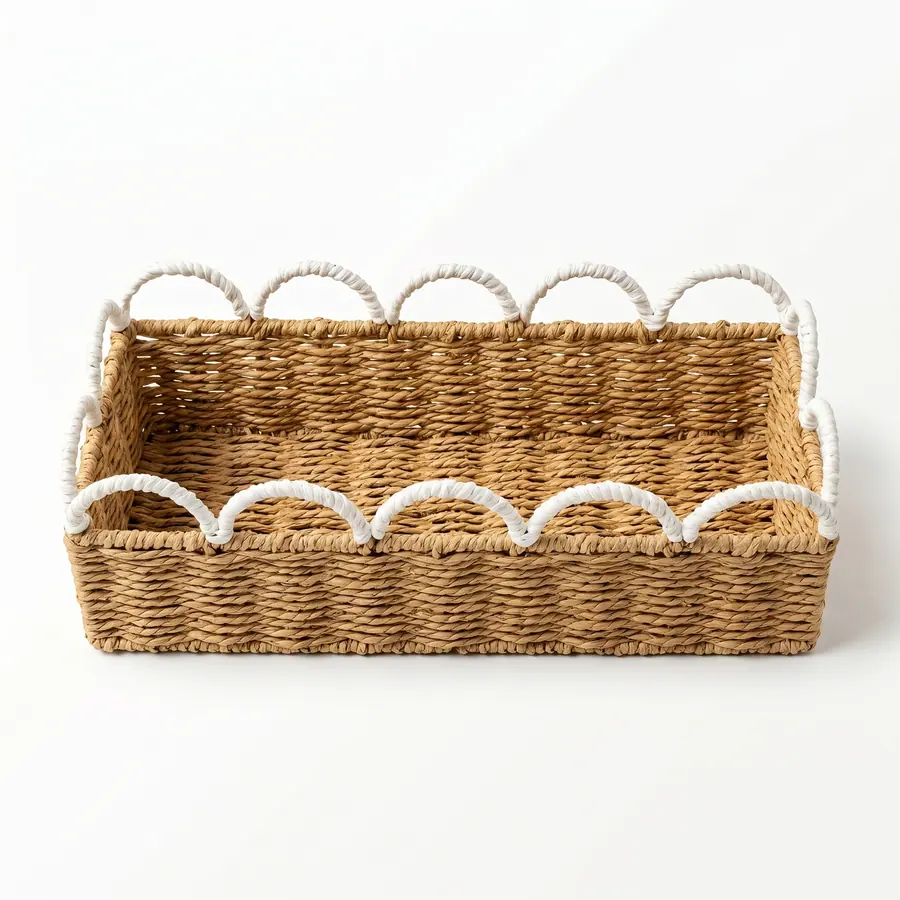
Importers should compare open-weave and wide-checker paper rope laundry hampers by translating the visual style into a written specification. The decision is not simply which pattern looks better. It should cover body construction, dimensions, rim and handle details, liner visibility, sample approval, carton packing, inspection evidence, and the commercial basis used for quotation. A search phrase such as open weave or wide checker can start the conversation, but it cannot replace drawings, close-up photos, and supplier confirmations.
Use this comparison when a buyer is deciding between two paper rope hamper directions for a wholesale program. The guide avoids fixed claims about universal load, durability, MOQ, tolerance, compliance, or lead time because those values depend on the final design, destination, testing method, and approved sample. The useful outcome is a side-by-side RFQ that lets suppliers answer the same question instead of pricing different assumptions.
1. Convert weave words into visible construction details
Open-weave and wide-checker are useful buyer descriptions, not complete technical specifications. An open-weave hamper may show vertical openings, wider spacing, or a lighter visual surface. A wide-checker hamper may show broader horizontal and vertical bands, a bolder grid, or a tighter-looking body. Different suppliers may use different workshop terms for the same visual direction, so the RFQ should describe what can be seen and approved.
Start with photos and mark the zones that matter: body panel, rim, base, handle roots, lid, liner, trim, and color transitions. State whether the weave must stay open enough to show a liner, whether the checker pattern must align around the body, and whether the rim should visually soften or frame the pattern. If the buyer is not certain about the production term, write the instruction as a visual reference for supplier confirmation.
The paper rope basket category can help buyers collect material and construction references. The final comparison still needs a project brief that says which details are fixed and which details the supplier may recommend.
2. Use product references without turning them into universal rules
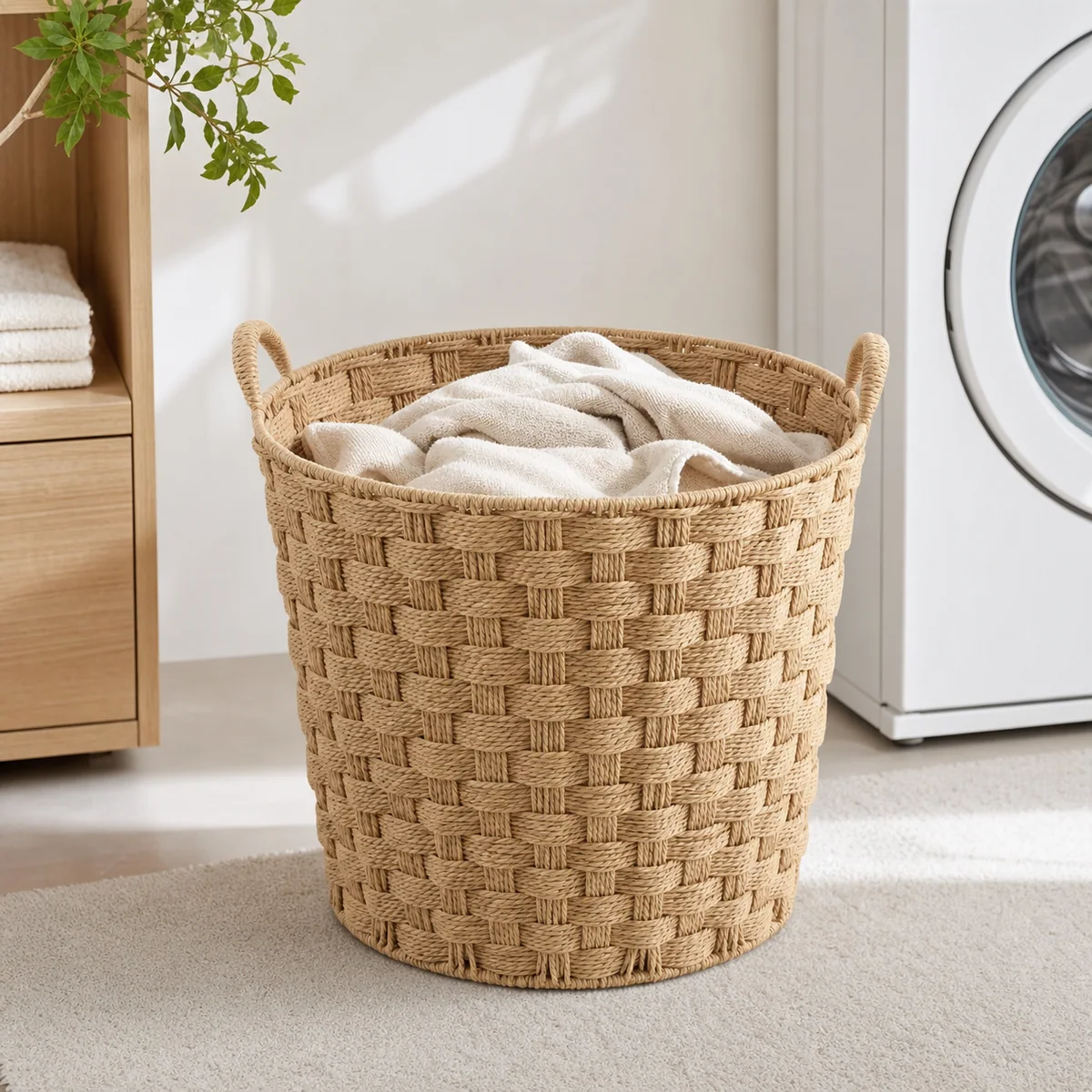
A concrete catalog reference is useful because it gives the buyer and supplier a shared visual starting point. The current site record for JZ10050 natural brown paper rope round laundry hamper presents a round paper rope hamper with a wide checker style and loop handles. The current site record for JZ20043 light gray paper rope round nested laundry hamper presents a round two-piece paper rope hamper direction with open vertical weaving.
Those references should not be copied into a purchase order as if every detail is automatically included. A changed diameter, height, color, handle shape, liner, lid, label, set quantity, or packing method can change the sample and quotation. Treat each reference as a visual anchor and then write the order-specific choices.
| Comparison point | Open-weave direction | Wide-checker direction | RFQ action |
|---|---|---|---|
| Visual surface | More visible openings or vertical spacing | Broader grid or checker appearance | Attach close-ups and mark accepted spacing |
| Liner relationship | Liner may be more visible through the body | Liner may read as a backing behind the pattern | Decide liner color, height, and attachment |
| Shape control | Open areas may make silhouette review more important | Checker alignment may make pattern review more important | Photograph front, side, top, rim, and base |
| Handle area | Open panels near handles need clear reinforcement review | Pattern change around handles needs approval | Mark handle roots and acceptance photos |
| Packing concern | Open structure may need surface and shape protection | Bold raised areas may need abrasion review | Request pack-out photos before final quote |
3. Match the construction to the retail brief
Choose the weave after defining where the hamper will be sold and used. A bathroom corner, bedroom laundry area, closet program, ecommerce set, and private-label collection each creates different priorities. The brief should identify the expected contents for review, target floor or shelf footprint, need for a lid, liner preference, handle use, merchandising view, and whether the item is sold as one piece or a nested set.
Open-weave designs can create a lighter look, but the buyer must decide whether seeing the liner or contents is acceptable. Wide-checker designs can create a stronger graphic surface, but the buyer must decide how much pattern alignment matters around seams, handles, and the rim. Neither construction should be promoted as automatically stronger, more breathable, or more durable unless the buyer defines a test method and the result is verified for the exact product.
The laundry baskets category is the commercial path for shape and program references. It should be paired with order-level notes for intended use, color, liner, lid, labels, and destination-market obligations.
4. Specify dimensions and measurement points before pricing
For round hampers, one size line is rarely enough. Define top diameter, bottom diameter, overall height, usable inside height, rim width, base contact area, handle opening, and lid relationship where applicable. If the shape tapers, show both top and base measurement points. If the product is a set, list each SKU and the required nesting clearance.
Handmade woven goods need product-specific measurement ranges. Do not import a tolerance from another basket or another material. Ask the supplier to propose achievable ranges after reviewing the exact weave, frame, rim, and size. Then approve those ranges through the sample record, not through an informal message.
A clean drawing also makes quotation comparison easier. If one supplier measures the outside rim and another measures the inside opening, their numbers and prices may not describe the same product. Include annotated measurement photos in the RFQ and require the quotation to state any measurement assumption.
5. Review sample evidence beyond the body pattern
A pre-production sample should be judged as a complete hamper. Review material, color, weave spacing, checker scale, silhouette, rim, base, handle roots, lid fit, liner position, label placement, and packing arrangement. Photograph the full product and the critical details under consistent lighting. Number the comments so the supplier can answer correction by correction.
For an open-weave direction, focus on spacing consistency, visible liner relationship, rim transition, body-to-base connection, and whether the open panels distort the intended outline. For a wide-checker direction, focus on checker scale, pattern alignment, surface neatness, handle interruptions, and the way the rim frames the grid. These are observable approval points, not promises that handmade units will be identical.
Use the sample development guide to organize feasibility, revision, approval, and retained sample decisions. If the buyer approves a sample with corrections, the record should state how the corrections will be checked before production starts.
6. Compare packing and carton plans with the same discipline
Packing can change both landed cost and product appearance after shipment. The RFQ should state whether the hamper is packed individually, nested, boxed as a set, or mixed with other items. It should identify protection for rims, handles, lids, liners, raised pattern areas, labels, and the basket body. Ask for pieces per carton, orientation, inner protection, carton dimensions, net weight, gross weight, marks, and pack-out photos.
Do not compare a quote that includes retail labels, inner bags, separators, and a defined carton against another quote that only says export carton. That is not a price comparison; it is a scope mismatch. Require every supplier to return the same packing table and list exclusions.
If the buyer needs a compression, humidity, abrasion, or shape-recovery check, it must be defined with a method and acceptance criterion. Broad claims about safe packing or durable structure do not create inspection evidence.
7. Build a QC checklist for the selected construction
The QC plan should follow the approved sample and the intended use. Useful checkpoints include material and color reference, top and base dimensions, overall profile, weave direction, checker alignment, rim level, handle position, handle attachment, lid fit, liner position, label placement, surface condition, carton marks, and final pack-out. The buyer should define defect levels and sampling logic for the actual order.
A short checklist is often more effective than a vague requirement for good quality. Replace subjective language with visible evidence: annotated measurements, close-up photos, color comparison, label location, barcode presentation, and packing-stage images. The factory and quality-control overview can frame the conversation, but the order specification remains the controlling document.
Inspection responsibility should also be written. Confirm who performs factory checks, who arranges any independent inspection or testing, when evidence is reviewed, and who can approve deviations. These points affect quotation and shipment release.
8. Normalize MOQ, timing, and delivery terms
Minimum order quantity, sample timing, production timing, and delivery basis are variables. They may change with material preparation, custom color, weave complexity, set structure, labels, liners, carton purchases, and assortment mix. Ask which variable drives the quoted MOQ and whether the quantity applies by design, color, size, or selling unit.
Every quotation should state currency, price basis, included packing, unit or set definition, sample or development charges if any, payment request, quote validity, delivery term, named place, timing start point, inspection responsibility, and exclusions. A lead time without start conditions is incomplete because artwork, sample approval, material readiness, packing confirmation, and payment terms can all affect the schedule.
The International Chamber of Commerce overview of Incoterms rules explains that those rules clarify delivery tasks, costs, and risks between seller and buyer. The purchase document should still include the named place or port so both sides know which rule is being applied.
9. Release one comparison RFQ
Send one version-controlled RFQ to every shortlisted supplier. It should include reference images, selected weave direction, intended use, dimensions, liner and lid decisions, material and color reference, label files, packaging requirements, quantity by SKU, destination, inspection request, commercial terms, and open questions. Require the supplier to answer with confirmations, assumptions, exceptions, and alternatives.
Before release, check that the RFQ contains the exact commercial path for this program, including the laundry baskets category, and a route to submit the finished inquiry through the structured RFQ form. The goal is not to force one construction. It is to make the open-weave and wide-checker options comparable enough for a buyer to choose with evidence rather than with incomplete photographs.