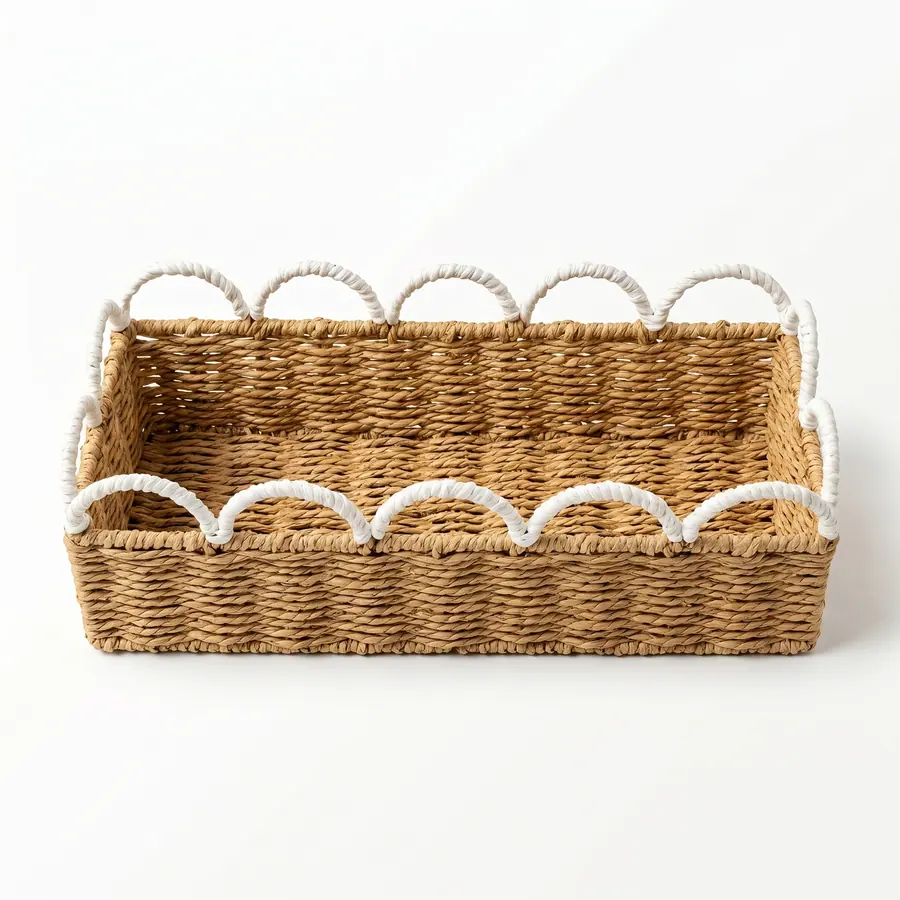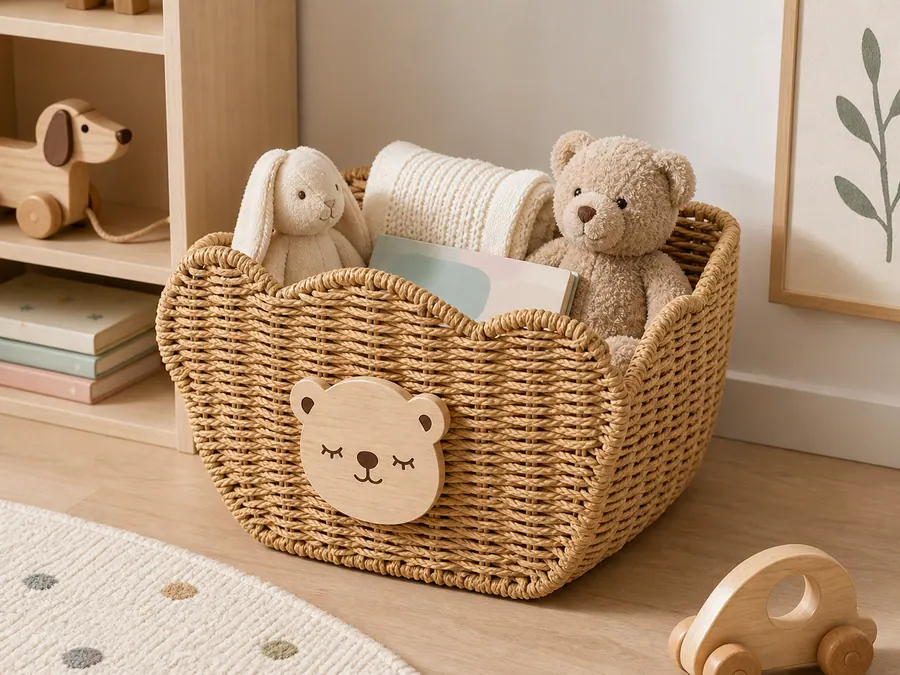
Importers should approve a kids storage basket sample only when it is tied to one controlled specification and records decisions on construction, dimensions, appearance, intended use, labeling, and pack-out. A sample that merely looks attractive is not an order-release standard. The approval file should show what was reviewed, what remains conditional, who accepted each point, and which physical or digital reference production must follow.
This guide focuses on the sampling decision, not on choosing the best material or designing an entire retail collection. Use it after the concept has been narrowed enough for suppliers to make a representative sample. The goal is a traceable yes, no, or revise decision at each gate, without assuming a universal tolerance, test plan, minimum quantity, sample schedule, or compliance result.
1. Release one sample brief, not a folder of references
Before sample work starts, issue a dated brief with a revision number. It should identify the SKU, intended storage use, selling format, destination markets, target user context, outside and usable dimensions, material direction, construction, colors, decoration, labels, and proposed packing. Put reference images beside written notes and mark which features are inspiration only. A supplier should not have to guess whether the buyer values a silhouette, a color relationship, or every visible detail in a mood image.
Record quantities by SKU and color even though the sample is not a production order. The assortment affects which materials, trims, labels, and pack components are representative. Also name the decision owner. When a designer, importer, retailer, and test consultant are involved, one consolidated comment sheet prevents contradictory instructions from becoming separate sample versions.
The kids storage basket category can provide visual directions for shape and presentation, but a category image is not a specification. Copy the selected direction into the brief, add annotated views, and list unresolved points as supplier questions. Begin sampling only after both sides acknowledge the same revision.
2. Approve construction as a set of controlled components
Review the sample from the inside out. Identify the basket body material, any supporting frame or board, base, rim, handles, lid, liner, seams, joining method, and decorative attachments. Photograph each component that cannot be understood from a front view. If a hidden structure affects shape or attachment, include it in the record instead of relying on the retained sample alone.
For every visible component, compare color, surface, placement, and finish with the brief. For every structural component, ask what evidence will show repeatability during production. The answer might be a material reference, a close-up photograph, an approved component, or a written construction detail. It should not be a broad adjective such as "premium," "soft," or "strong."
Substitution control belongs in sample approval. Mark the components that cannot change without written buyer review, and define when a change requires a new component sample, a revised complete sample, or only documentary confirmation. This is especially important when a similar-looking rope, lining, thread, plaque, or protective material could alter color, dimensions, hand feel, packing behavior, or a test plan.
3. Measure the sample in a repeatable condition
An approval sheet should show where and how every critical dimension is taken. Record outside length, width, and height for each SKU, then add opening, base, usable internal space, handle drop, lid fit, divider position, or nesting clearance where those values affect use. State whether the basket is measured empty, naturally placed on a level surface, shaped by hand, or after a defined unpacking period.
Do not approve a generic tolerance copied from another woven item. Ask the supplier to report the actual sample measurements and discuss a product-specific production range. Classify dimensions as critical when they control shelf fit, set nesting, label placement, divider function, or another buyer requirement. Other measurements can remain informational, but they should still use the same reference points.
Shape needs observable language too. Note whether the base sits as intended, the opening remains usable, paired sides appear balanced, the rim follows the approved profile, and a set nests and separates without damaging visible surfaces. Add front, side, top, base, and nested-set photographs. A later inspector should be able to reproduce the review without asking what "good shape" meant.
4. Separate motif approval from product-use review
Animal faces, ears, embroidery, appliques, plaques, color blocks, and other child-oriented details need their own approval layer. Record artwork revision, component dimensions, placement from fixed reference points, color relationship, attachment method, orientation, and acceptable visual relationship across sizes. Review the smallest and largest SKU because a motif that is balanced on one size may not scale automatically.
Then conduct a distinct product-use review. Examine accessible edges, openings, handles, cords, protrusions, detachable components, and the way the basket may be reached, lifted, or tipped in the intended setting. These observations are inputs to the buyer's risk and compliance work; they are not proof that the product is safe or compliant.
Market classification must be resolved by the responsible business with qualified support where needed. For example, the U.S. Consumer Product Safety Commission guidance on children's products explains that intended use, packaging and promotion, consumer recognition, and age-determination guidance are among the factors considered in the United States. The importer should document the intended market and product representation, identify applicable requirements, and issue the exact testing or documentation request for this construction. Do not ask a supplier to approve a vague "child-safe" statement.
5. Put labels and pack-out through the same sample gate
A product sample without its planned labels and packing is incomplete when those elements affect appearance, dimensions, scanning, nesting, or protection. Provide final or clearly marked provisional artwork for the brand label, care information, barcode, SKU sticker, hangtag, inserts, required marks, and carton marks. Specify material, size, print color, attachment, position, and orientation. The buyer remains responsible for approving legal and retailer content.
Review barcode and label placement on the actual product or an agreed mock-up. Confirm that a label does not cover the motif, distort a soft wall, interfere with nesting, or create an unintended visible attachment. If different markets or retailers use different label sets, identify the version by SKU rather than treating labels as a packing-line choice.
Pack the approved sample using the proposed production method. Record whether the basket is nested, folded, shaped, wrapped, bagged, bundled, placed in an inner carton, or loaded directly into the master carton. Photograph protection at rims, handles, decorations, and contact points. Note pieces per carton, assortment, orientation, separators, carton dimensions, net and gross weight, and marks as quotation inputs that the supplier must confirm. Any compression, recovery, abrasion, humidity, or transport check requires a project-specific method and acceptance rule.
6. Issue a clear sample disposition
Every review should end in one of three statuses: approved, conditionally approved, or revise and resubmit. "Noted" and "looks fine" do not explain whether production may proceed. An approval means the reviewed item and documents form the current reference. A conditional approval lists limited corrections, who verifies them, the evidence required, and whether production release must wait. A resubmission decision identifies each nonconformity or changed buyer requirement and creates a new revision.
Distinguish supplier corrections from buyer changes. If the sample misses the issued brief, record a correction. If the buyer changes size, color, motif, material, label, or packing after seeing the sample, revise the brief and request the commercial and timing impact. This distinction keeps the development record honest and helps both sides understand why another sample may be necessary.
Retain a complete reference set: approved specification, annotated measurements, artwork, photographs, comment history, pack-out record, and the physical sample location if one is kept. The sample development guide provides a useful framework for feasibility, revision, and approval stages. The order file should identify which sample revision supersedes all earlier versions.
7. Convert approval into production checkpoints
Before releasing the purchase order, turn approved features into a production and inspection list. Each line should name the requirement, method, sample basis, acceptance rule, evidence, responsible party, and escalation path. Visual comparisons can refer to approved photographs or a retained sample; dimensions need annotated measurement methods; artwork needs revision-controlled files; packing needs a pack-out standard.
Decide when each point can be checked. Material identity and color direction may require review before assembly. Construction and motif placement may be visible on first finished pieces. Labels, assortment, and carton marks belong at packing. Any laboratory test or independent inspection needs an agreed sample source, scope, timing, responsibility, and release condition. The factory and quality-control overview can help structure this handoff, but only the project file defines the actual acceptance rules.
For repeat orders, do not simply write "same as last time." Compare the new order with the retained approval package and list intentional differences. Confirm whether materials, colors, artwork, regulations, retailer instructions, or pack quantities have changed. A controlled comparison is faster than reconstructing an old decision from email attachments.
8. Use this sample approval table
Complete every row before production release. "Open" is a valid status; a blank cell is not an approval.
| Approval gate | Evidence in the file | Release question |
|---|---|---|
| Brief control | Dated specification, revision, SKU list, intended use | Did supplier and buyer review the same brief? |
| Components | Material references, construction notes, detail photos | Are substitutions and reapproval rules explicit? |
| Dimensions | Annotated drawing, sample measurements, shape views | Are methods and product-specific ranges agreed? |
| Motif and finish | Artwork revision, placement record, close-ups | Is each size and color represented correctly? |
| Use and compliance plan | Market, user context, risk review, evidence request | Has the responsible buyer defined applicable work? |
| Labels | Final files or controlled proofs, position photos | Are content, version, attachment, and readability approved? |
| Pack-out | Packed sample or photos, carton and assortment data | Does the quoted packing match the reviewed method? |
| Disposition | Status, comments, owner, date, required follow-up | Is approval unconditional, conditional, or a resubmission? |
| Production transfer | Inspection checkpoints and escalation record | Can production and QC apply every approved decision? |
9. Send only a released package for final quotation
The final quotation request should cite the approved or conditionally released revision and list every remaining commercial variable. Ask for quantity basis by SKU and color, included product and export packing, currency, payment terms, quotation validity, delivery rule and named place, milestone assumptions, sample or development charges, and testing or inspection responsibility. MOQ and timing should be returned as project-specific answers, not copied from a different basket.
Submit the released package through the structured RFQ form. Include the approval table and identify unresolved items explicitly. A useful supplier response will either confirm the same basis or show exceptions and alternatives in writing. That creates a defensible bridge from a creative sample to a wholesale order without pretending that one attractive prototype proves production consistency, compliance, or commercial feasibility.