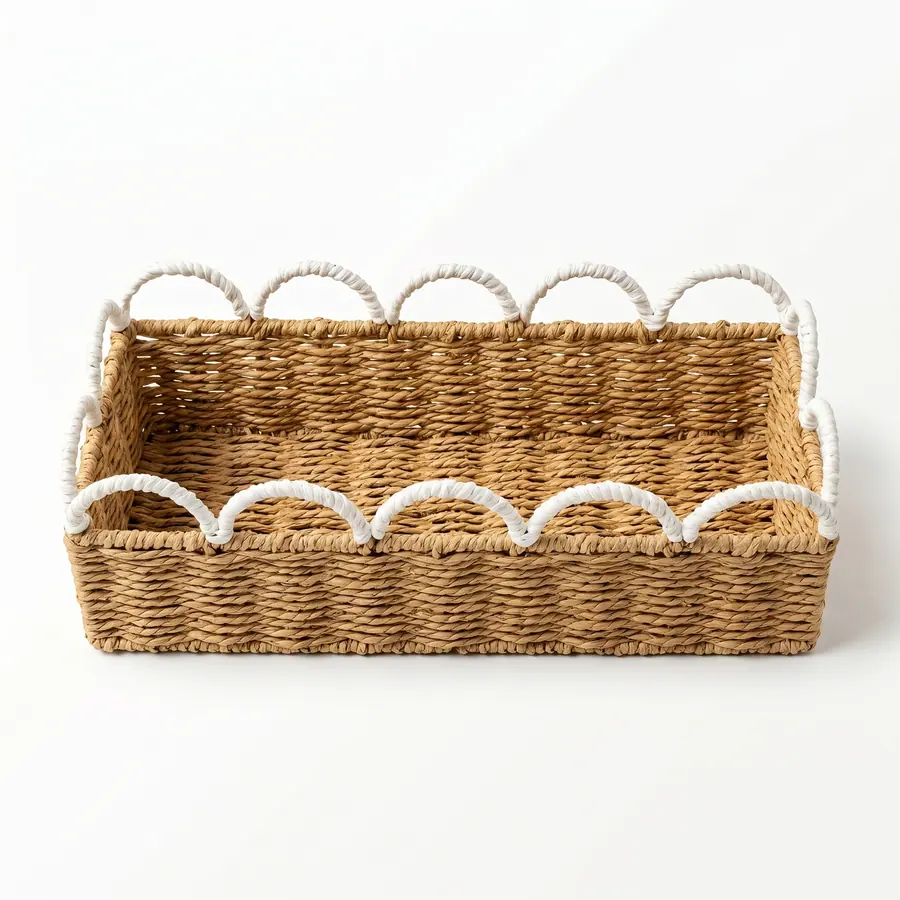
Round, rectangular, and tapered baskets answer different retail problems. Buyers should choose shape by fixture fit, usable opening, photography angle, nesting behavior, handle position, and carton route rather than choosing the prettiest reference photo.
No shape is automatically cheaper, stronger, or better for every program. The right choice depends on the product role and the evidence the buyer asks the supplier to provide.
Use round baskets when orientation should feel flexible
For round rectangular and tapered shape selection, this checkpoint focuses on top diameter, bottom diameter, widest point, handle drop, lid fit. The retail shape buyer should write the decision in buyer language and attach the reference that proves the intended result. If a supplier proposes a shortcut, the response should explain what changes in appearance, packing, sample approval, or commercial basis.
buyer checks access from multiple viewing angles. This is also where the buyer keeps evidence boundaries clear: project-specific load checks, tolerance ranges, compliance wording, and production timing are confirmed only when the method, owner, and acceptance rule are written for this exact program.
Use rectangular baskets when the fixture controls fit
For round rectangular and tapered shape selection, this checkpoint focuses on outside width, inside length, corner shape, wall lean, shelf clearance. The retail shape buyer should write the decision in buyer language and attach the reference that proves the intended result. If a supplier proposes a shortcut, the response should explain what changes in appearance, packing, sample approval, or commercial basis.
basket dimensions answer a shelf or tray grid. This is also where the buyer keeps evidence boundaries clear: project-specific load checks, tolerance ranges, compliance wording, and production timing are confirmed only when the method, owner, and acceptance rule are written for this exact program.
For shape comparison sheet, the internal links in this article support distinct decisions rather than a generic reading path. Use the linked category or guide pages to clarify references, then keep the article's commercial path and RFQ step explicit in the buyer brief.
Use tapered baskets when stacking or visual lightness matters
For round rectangular and tapered shape selection, this checkpoint focuses on top opening, bottom footprint, side angle, nesting clearance. The retail shape buyer should write the decision in buyer language and attach the reference that proves the intended result. If a supplier proposes a shortcut, the response should explain what changes in appearance, packing, sample approval, or commercial basis.
buyer accepts two sets of measurements, not one size. This is also where the buyer keeps evidence boundaries clear: project-specific load checks, tolerance ranges, compliance wording, and production timing are confirmed only when the method, owner, and acceptance rule are written for this exact program.
Compare shape against product photography
For round rectangular and tapered shape selection, this checkpoint focuses on front image, top view, side profile, filled view, packed view. The retail shape buyer should write the decision in buyer language and attach the reference that proves the intended result. If a supplier proposes a shortcut, the response should explain what changes in appearance, packing, sample approval, or commercial basis.
listing photos show the intended use rather than an empty silhouette. This is also where the buyer keeps evidence boundaries clear: project-specific load checks, tolerance ranges, compliance wording, and production timing are confirmed only when the method, owner, and acceptance rule are written for this exact program.
| Shape choice | Retail problem solved | Evidence required |
|---|---|---|
| top diameter | bottom diameter, widest point | buyer checks access from multiple viewing angles |
| outside width | inside length, corner shape | basket dimensions answer a shelf or tray grid |
| top opening | bottom footprint, side angle | buyer accepts two sets of measurements |
| front image | top view, side profile | listing photos show the intended use rather than an empty silhouette |
| rim pressure | handle compression, corner rubbing | carton plan does not distort the chosen profile |
Review packing effects before approving shape
For round rectangular and tapered shape selection, this checkpoint focuses on rim pressure, handle compression, corner rubbing, set separation. The retail shape buyer should write the decision in buyer language and attach the reference that proves the intended result. If a supplier proposes a shortcut, the response should explain what changes in appearance, packing, sample approval, or commercial basis.
carton plan does not distort the chosen profile. This is also where the buyer keeps evidence boundaries clear: project-specific load checks, tolerance ranges, compliance wording, and production timing are confirmed only when the method, owner, and acceptance rule are written for this exact program.
Quote alternatives as separate shape lines
For round rectangular and tapered shape selection, this checkpoint focuses on round option, rectangular option, tapered option, same commercial basis. The retail shape buyer should write the decision in buyer language and attach the reference that proves the intended result. If a supplier proposes a shortcut, the response should explain what changes in appearance, packing, sample approval, or commercial basis.
supplier does not merge one shape price with another shape pack-out. This is also where the buyer keeps evidence boundaries clear: project-specific load checks, tolerance ranges, compliance wording, and production timing are confirmed only when the method, owner, and acceptance rule are written for this exact program.
Before release, the retail shape buyer should send one file containing the selected references, the decisions above, quantities by variant, destination market, artwork status, pack-out expectations, inspection evidence, and unresolved questions. Submit the controlled request through product references; if the commercial path is not the final inquiry page, use it for selection and then move the confirmed brief to RFQ.
A useful round rectangular and tapered shape selection record is narrow. It answers the manifest question for this article and points to other pages only when the buyer needs a different decision, such as material selection, factory checks, sample development, or quote comparison. That focus helps avoid cannibalizing adjacent sourcing guides.
Shape decision notes for retail buyers
For basket shape decision control, the buyer should record the reason a shape wins and the reason the other shapes lose. A round hamper may win because it photographs well from several sides, while a rectangular tray may lose because the corner radius wastes shelf space. These notes prevent the team from reopening the same shape debate after the first quotation arrives.
When two shapes remain viable, the buyer should keep them as separate quote lines through sampling. The drawing, measurement points, label plan, and carton assumption should travel with each shape. Combining the rectangular unit price with the tapered packing concept creates a comparison that neither supplier nor inspector can reproduce.
A practical shape example is a buyer choosing between a round hamper and a tapered floor basket for the same room story. The round option may photograph better from several angles, while the tapered option may look lighter but lose usable lower volume. Keeping those tradeoffs in separate quote lines helps the buyer approve a shape for a reason, not a mood.
The buyer should also ask the supplier to note the first manufacturing risk for each shape. A round basket may need rim consistency control, a rectangular basket may need corner alignment review, and a tapered basket may need nesting clearance confirmation. These notes do not prove performance, but they make the first sample review sharper and easier to document.
For the shape-selection route, compare available forms in the product catalog, review larger round references in laundry baskets, connect set logic to the nested basket planning guide, and send shape alternatives through RFQ.