A repeat woven basket order should be treated as controlled revalidation, not a casual reorder message. Buyers need to compare the approved sample, previous purchase order, customer feedback, artwork files, packing record, and current supplier assumptions before releasing the next batch.
The previous order may not be safe to copy. Material lots, color references, label files, carton requirements, and buyer priorities can change between orders.
Start from the approved sample, not the invoice
For repeat woven basket order revalidation, this checkpoint focuses on retained physical sample, dated photos, approval sheet, change notes. The repeat order buyer should write the decision in buyer language and attach the reference that proves the intended result. If a supplier proposes a shortcut, the response should explain what changes in appearance, packing, sample approval, or commercial basis.
product target is confirmed before commercial copying. This is also where the buyer keeps evidence boundaries clear: project-specific load checks, tolerance ranges, compliance wording, and production timing are confirmed only when the method, owner, and acceptance rule are written for this exact program.
Compare the old PO line by line
For repeat woven basket order revalidation, this checkpoint focuses on SKU, quantity, dimensions, color, packing, label, payment, delivery. The repeat order buyer should write the decision in buyer language and attach the reference that proves the intended result. If a supplier proposes a shortcut, the response should explain what changes in appearance, packing, sample approval, or commercial basis.
every keep or change decision is visible. This is also where the buyer keeps evidence boundaries clear: project-specific load checks, tolerance ranges, compliance wording, and production timing are confirmed only when the method, owner, and acceptance rule are written for this exact program.
For repeat order change log, the internal links in this article support distinct decisions rather than a generic reading path. Use the linked category or guide pages to clarify references, then keep the article's commercial path and RFQ step explicit in the buyer brief.
Convert customer feedback into measurable updates
For repeat woven basket order revalidation, this checkpoint focuses on tight fit, warm color, label scan issue, carton damage, trim concern. The repeat order buyer should write the decision in buyer language and attach the reference that proves the intended result. If a supplier proposes a shortcut, the response should explain what changes in appearance, packing, sample approval, or commercial basis.
repeat order does not reproduce vague complaints. This is also where the buyer keeps evidence boundaries clear: project-specific load checks, tolerance ranges, compliance wording, and production timing are confirmed only when the method, owner, and acceptance rule are written for this exact program.
Reconfirm material and color availability
For repeat woven basket order revalidation, this checkpoint focuses on material batch, trim stock, lining fabric, label material, color reference. The repeat order buyer should write the decision in buyer language and attach the reference that proves the intended result. If a supplier proposes a shortcut, the response should explain what changes in appearance, packing, sample approval, or commercial basis.
supplier flags substitutions before production. This is also where the buyer keeps evidence boundaries clear: project-specific load checks, tolerance ranges, compliance wording, and production timing are confirmed only when the method, owner, and acceptance rule are written for this exact program.
| Repeat-order record | Compare against | Release action |
|---|---|---|
| retained physical sample | dated photos, approval sheet | product target is confirmed before commercial copying |
| SKU | quantity, dimensions | every keep or change decision is visible |
| tight fit | warm color, label scan issue | repeat order does not reproduce vague complaints |
| material batch | trim stock, lining fabric | supplier flags substitutions before production |
| hangtag | barcode file, SKU sticker | old files are not reused blindly |
Refresh artwork and carton records
For repeat woven basket order revalidation, this checkpoint focuses on hangtag, barcode file, SKU sticker, carton mark, packing photo. The repeat order buyer should write the decision in buyer language and attach the reference that proves the intended result. If a supplier proposes a shortcut, the response should explain what changes in appearance, packing, sample approval, or commercial basis.
old files are not reused blindly. This is also where the buyer keeps evidence boundaries clear: project-specific load checks, tolerance ranges, compliance wording, and production timing are confirmed only when the method, owner, and acceptance rule are written for this exact program.
Release a repeat-order change log
For repeat woven basket order revalidation, this checkpoint focuses on approved sample, previous PO, updates, supplier assumptions, timing start. The repeat order buyer should write the decision in buyer language and attach the reference that proves the intended result. If a supplier proposes a shortcut, the response should explain what changes in appearance, packing, sample approval, or commercial basis.
buyer submits a controlled repeat package instead of a short message. This is also where the buyer keeps evidence boundaries clear: project-specific load checks, tolerance ranges, compliance wording, and production timing are confirmed only when the method, owner, and acceptance rule are written for this exact program.
Before release, the repeat order buyer should send one file containing the selected references, the decisions above, quantities by variant, destination market, artwork status, pack-out expectations, inspection evidence, and unresolved questions. Submit the controlled request through repeat RFQ path; if the commercial path is not the final inquiry page, use it for selection and then move the confirmed brief to RFQ.
A useful repeat woven basket order revalidation record is narrow. It answers the manifest question for this article and points to other pages only when the buyer needs a different decision, such as material selection, factory checks, sample development, or quote comparison. That focus helps avoid cannibalizing adjacent sourcing guides.
Repeat order notes before production restart
For repeat order change control, the buyer should treat every difference from the last order as a named decision. A new carton mark, revised label, changed color comment, different quantity, or updated inspection request can affect the supplier plan even when the basket body remains familiar.
The repeat file should also preserve what is intentionally unchanged. This prevents the supplier from improving or substituting details that the buyer wanted to keep. A good repeat order is not simply a memory of the previous shipment; it is a controlled statement of what continues and what changes.
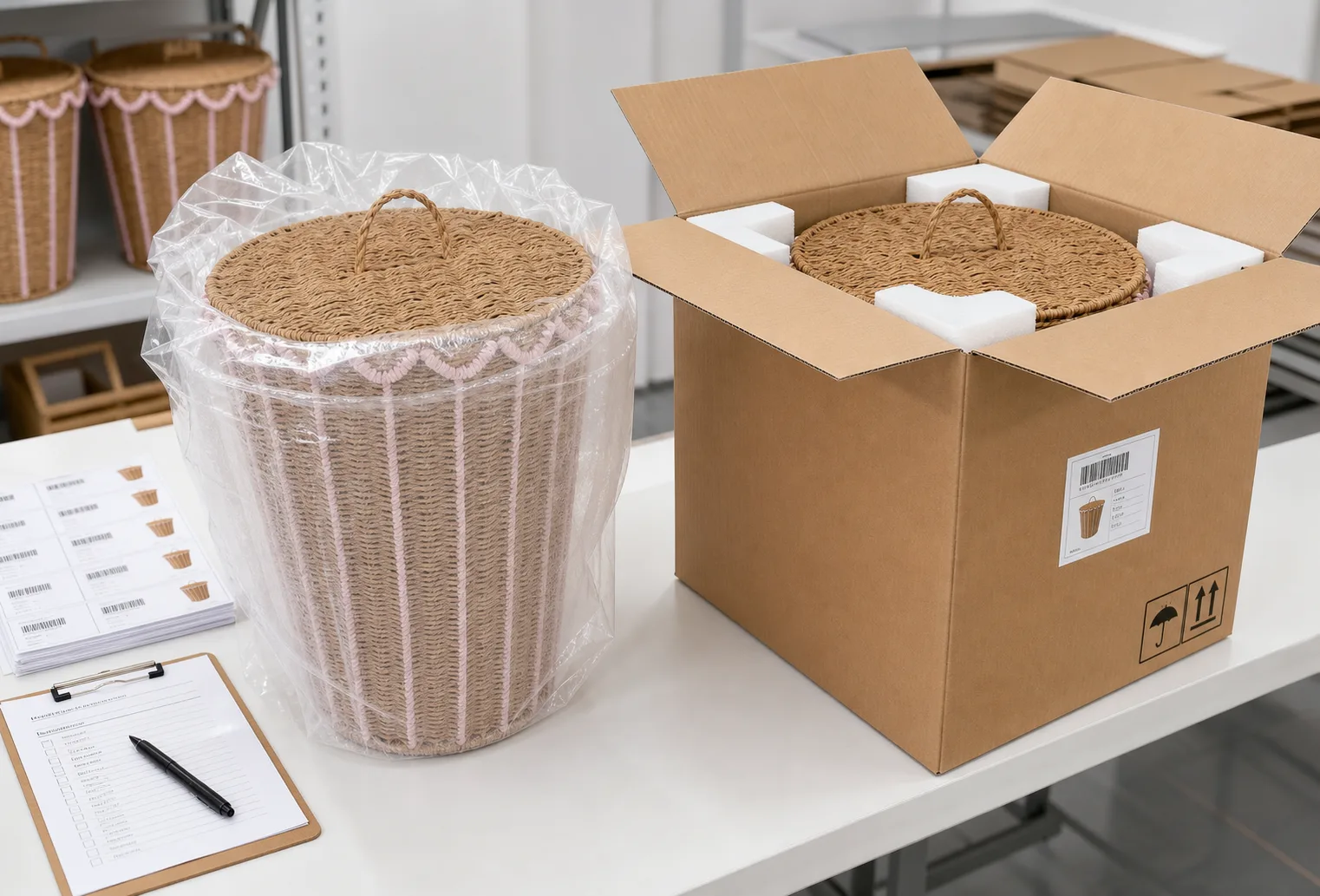
A practical repeat-order example is a buyer reordering a lidded basket after customers reported carton damage and label scanning issues. The repeat file should keep the approved basket body but update the packing photo requirement and label proof. That makes the order a controlled continuation of the previous shipment rather than a vague request to produce the same item again.
The buyer should also require the supplier to acknowledge unchanged details in writing. Repeat orders fail when both sides focus only on new changes and forget to preserve the approved rim, handle, label, or packing method. A short unchanged-details list protects the original standard while the change log handles the updates.
A final repeat-order control is to confirm the date of every reference file. Old carton marks, outdated barcode art, or earlier sample comments should be archived away from the active folder so the supplier does not accidentally revive instructions from a superseded order.
For the repeat-order route, submit changes through the repeat RFQ path, review timing with the factory overview, check color risk with the sample development guide, and use products only when a new reference is added.