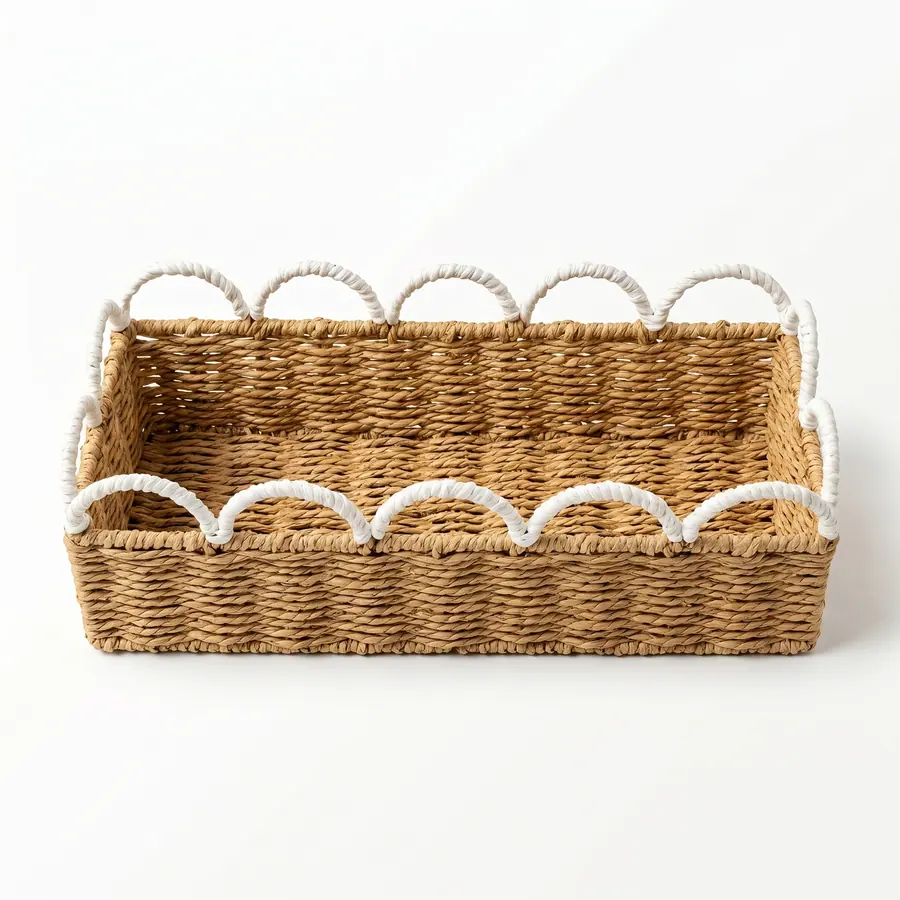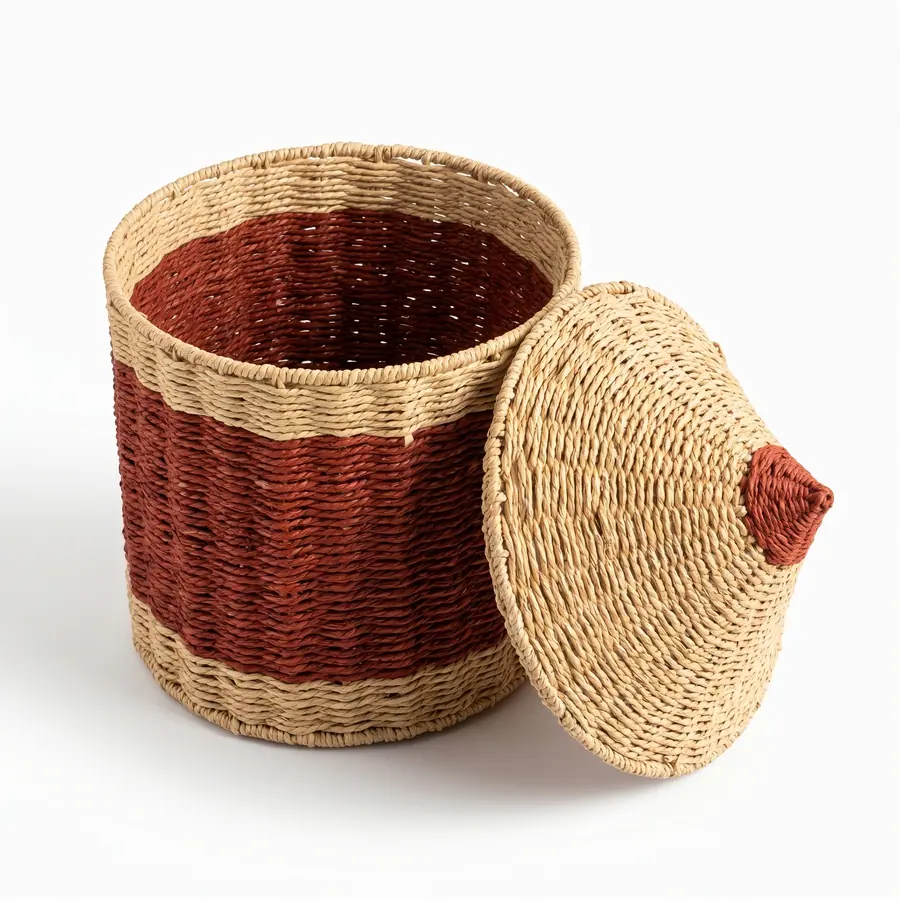
For natural woven baskets, the safest useful sustainability language is narrow, specific, and tied to evidence for the exact product and claim scope. A buyer may be able to state a verified material composition, documented recycled-content percentage, identified certification and scope, or a measured packaging change when current records support the statement. A material’s natural appearance, plant origin, or handmade construction does not by itself substantiate a broad environmental benefit.
Start with the claim before collecting documents. Write the exact sentence, identify whether it refers to the whole basket, one component, the packaging, a process, or a company, and define the market and channel where it will appear. Then ask what a reasonable customer could understand from the words, images, icons, product name, and surrounding layout. This article is a sourcing and evidence workflow, not legal advice; qualified counsel or the buyer’s compliance team should review market-specific language.
1. Replace broad labels with a claim inventory
Terms such as sustainable, green, eco-friendly, responsible, recyclable, biodegradable, compostable, renewable, plastic-free, low-impact, and carbon-neutral can communicate more than the writer intends. Do not begin with a preferred badge and work backward. Build an inventory of every proposed environmental message across product pages, packaging, hangtags, marketplace fields, presentations, sales sheets, and internal product data.
For each message, capture the exact English and translated wording, visual symbol, product or SKU, component scope, market, audience, channel, evidence owner, source date, and expiry or review date. Include implied claims created by leaf icons, circular arrows, certification-style seals, earthy imagery, or comparisons. The product collection can identify the SKUs in scope, but catalog placement is not evidence for an environmental statement.
A useful inventory row answers five questions: What exactly is said? What does it refer to? What evidence supports it? Who approved it? When must it be reviewed? If any answer is blank, keep the language out of production artwork until the gap is closed.
2. Match the claim to the correct product scope
A woven basket is usually a combination of components. Depending on the design, it may include paper rope, water hyacinth, cotton rope, a frame, base, stitching, lining, adhesive, coating, handles, label, ink, retail packaging, protective materials, and an export carton. A fact about one component should not be presented as a fact about the whole product.
Write scope directly into the working claim. “The paper hangtag contains X% verified recycled content” is materially different from “this basket is recycled.” “Packaging reduced by X% by weight versus the named previous pack” is different from “low-waste product.” The first versions identify the object, metric, and comparison; the second versions leave the consumer to infer a much broader benefit.
Create a bill-of-materials view for claim review. It does not need to expose confidential commercial information, but it should let the approval team identify which components are included, excluded, unknown, or changed. Recheck the claim whenever a material substitution, supplier change, artwork revision, or packing change affects that scope.
3. Use an evidence ladder before approving language
Different claims require different records. A supplier email may identify a proposed material but may be insufficient for a quantified or certified claim. A certificate may be relevant only to a named organization, site, material, product, transaction, or validity period. A test report may cover a defined sample and method, not every future order. A lifecycle comparison requires a suitable method, boundary, data, and interpretation.
Use an evidence ladder:
| Claim type | Evidence questions | Approval caution |
|---|---|---|
| Material identity | Is the exact component and specification documented? | Do not extend one component fact to the whole basket |
| Recycled content | Is the percentage, basis, component, chain of records, and period defined? | State the percentage and scope exactly |
| Certification | Is the issuer, holder, scope, product or material, validity, and mark-use permission current? | Do not imply the finished basket is certified when only another scope is covered |
| Recyclability | Is the relevant product or component accepted in the target market’s actual collection and processing context? | Technical possibility alone may not support an unqualified consumer claim |
| Biodegradable or compostable | Are method, conditions, timeframe, complete product scope, and disposal route established? | Avoid transferring a raw-material property to the finished basket |
| Comparative reduction | Are baseline, current design, metric, boundary, dates, and calculation method comparable? | Name the comparison and measured change |
| Carbon or lifecycle claim | Are the method, system boundary, data quality, assumptions, review, and exact wording aligned? | High-level slogans can imply more than the study establishes |
Evidence should be accessible to the approval owner, linked to the claim ID, and retained with the product revision. If the evidence expires or the product changes, the claim should return to review.
4. Apply official guidance by destination market
Environmental marketing rules vary by market and continue to change. In the United States, the Federal Trade Commission’s Green Guides summary advises marketers to avoid broad, unqualified general environmental benefit claims and to use qualifications that are clear, prominent, and specific. It also provides claim-specific guidance for topics such as recycled content, recyclable, degradable, compostable, renewable materials, and certifications.
For the European Union, Directive (EU) 2024/825 adds rules addressing generic environmental claims, whole-product claims based on only one aspect, and sustainability labels. The official text requires Member States to adopt and publish transposition measures by 27 March 2026 and apply those measures from 27 September 2026. Buyers selling into the European Union should confirm the applicable national implementation, timing, and product-specific requirements with qualified counsel.
These examples are not a global checklist. The claim owner should identify every destination market, verify current law and regulator guidance from official sources, and record who completed the review. A phrase accepted in one context may carry a different legal or consumer meaning elsewhere. Translation should be reviewed as a claim, not treated as a mechanical copy.
5. Treat certification and seals as scoped evidence
Before using a certification name, logo, or seal, inspect the current document and program rules. Confirm the exact holder, issuing body, certificate number where applicable, covered site, material or product, transaction or chain-of-custody scope, validity period, and authorization to use the mark. Ask whether the claim concerns the raw material, a supplier, a facility, the final basket, or a specific shipment.
Do not create an in-house leaf badge that resembles independent certification unless the meaning and basis are made clear and the market review accepts it. Visual presentation can imply third-party approval even when the text is vague. Keep logo files controlled and link each use to the approval record.
A certificate supplied during development should not be assumed valid for future orders. Recheck validity and scope at the point defined by the buyer, especially after material, site, supplier, or product changes. If evidence covers only packaging, the product page should not imply that the basket itself holds the same certification.
6. Write qualified language that can survive product changes
Good qualifications identify the object and limit of the claim close to the headline statement. They should be readable in the same consumer journey, not hidden in a remote document. The exact wording still requires market review, but a disciplined drafting pattern is:
Component + verified attribute + amount or method + relevant boundary + date or comparison, where needed.
For example, a team evaluating a recycled-content statement would specify which component contains the content, the verified percentage and basis, and the records supporting the current production period. A team evaluating packaging reduction would name the old and new pack, metric, calculation boundary, and comparison date. A team evaluating a material-origin statement would identify the precise component and traceability evidence rather than implying a whole-product environmental outcome.
Avoid adjectives that add an unsupported conclusion. A fact such as “outer paper label” does not need “planet-friendly.” A documented change in carton weight should not become “zero-waste shipping.” Keep the statement no broader than the evidence and no broader than the component actually reviewed.
7. Separate product facts, packaging facts, and care guidance
Product claims and packaging claims should have separate IDs and evidence. A recyclable carton does not make the basket recyclable. A plant-fiber wrapping does not describe an internal frame. Reduced packaging does not establish a lower total product impact unless an appropriate comparison supports that conclusion.
Care and disposal language also needs evidence and market context. Do not tell consumers to compost, recycle, or biodegrade the finished basket unless the complete relevant scope, conditions, route, and claim requirements are supported. If components must be separated, identify whether that instruction is practical and reviewed for the target market.
For water hyacinth products, material-handling and moisture instructions belong in the product specification and care review, not in an environmental slogan. The water hyacinth texture, structure, and moisture guide helps keep performance controls separate from sustainability language.
8. Create a claim approval record that production can follow
Assign each proposed claim a stable ID. The approval record should include exact wording and translation, SKU and revision, component scope, market and channel, supporting evidence IDs, qualification, artwork location, approval owner, approval date, next review date, and triggers for withdrawal. Attach screenshots or artwork proofs so the surrounding context is visible.
Set withdrawal triggers before launch. Typical triggers include material or supplier substitution, certificate expiry, specification revision, packaging change, evidence correction, new destination market, regulatory update, or a change in the icon or layout that broadens the impression. When a trigger occurs, remove or pause the claim until the review is complete.
Keep marketing, sourcing, quality, packaging, and compliance responsibilities distinct. Sourcing obtains current material and supplier records. Product and quality teams confirm the reviewed SKU and revision. Packaging controls artwork. Compliance or counsel evaluates the market claim. Marketing uses only the approved wording and context. The knowledge base can support document organization, but the claim register should remain linked to the live product and artwork revisions.
9. Ask suppliers for evidence without asking them to approve the claim
The buyer owns the consumer-facing statement and market review. A supplier can provide component data, specifications, declarations, certificates, transaction records, test reports, process records, and notice of changes. The supplier should not be asked to decide whether a broad marketing phrase is lawful in every destination.
Add a claim-evidence section to the RFQ:
- exact proposed claim or data field under review;
- product, component, SKU, market, and period in scope;
- required document type and issuing party;
- certificate or report validity and scope checks;
- quantitative basis, units, calculation method, and comparison baseline;
- translation or label information required from the buyer;
- supplier duty to disclose changes affecting the evidence;
- buyer approval owner and rule that unapproved language stays off artwork.
Submit the product brief and evidence request through the structured RFQ form. Ask suppliers to mark unavailable, pending, or out-of-scope evidence explicitly. A blank attachment field should never become an assumed environmental benefit.
10. Use a final pre-publication claim checklist
Before a product page, package, or sales sheet is released, confirm:
- the exact words and visuals have been reviewed together;
- the claim refers to the correct product, component, packaging, process, or company scope;
- current evidence directly supports every express and implied message;
- percentages, units, baselines, dates, and methods are stated where needed;
- certification holder, scope, validity, and logo permission are confirmed;
- qualifications are clear, prominent, specific, and close to the claim;
- translations preserve the same limits;
- all destination markets and channels have been reviewed against current official requirements;
- the product, supplier, material, and artwork revisions match the evidence;
- an owner, review date, and withdrawal trigger are recorded.
Natural woven baskets can support accurate material stories, but the story must remain within the evidence. The defensible claim is rarely the broadest phrase available. It is the precise statement that identifies what was verified, for which component and product, under which conditions, and for which market.