Wholesale buyers should specify a woven tissue box cover by matching it to the exact refill box or tissue format, then controlling outside and usable inside dimensions, dispensing opening position, loading method, structure, finish, color, labels, unit protection, carton plan, and sample evidence. A catalog photo is only a direction. The approved file must show how tissues are inserted, dispensed, replenished, packed, and inspected for the intended channel.
1. Which tissue format must the cover fit?
Start with the tissue pack that will be used in the destination market. Do not begin with a generic request for a standard rectangular cover. Provide a physical refill box, supplier drawing, or buyer-controlled dimensions for the actual pack. Record its outside length, width, and height, the position and size of its dispensing area, how the carton opens, and whether the refill dimensions change when the box is full or partly used.
Separate the refill dimensions from the cover dimensions. The cover needs enough usable internal space for loading and removal, but excessive clearance can change presentation or let the refill move. If the program must accept more than one refill format, list each format and ask the sample to demonstrate the approved range. Do not assume that one attractive sample fits every regional or retailer tissue carton.
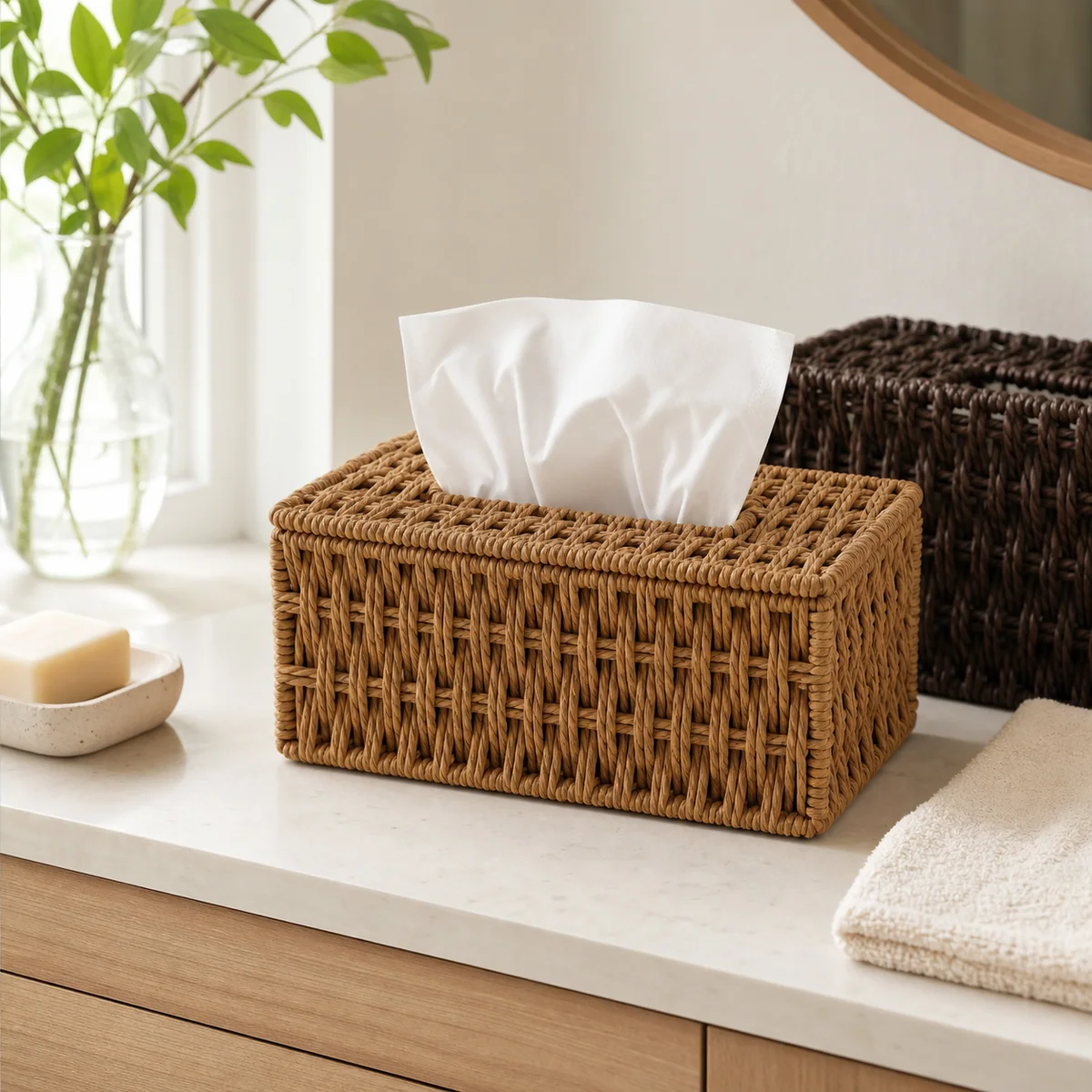
The current JZ10044 paper rope tissue box cover is a useful product reference because its CMS record identifies a rectangular paper rope cover, a top dispensing opening, two size options, and dark brown and natural wood-tone directions. Those facts describe this catalog item only. A buyer still needs to state which size, refill, color, and changes belong to the new order.
2. How will the refill be loaded and replaced?
The specification should show the complete replenishment sequence. A cover may lift over an existing tissue carton, accept a refill through the base, use a removable panel, or follow another agreed construction. The selected route affects internal clearance, base treatment, stability, labels, packing, and the views required for sample approval.
Ask the supplier to return top, bottom, side, and interior photographs or a simple construction drawing. Mark every removable or open area and explain how it is secured during normal handling. If the buyer wants the original tissue carton hidden, state which faces may remain visible. If the cover must be lifted for replacement, identify the approved contact points and make sure decorative or woven areas are not treated as handles unless that use has been designed and reviewed.
Run a replacement trial with the real refill format. Record whether the refill can be inserted and removed without forcing the cover, catching the carton, disturbing labels, or changing the approved shape. This is an observable sample decision, not a general claim that one loading construction is universally easier.
3. Which dimensions and opening details are critical?
An RFQ should include outside length, width, and height; usable internal length, width, and height; base opening or access dimensions; top opening length and width; opening position from fixed edges; rim width; corner profile; and any wall taper. Mark every measurement point on an image. State whether the cover is measured empty, naturally placed on a level surface, and without hand pressure.
The top opening must be assessed with the approved tissue pack. Review whether tissues emerge at the intended point, whether the first sheet can be reached, whether dispensing changes as the pack is used, and whether any edge contacts the tissue. The buyer should define the refill condition and observation method instead of asking for a vague promise such as smooth dispensing.
Classify dimensions by consequence. Internal clearance, opening position, and base access may control function. Outside size may control shelf, vanity, hotel-counter, or retail-pack fit. Other handmade appearance dimensions may be reviewed against an approved sample and project-specific range. Do not copy a tolerance from another basket or rigid plastic cover; ask the supplier to propose achievable ranges for the sampled construction and then approve the method.
4. What construction and appearance should the supplier quote?
A material label alone is incomplete. Specify the visible paper rope or other woven material, any internal frame or support, base, top panel, opening edge, corners, joins, wrapping, adhesive or stitching where applicable, and all hidden parts that affect shape or replenishment. Ask for close views at the top opening, corner, base, and any transition between woven and supporting components.
For a paper rope direction, use the canonical paper rope category to select visual references, then identify exactly what is being borrowed: color, weave scale, rectangular profile, top treatment, or surface appearance. A category image should not be interpreted as approval of dimensions, internal construction, performance, or packing.
Define appearance with evidence. Record the front or label face, weave direction, corner treatment, opening alignment, color reference, acceptable natural or handmade variation, and unacceptable visible conditions. Examples may include an exposed support, loose termination, blocked opening, visibly twisted top panel, unstable base, or a finish that differs from the approved reference. The project team should confirm the final defect language and acceptance method for this design.
5. How should color, branding, and retail presentation be controlled?
Treat the cover, brand elements, and tissue pack as one visual system. Provide controlled color references for the body, wrapping, thread, internal support, label, print, and any retail packaging. If several colors form one assortment, review them together and state quantity by color. Do not infer a colorfastness or sustainability claim from the material name or appearance.
Choose label locations only after the refill and loading sequence are clear. A sewn label, plaque, hangtag, sticker, belly band, barcode, or care insert can affect the visible face, opening, base access, unit protection, and quotation. Supply artwork revision, material, size, placement, orientation, attachment, and market version. The buyer remains responsible for approving legal, retailer, and barcode content.
Decide what the shopper receives: cover only, cover over a refill supplied elsewhere, individual bag, sleeve, retail box, or another selling unit. Ask the quote to state exactly which elements are included. If the tissue refill is shown in marketing photography but not supplied with the product, keep that distinction clear in product content and packing instructions.
6. What should the sample approval file contain?
The sample should be reviewed as a working cover, not as an empty decorative object. Use the actual refill format and the proposed label and pack. Compare the result with one dated specification revision, then issue approved, conditionally approved, or revise-and-resubmit status. General comments such as looks good do not tell production which features control release.
Use this approval table before final quotation:
| Approval gate | Buyer input | Evidence to retain | Release question |
|---|---|---|---|
| Refill compatibility | Exact tissue carton or controlled drawing | Refill identity and fit photos | Does the sampled cover accept the approved format? |
| Loading route | Base, lift-over, panel, or other agreed method | Replacement sequence | Can the refill be replaced without forcing or damage? |
| Dispensing | Opening size, position, edge treatment | Full and partly used observations | Does the agreed setup dispense as reviewed? |
| Dimensions | Annotated outside, inside, opening, and access points | Sample measurements and method | Are critical fit ranges ready for production? |
| Construction | Material, support, top, base, joins, and corners | Detail photos or drawing | Does the sample match the quoted build? |
| Appearance | Color, weave, alignment, label face, variation range | Controlled full and close views | Is the retail presentation approved? |
| Pack-out | Unit protection, selling unit, carton arrangement | Packed and unpacked sequence | Does protection preserve the approved result? |
| Disposition | Revision, comments, owner, date, open items | Signed or recorded decision | Is production released, conditional, or blocked? |
The pre-production sample review guide can support the review sequence. Keep this tissue-cover file narrower: it must prove refill fit, opening access, loading, construction, and presentation for the exact SKU.
7. Which packing and QC checks belong in the order?
Protect the features that control function and presentation. Identify contact at the top opening, corners, woven faces, label, base access, and any protruding trim. State the unit wrap or separator, orientation, pieces per carton, carton dimensions, assortment, marks, and how the first pack-out will be approved. A general statement such as standard export packing is not enough for comparing quotes.
Review one product before packing and after the proposed pack-out. Confirm the cover sits as intended, the opening remains aligned, the refill still fits, the label face is acceptable, and visible surfaces match the sample record. Any compression, abrasion, humidity, drop, or transit requirement needs a project-specific method, sample basis, acceptance rule, and responsible party; this guide does not supply universal thresholds.
Build production checkpoints from the approval file. Possible stages include material and color reference before assembly, first-finished-piece review of opening and dimensions, representative appearance and construction checks during production, and label, assortment, carton, and pack-out checks before shipment. The factory and QC overview explains the general evidence flow, while the purchase specification must define the actual inspection plan.
8. How should buyers compare MOQ, timing, and commercial terms?
Ask for project-specific commercial answers after the construction, size, color assortment, label, and packing basis are stable. MOQ may depend on material preparation, color quantity, internal components, artwork, printed packaging, or carton purchases. Request the quantity by SKU and color, identify any component purchase minimum separately, and ask how unused branded materials would be owned, stored, reused, or disposed of.
Sample and production timing should state start conditions and approval dependencies. A supplier can only confirm a useful schedule after receiving the refill reference, controlled specification, artwork status, sample route, quantity, pack-out, required evidence, and commercial basis. Do not publish or plan around an unconfirmed universal sample or lead time.
Each quotation should identify currency, item and revision, quantity basis, included unit and export packing, sample or development charges, payment terms, quote validity, requested delivery rule and named place, inspection or testing responsibility, and exclusions. Use the OEM and ODM project page to frame customization inputs. When the file is complete, submit it through the structured RFQ page and require the supplier to mark assumptions and alternatives instead of silently completing missing details.