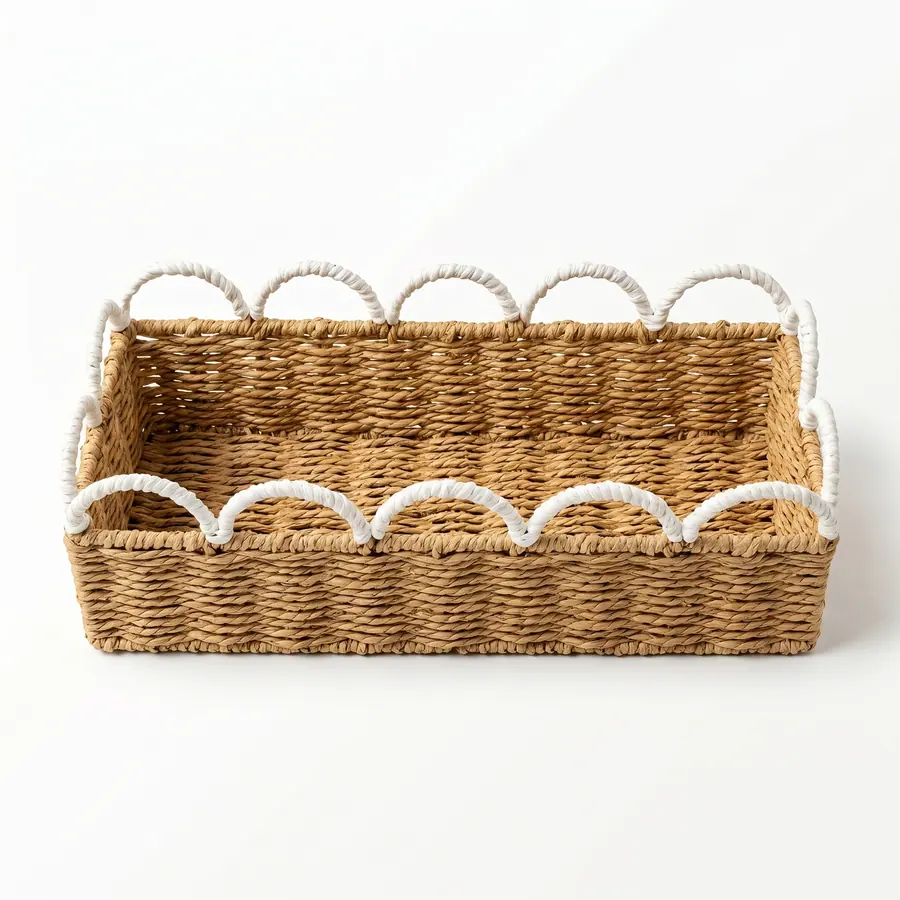
Woven basket defects are easiest to prevent before the basket is finished. A final inspection can sort visible problems, but it cannot cheaply correct a vague material approval, missing label rule, unrealistic shape expectation, or untested pack-out. Buyers should build the defect list from the specification, the approved sample, and the way the order will be sold or handled.
This article focuses on defect prevention. It is different from a factory-visit checklist and different from a shipment QC timeline. Buyers can connect the prevention plan to the factory quality process and submit project details through RFQ. No defect category below should be treated as a universal certification, test result, or fixed tolerance.
1. Wrong material or unapproved substitution
Material defects often start as unclear sourcing decisions. A basket photo may show paper rope, water hyacinth, seagrass, cotton rope, a metal frame, fabric liner, stitching, and labels, but the quote may not specify which components are fixed. Prevention begins by naming each component and requiring written approval before substitution.
Ask for batch photos or retained references before bulk work. The evidence should identify the SKU and component. If the supplier proposes a substitute because the original material is not available or not suitable, the buyer should decide whether the change needs a revised sample, quotation update, or packing review.
2. Shape defects that affect fit or display
Shape problems include leaning walls, collapsed rims, rocking bases, poor lid fit, distorted openings, and nested sets that rub. They are best prevented by marking measurement points and visual views before production. “Looks uneven” is not enough; the buyer should connect each shape issue to shelf fit, lid function, retail photography, packing, or user handling.
For shape-specific methods, use shape consistency in handwoven baskets. That page separates rim, wall, base, opening, nesting, and handle relationship so shape comments do not get lost inside a general defect list.
3. Color drift and component mismatch
Color quality is not only about one material. A woven body, trim, liner, thread, label, and printed insert can look acceptable separately but mismatched together. Prevention requires an approved reference, review conditions, and a decision about natural variation. The buyer should decide whether the product is judged as one unit, as a set, or as a mixed-color assortment.
Wrong color family, visible staining, unapproved dye direction, and inconsistent set relationship should be classified differently from acceptable material character. For color-sensitive programs, connect the order file to managing color drift in handwoven basket production.
4. Workmanship issues at rims, handles, and liners
Workmanship defects should be named by location. Examples include loose ends at the rim, exposed frame points, uneven wrapping, handle pairs that do not align, liner edges that pull away, missing stitches, glue marks where glue is used, or decorative trims that shift from the approved position. Each issue should be tied to a defect class for the actual order.
If the buyer requires a handle or attachment check, the method and acceptance rule must be written before inspection. Do not convert a subjective impression of strength into an unsupported performance claim. The specification should say what evidence is needed and who reviews it.
5. Label, barcode, and carton-mark errors
A basket can be physically acceptable but commercially blocked by wrong data. Label content, SKU stickers, barcode position, hangtag attachment, country or care wording where applicable, carton marks, and mixed-assortment rules should be approved before mass packing. A late label error can be harder to solve than a small visual defect.
Prevention evidence can include artwork proof, placement photo, scan record if required by the buyer, and packed-carton mark photo. Keep responsibility for legal wording and destination-market requirements written in the order file instead of assuming a generic template applies.
6. Moisture, odor, stains, and surface cleanliness
Natural and hand-prepared materials can be affected by storage, drying, transport, and packing timing. Prevention should focus on visible condition and agreed handling rather than broad claims. Define unacceptable mold, staining, heavy odor, wet packing condition, or surface dirt for the order. If the buyer requires a project-specific check, name the method and acceptance rule.
Packing too early or storing materials poorly can create problems that appear later. Ask how materials and finished goods are separated, aired, and protected before sealing cartons. Keep any moisture or cleanliness evidence tied to the actual product and route.
7. Packing damage and assortment mistakes
Packing-related defects include abrasion, compression marks, bent rims, missing separators, wrong nesting order, mixed color errors, wrong carton quantity, and carton marks that do not match the purchase order. These issues are preventable only if the pack-out is reviewed before all cartons are sealed.
Ask for photos of unit protection, orientation, nesting, separators, labels, carton quantity, and closed carton marks. If ecommerce or parcel handling is part of the buyer’s route, the buyer must define any extra packing or checking requirement in the order file.
8. Prevention table for woven basket orders
| Defect family | Prevention control | Evidence |
|---|---|---|
| Material mismatch | Component approval and substitution rule | Batch photo or retained reference |
| Shape failure | Use-case measurement and view set | Annotated dimensions and sample photos |
| Color drift | Reference and review condition | Component comparison record |
| Workmanship issue | Location-specific defect examples | Rim, handle, liner, and trim close-ups |
| Label error | Artwork and data approval | Label, barcode, and carton mark photos |
| Packing damage | Pack-out review before sealing | Protection and carton arrangement images |
9. Use defects to improve repeat orders
After shipment, keep defect photos, correction records, buyer comments, and accepted deviations with the purchase order. A repeat order should not start from memory. It should start from the last order’s risk log.
The prevention plan should stay focused. Do not add every possible defect to the next order. Add controls for the issues that actually affected material, shape, color, workmanship, label, moisture, or packing risk. That makes inspection stricter where it matters and easier to apply during production review.
10. Separate preventable defects from buyer preference changes
Not every complaint after sample approval is a defect. Sometimes the buyer changes the retail direction after seeing a sample, prefers a different weave density, wants a warmer color, or decides that a label should move for merchandising reasons. Those may be valid changes, but they should not be recorded as production defects if the supplier followed the approved file.
This distinction matters for cost and timing. A preventable defect should lead to correction or sorting under the agreed quality plan. A buyer preference change may require a revised sample, updated quotation, or new packing review. Mixing the two categories makes the quality record unfair and makes the next order harder to manage.
11. Build a defect photo library for the next inspection
A short defect photo library is often more useful than a long written list. Keep one or two approved examples and one or two rejected examples for the main risk areas: material, shape, color, workmanship, label, moisture, and packing. The photos should be dated and tied to the SKU or product family.
The library does not need to cover every possible issue. It should show the boundary that inspectors usually debate. If a new problem appears during shipment review, add it only when it is likely to recur or when it changes the buyer’s acceptance decision.