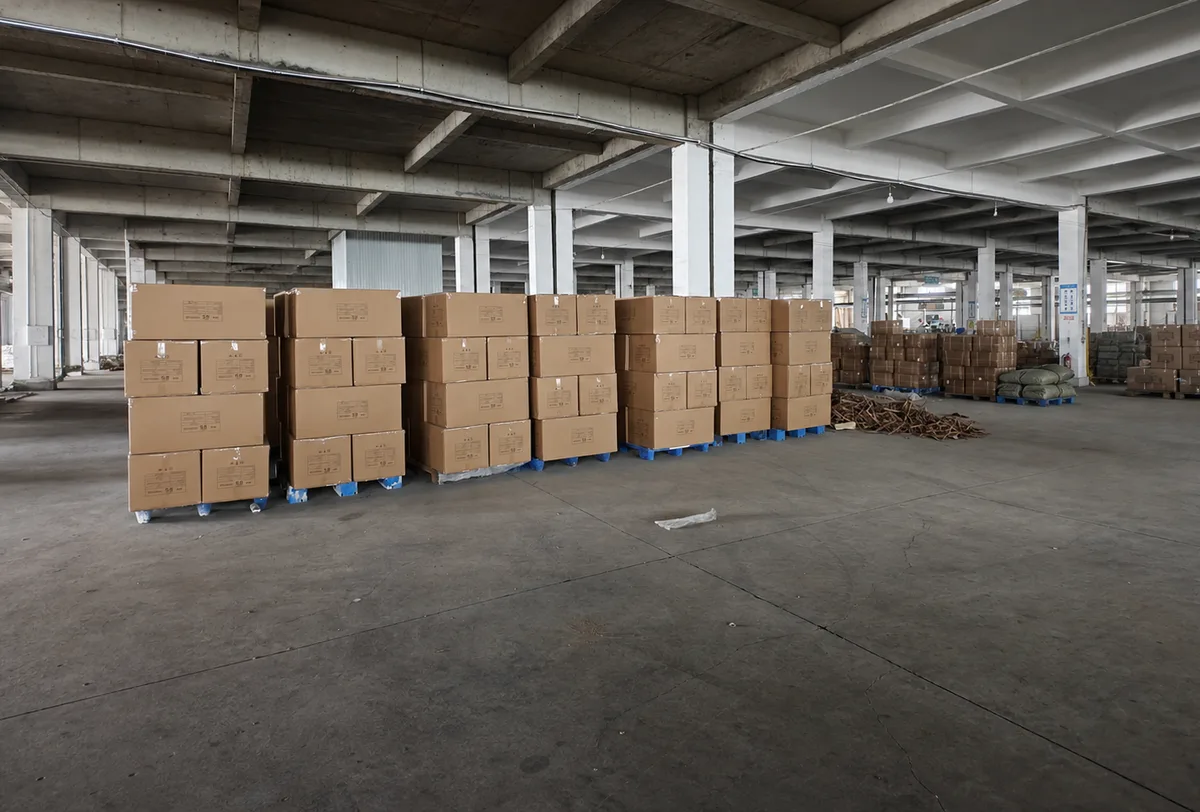
Bulk handwoven basket buyers should ask for production-gate evidence at the moments when a wrong decision is still reversible. The useful question is not “is the order going well?” It is “what proof shows this gate can close?” For a large handmade order, gate evidence should cover the production file, prepared materials, first finished units, in-process shape and color checks, packing trial, packed cartons, and final release.
This page is deliberately narrower than a general sourcing checklist. It does not set a universal MOQ, tolerance, lead time, inspection level, certification, or performance claim. The buyer still needs to define product-specific requirements and submit them through the structured RFQ page. The commercial destination for a quality-process discussion is the factory overview, where buyers can connect these gates to the supplier conversation.
1. Gate zero: freeze the order file before work spreads
The first production gate is not a basket on the table. It is the order file that tells every team which basket is being made. Ask for the current specification, approved sample identity, SKU list, quantity by size and color, material notes, label artwork, carton marks, packing plan, and open-question log. If any of these items is still unresolved, production may begin with hidden assumptions.
Gate zero evidence can be simple: one dated PDF, one spreadsheet, or one message thread that names the controlling revision. The key is that the sample room, material buyer, weaving supervisor, QC reviewer, and packing team all refer to the same version. When the buyer changes a color, label, or pack-out, the gate should reopen until the revised file is acknowledged.
2. Material-release gate: approve inputs before labor accumulates
Handwoven baskets absorb labor early. A wrong material batch can become expensive after hundreds of units are woven. Before broad work starts, ask for evidence of the main woven material, frame or base component, liner, stitching, handles, labels, and packing materials. The record should name the component, SKU, color or material reference, and whether it is approved, rejected, or waiting for buyer review.
Do not treat natural variation as a defect by default. The buyer must define the acceptable boundary for the specific program. The material gate should catch wrong color family, unapproved substitution, visible contamination, component mismatch, and any condition that would make the approved sample impossible to repeat within the agreed range.
3. First-unit gate: check the earliest complete baskets
The first complete units show whether the production team understood the approved sample. Ask for multi-angle photos and a short review of dimensions, rim, base, handles, weave direction, color relationship, label placement, and surface condition. A first-unit gate is not the same as final inspection; it is a chance to correct direction before the problem multiplies.
If the first units are acceptable with small comments, record the comments and how they will be checked. If they reveal a design change, pause the affected work and decide whether a revised sample, quotation update, or packing review is needed. For deeper sample interpretation, use how to read a woven basket pre-production sample.
4. In-process gate: track the risks that change while weaving
Some quality risks appear only during production. Shape can drift as material tension changes. Color can shift between prepared batches. Handles can sit differently when different workers attach them. Liners and labels can move if the team uses old placement references. The in-process gate should focus on these moving risks rather than repeating the whole specification.
A practical in-process evidence set includes dated photos from early, middle, and late production; notes on any sorted or reworked units; and confirmation that approved materials are still being used. For shape-sensitive items, connect this gate to shape consistency checks. For color-sensitive items, require a separate color boundary instead of relying on warehouse lighting.
5. Packing-trial gate: prove the carton before the order is sealed
Packing can change a basket after production appears acceptable. A nesting order can deform rims. Missing separators can create abrasion. A carton mark error can disrupt receiving. Before all cartons are sealed, ask for pack-out photos showing unit protection, orientation, nesting order, inner packaging, carton quantity, label visibility, carton marks, and closure method.
The packing-trial gate also protects cost comparison. A quote that includes separators, individual sleeves, and documented carton marks is not the same as a quote that says only export carton. If the buyer adds a new packing requirement after quotation, the supplier should confirm whether cost, timing, or carton data changes.
6. Release gate: make shipment approval traceable
The release gate should summarize what was checked and why the shipment can move. Ask for the final inspection method, quantity or carton basis, defect findings, correction evidence, packed-carton photos, label or mark proof, and open exceptions. ISO 2859-1 can be a reference for attributes sampling discussions, but it does not replace the buyer’s product-specific defect list or acceptance decision.
A release record should not be reduced to “passed” without context. If a deviation was accepted, name who accepted it and which quantity it affects. If rework occurred, include before-and-after evidence. If the buyer holds shipment, list the exact gate that remains open.
7. Buyer table for bulk production gates
| Gate | Evidence | Do not close the gate until |
|---|---|---|
| Order file | Current specification, sample identity, SKU list | All teams use the same revision |
| Materials | Component and batch references | Buyer has approved the inputs or marked exceptions |
| First units | Multi-angle photos and measurements | Direction matches the approved sample record |
| In-process | Stage photos and correction notes | Moving risks are still inside the agreed boundary |
| Packing trial | Pack-out and carton mark evidence | Carton method matches the order file |
| Release | Final findings and exception log | Shipment decision is traceable |
8. How to use the checklist in a real order
Send the gate checklist before production starts. Ask the supplier to mark which evidence will be provided automatically, which needs buyer approval, and which depends on product design. Do not wait until final inspection to ask for proof that should have existed at material or packing stage.
After shipment, keep the gate records with the purchase order. A repeat order should begin by reviewing which gates stayed stable and which gates created questions. That is how a bulk handwoven basket buyer turns quality control from a final-day argument into a staged production record.
9. Decide who can reopen a closed gate
A gate is useful only if the team knows what can reopen it. A buyer revision, material shortage, label file change, carton quantity change, or repeated in-process defect should move the order back to the relevant gate instead of being handled as a side comment. Write the approval owner for each gate. For example, the merchandiser may acknowledge a photo, but the buyer may still need to approve a changed color reference or altered packing method.
This prevents a common bulk-order problem: one person treats a point as closed while another team is still waiting for confirmation. A short reopen rule also helps when time pressure appears near shipment. If the carton mark changes after packing starts, the issue belongs to the packing or release gate, not to an informal message thread.
10. Keep the gate record short enough to use
A production-gate system does not need a large manual. The strongest version is a small checklist that people actually update. Use one row per gate, one owner, one evidence link or photo set, one decision, and one date. If the file becomes too long, supervisors may stop using it and return to informal approvals.
For a first order, keep the gate list narrow. For repeat orders, add only the lessons that affected the last shipment: a late label correction, color review delay, packing rework, or shape-sorting issue. That gives the next order a sharper control plan without turning every natural handmade detail into a formal hold point.