Buyers should communicate handmade woven product color as a controlled comparison system: identify every colored component, name the governing reference, define how it will be viewed, and decide acceptable variation on representative samples. A color name or screen image alone is not an approval standard. Natural fibers, paper, cotton, dyes, coatings, stitching, fabric, and printed labels can respond differently, so each project needs a written decision.
The objective is not perfect uniformity. It is to prevent avoidable misunderstandings and make remaining variation commercially judgeable. Each approval should identify the product, component, reference, revision, date, and decision owner.
Map Color by Component
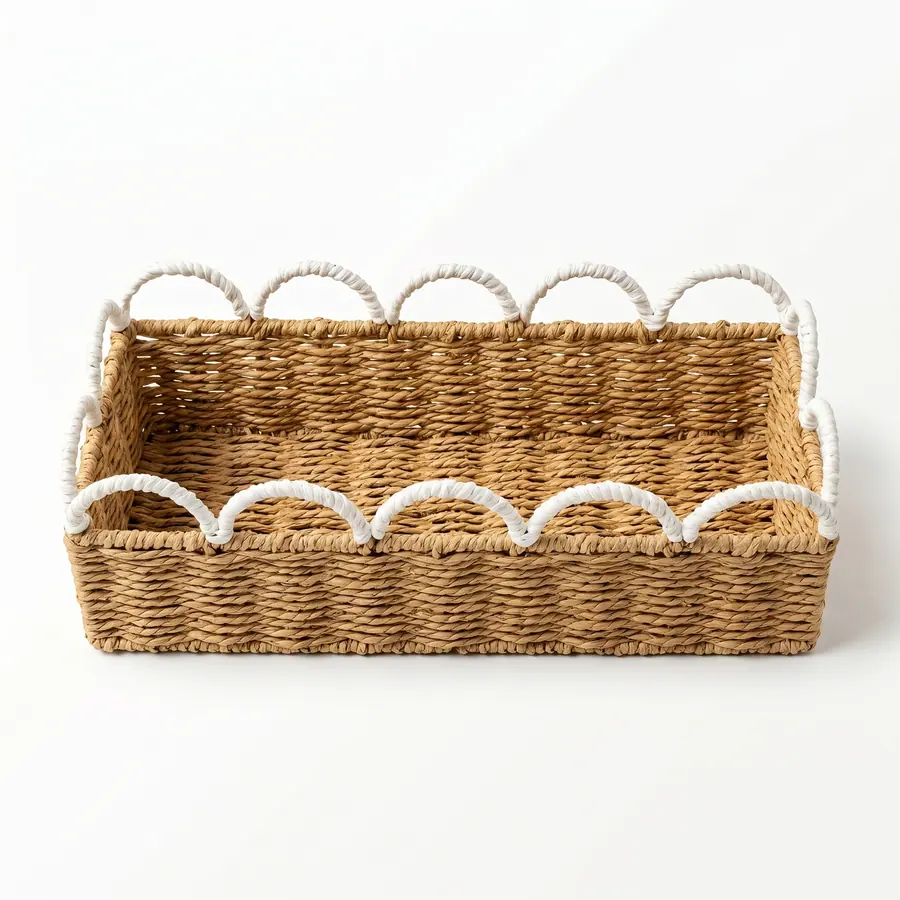
Create a color map for the body material, frame covering, rim, trim, stitching, handles, lid, liner, label, hangtag, retail packaging, and carton printing where relevant. Give each component an ID and reference. If two parts should match, state whether they require the same material appearance or only a coordinated visual relationship.
A phrase such as natural with green accents is incomplete. Natural may mean a raw-fiber appearance, a dyed neutral, or paper rope. Green may apply to one stitch, an entire rim, or a liner. Use a table:
| Component | Reference | Approval evidence | Open question |
|---|---|---|---|
| Basket body | Buyer reference A | Physical swatch/sample | Material effect |
| Trim | Buyer reference B | Sample close-up | Match or coordinate |
| Liner | Fabric reference C | Cut swatch | Lot relationship |
| Label | Final artwork | Printed proof | Print method |
Establish a Reference Hierarchy
State which source controls when references differ. A practical hierarchy can place the signed physical sample above a supplier swatch, marked photograph, digital color value, and verbal name, but the buyer must choose it for the project. Record the identity and custody of physical references.
Digital values can identify intent for artwork, yet they do not predict appearance by themselves on fiber, fabric, paper, paint, or a particular print process. If a reference object is sent, label the area to match and note whether gloss, texture, aging, or base material affects the reading. When a later sample is approved, issue a revision that supersedes the earlier source.
Define Viewing and Photography Conditions
Agree on the light source or viewing area, surrounding colors, distance, comparison orientation, and whether material will be assessed flat, woven, or assembled. If instrument readings are required, the buyer should specify equipment, method, sample preparation, and an acceptance rule with qualified support.
Photographs should include an identity card, the approved reference when available, the checked component, and a neutral background. Keep capture conditions consistent and retain original files. The remote product photo guide explains the evidence set. A photograph can flag a possible difference, but screen appearance should not be the sole authority for a critical shade.
Separate Material Character From Process Variation
Before setting acceptance, identify what creates visible variation. Natural-fiber tone, paper base, dye batch, coating, weave direction, strand overlap, texture, fabric lot, and print substrate can affect appearance. These are possible project variables, not a claim that every product will show the same pattern.
Ask the supplier to show representative material or sample units and explain expected variation sources for the selected construction. The buyer decides which features belong to the intended handmade appearance and which damage retail presentation. Acceptable natural variation is not an excuse for wrong materials, wrong components, stains, contamination, or an unapproved batch. Document boundary examples with captions instead of relying on words such as slight, normal, close, or obvious.
Approve Color in Stages
Use separate gates for reference selection, material swatch, first woven sample, revised sample if needed, bulk material or first-production comparison where required, and final inspection evidence. A flat swatch may not predict assembled appearance because weave, density, frame color, and neighboring components affect perception. Waiting for a finished sample before discussing color can also waste development effort.
Record what each gate approves, what remains provisional, and who can release the next step. Connect these approvals to the custom sample timeline. No material purchase or production release should be inferred from an unlabeled photograph or casual message.
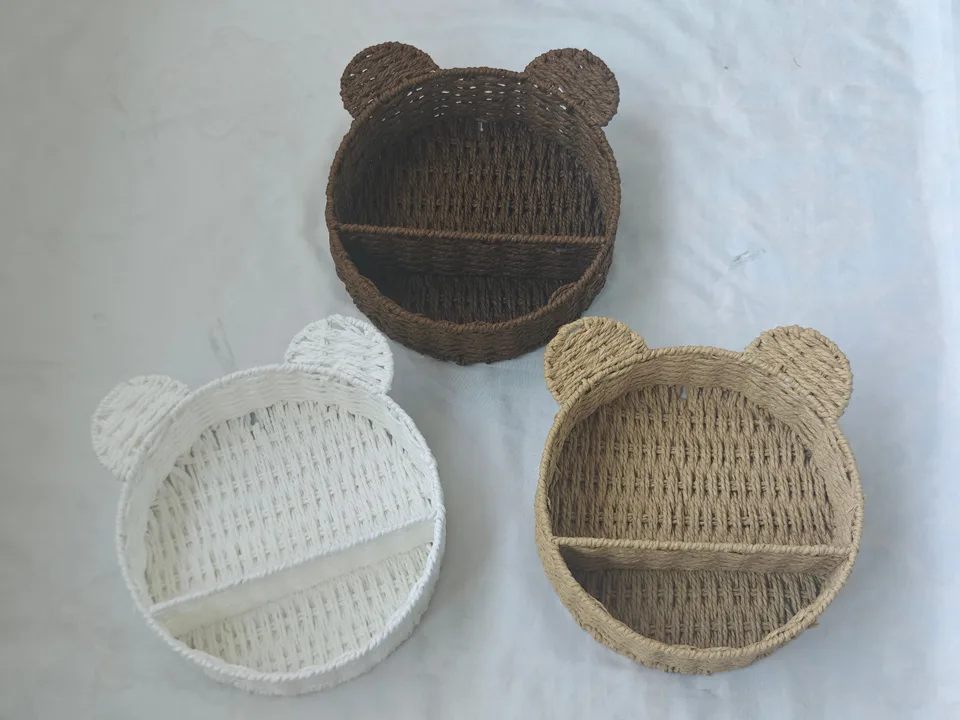
JZ10167 Case Evidence: One Structure, Three Photographed Color Samples
All four photographs are user-provided photographs of actual JZ10167 samples, not AI renderings or concept visuals. The three-color group photograph and the three individual views document this specific case; they do not establish a universal paper-rope color range.
The white, natural tan, and dark brown pieces use the same paper rope, the confirmed catalog dimensions of 30 cm body diameter, 10 cm depth, and 5 cm ear radius, and the same bear-ear two-tier structure; only the color direction differs. Buyers can review the photographed JZ10167 product case when preparing an approval file.
| Confirmed for this case | Directly visible in the photographs | Still approve before production |
|---|---|---|
| Product identity JZ10167; paper-rope material; 30 cm diameter, 10 cm depth, 5 cm ear radius; bear-ear two-tier structure | White, natural tan, and dark brown directions; bear-ear outline; wrapped rim; center hanging opening; horizontal shelf and two open storage tiers | Governing color reference; allowed variation; viewing conditions; approved physical sample; SKU quantities by color; label and packaging identification |
The photographs cannot prove an exact Pantone code, zero batch drift, a colorfastness result, mounting hardware inclusion, wall compatibility, or load capacity. Treat those as separate decisions and evidence requests; the wall-storage mounting and load evidence guide explains why installation and loading should not be inferred from appearance.
All other buyer-specified color directions may be requested, subject to paper-rope material feasibility and physical-sample approval. The three photographed colors are completed sample directions, not an inventory or catalog limit. A screen image supports comparison but is not the final mass-production acceptance standard.
Set Acceptable Variation With Examples
There is no universal handmade color tolerance. Establish the project range after reviewing representative samples and the retail context. The record may use signed boundary samples, approved photographs under defined conditions, buyer-specified instrumental limits, or a combination. State which component relationships matter most.
Boundary examples are more useful than one ideal sample when variation is expected. Identify a target and, where practical, the lightest, darkest, warmest, or coolest acceptable examples. Define rejection separately for a wrong reference, excessive within-unit contrast, unacceptable unit-to-unit difference, staining, contamination, color transfer, or print mismatch.
Control Batches and Substitutions
Require written approval before changing a colored material, dye source, coating, fabric lot, thread, label stock, or print process when appearance could change. The supplier should identify the proposal and submit evidence required by the buyer's substitution rule.
Record how production batches will be identified and comparison units selected. Sets containing multiple materials or colors may need relationship approval as well as individual component approval. Repeat orders should cite the previous approved reference and confirm it remains available and suitable. Custom material or quantity splits among colors can affect MOQ and timing. Review the handmade MOQ guide rather than assuming a universal quantity effect.
Write Color Into the RFQ and Approval Record
The RFQ should ask suppliers to confirm:
- component-by-component references and conflicts;
- material and process used to create each color;
- which references are physical, digital, photographic, or provisional;
- swatch and sample deliverables;
- expected project-specific variation sources;
- buyer approval stages and response owners;
- batch identification and substitution controls;
- effects of custom colors on MOQ, charges, and timing;
- inspection method and required evidence.
Submit these fields through the project RFQ form, and use the custom-development workflow when color is part of a broader concept decision. Keep color approval separate from delivery terms. The International Chamber of Commerce Incoterms page explains delivery tasks, costs, and risks; it does not define color acceptance.
Make the Final Decision Traceable
Before production release, the color file should contain the current specification revision, component map, reference hierarchy, physical-reference IDs, viewing method, approved sample ID, dated evidence, acceptable boundaries, batch and substitution rules, and named approver. Any conditionally approved item should state what evidence will close it.
For final review, ask: Is this the correct component and revision? Is the governing reference present? Was the agreed viewing method used? Does the result fall within the project-specific approved range? This process respects handmade material character without turning variation into an undefined promise. It gives buyer and supplier one language for development, production, inspection, and repeat orders.
Frequently asked questions
Can buyers request a color outside the three JZ10167 samples shown?
Yes. The white, natural tan, and dark brown samples show three completed directions; they do not set an inventory or catalog limit. Buyers can propose another color direction, but it must pass paper-rope material feasibility review and be confirmed on a physical sample before mass production.
Are the three JZ10167 color examples actual samples of one product?
Yes. All three photographed pieces are actual product samples of JZ10167. The paper rope, catalog dimensions, and bear-ear two-tier structure are the same; only the color direction changes.
What should buyers send when communicating a custom woven-product color?
Buyers can send a Pantone or brand color code, a physical sample, or a clear visual reference, then record viewing conditions, allowed variation, SKU quantities and identification. Pantone should be treated as a directional reference for the chosen material, not an absolute reproduction promise, and the approved physical sample should govern final acceptance.
Can a screen image guarantee an absolute color match for a handmade woven product?
No. A supplier cannot promise an absolute screen-to-product match because screen settings, lighting, material texture, production process, and batch conditions affect appearance. The screen is a comparison aid; final acceptance requires an approved physical sample.