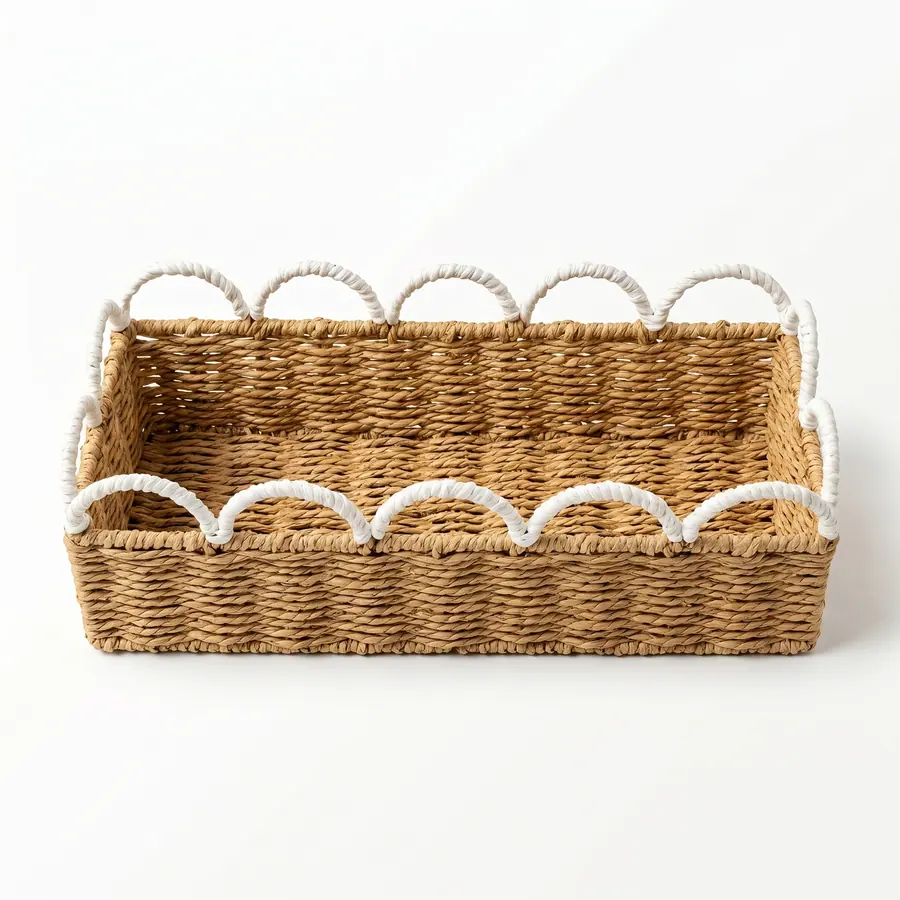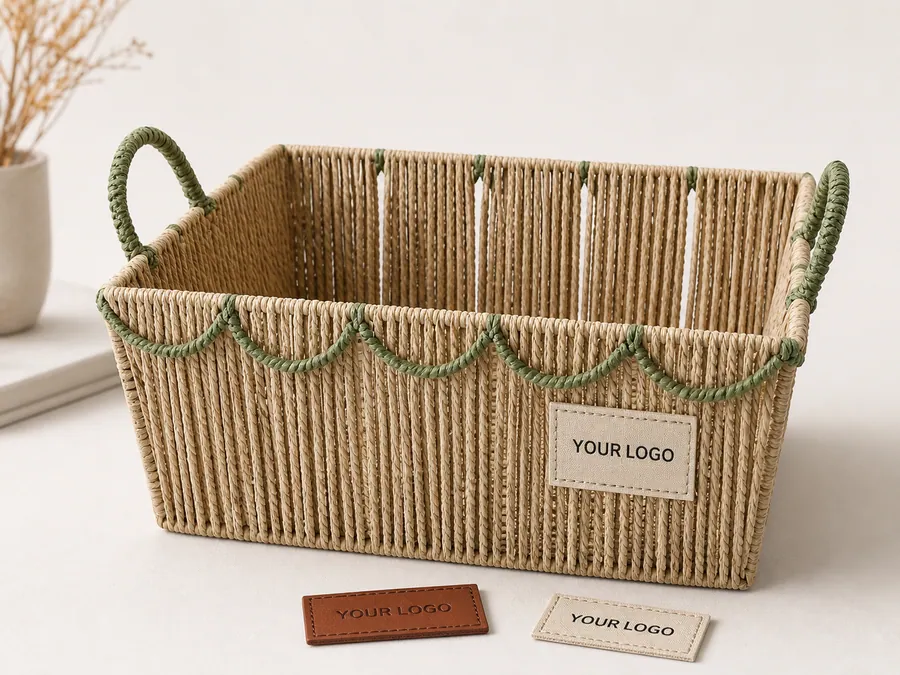
A woven basket collection needs rules for consistency and variation. Buyers should define the hero SKU, support roles, shared material logic, color architecture, trim hierarchy, packaging family, and sample sequence before asking a supplier to develop many items at once.
This is collection planning, not a capacity or certification claim. MOQ, timing, compliance, and performance remain project-specific variables to confirm in writing.
Name the hero SKU before adding support items
For multi-SKU woven basket collection development, this checkpoint focuses on main photograph item, volume anchor, premium piece, largest storage form. The OEM and ODM collection buyer should write the decision in buyer language and attach the reference that proves the intended result. If a supplier proposes a shortcut, the response should explain what changes in appearance, packing, sample approval, or commercial basis.
other SKUs extend a visible collection idea. This is also where the buyer keeps evidence boundaries clear: project-specific load checks, tolerance ranges, compliance wording, and production timing are confirmed only when the method, owner, and acceptance rule are written for this exact program.
Pair every fixed rule with an allowed variation
For multi-SKU woven basket collection development, this checkpoint focuses on same material with varied trim, same label with varied size. The OEM and ODM collection buyer should write the decision in buyer language and attach the reference that proves the intended result. If a supplier proposes a shortcut, the response should explain what changes in appearance, packing, sample approval, or commercial basis.
development remains flexible without becoming random. This is also where the buyer keeps evidence boundaries clear: project-specific load checks, tolerance ranges, compliance wording, and production timing are confirmed only when the method, owner, and acceptance rule are written for this exact program.
For collection architecture file, the internal links in this article support distinct decisions rather than a generic reading path. Use the linked category or guide pages to clarify references, then keep the article's commercial path and RFQ step explicit in the buyer brief.
Sequence samples from shared decisions outward
For multi-SKU woven basket collection development, this checkpoint focuses on common color, rim route, label style, unusual shape, final pack-out. The OEM and ODM collection buyer should write the decision in buyer language and attach the reference that proves the intended result. If a supplier proposes a shortcut, the response should explain what changes in appearance, packing, sample approval, or commercial basis.
buyer prevents repeated correction across all samples. This is also where the buyer keeps evidence boundaries clear: project-specific load checks, tolerance ranges, compliance wording, and production timing are confirmed only when the method, owner, and acceptance rule are written for this exact program.
Build price architecture from real cost drivers
For multi-SKU woven basket collection development, this checkpoint focuses on size, material, trim, liner, label, packing, set relationship. The OEM and ODM collection buyer should write the decision in buyer language and attach the reference that proves the intended result. If a supplier proposes a shortcut, the response should explain what changes in appearance, packing, sample approval, or commercial basis.
supplier explains alternatives instead of guessing a price ladder. This is also where the buyer keeps evidence boundaries clear: project-specific load checks, tolerance ranges, compliance wording, and production timing are confirmed only when the method, owner, and acceptance rule are written for this exact program.
| Collection layer | Role in range | Control rule |
|---|---|---|
| main photograph item | volume anchor, premium piece | other SKUs extend a visible collection idea |
| same material with varied trim | same label with varied size | development remains flexible without becoming random |
| common color | rim route, label style | buyer prevents repeated correction across all samples |
| size | material, trim | supplier explains alternatives instead of guessing a price ladder |
| shared hangtag | carton mark system, sleeve style | collection looks coordinated after packing |
Keep packaging family decisions visible
For multi-SKU woven basket collection development, this checkpoint focuses on shared hangtag, carton mark system, sleeve style, ecommerce pack. The OEM and ODM collection buyer should write the decision in buyer language and attach the reference that proves the intended result. If a supplier proposes a shortcut, the response should explain what changes in appearance, packing, sample approval, or commercial basis.
collection looks coordinated after packing, not only on a shelf. This is also where the buyer keeps evidence boundaries clear: project-specific load checks, tolerance ranges, compliance wording, and production timing are confirmed only when the method, owner, and acceptance rule are written for this exact program.
Release one collection RFQ package
For multi-SKU woven basket collection development, this checkpoint focuses on architecture table, SKU list, sample order, fixed rules, exceptions. The OEM and ODM collection buyer should write the decision in buyer language and attach the reference that proves the intended result. If a supplier proposes a shortcut, the response should explain what changes in appearance, packing, sample approval, or commercial basis.
supplier quotes collection-level and SKU-level assumptions. This is also where the buyer keeps evidence boundaries clear: project-specific load checks, tolerance ranges, compliance wording, and production timing are confirmed only when the method, owner, and acceptance rule are written for this exact program.
Before release, the OEM and ODM collection buyer should send one file containing the selected references, the decisions above, quantities by variant, destination market, artwork status, pack-out expectations, inspection evidence, and unresolved questions. Submit the controlled request through OEM/ODM development path; if the commercial path is not the final inquiry page, use it for selection and then move the confirmed brief to RFQ.
A useful multi-SKU woven basket collection development record is narrow. It answers the manifest question for this article and points to other pages only when the buyer needs a different decision, such as material selection, factory checks, sample development, or quote comparison. That focus helps avoid cannibalizing adjacent sourcing guides.
Collection release notes for multi-SKU decisions
For woven basket collection system control, the buyer should approve the shared system before arguing over every SKU. Material direction, color family, label language, trim hierarchy, and packaging family should be reviewed as collection decisions. Once those are fixed, individual SKUs can vary by role, scale, or feature without losing the range identity.
The collection release file should identify any experimental SKU separately. A new shape or material may be valuable, but it should not delay ordinary support items if the buyer can separate the risk. Marking experimental items also helps the supplier quote sample effort and commercial assumptions more honestly.
A practical collection example begins with one rectangular hero basket and then adds a tray, a desktop item, and a nested set that share trim language. The buyer should approve the shared label system and color family before asking for every SKU revision. That approach lets the supplier quote development work by system decisions and item decisions separately.
The buyer should also decide which collection rules may survive into future seasons. If the label style, rim treatment, or material family is intended to repeat, record it as a system asset rather than a one-time sample comment. That makes the next development round faster and keeps new SKUs from weakening the original collection logic.
For the collection development route, select visual anchors in products, manage custom rules through OEM and ODM, sequence approvals with the sample development guide, and release the collection package through RFQ.