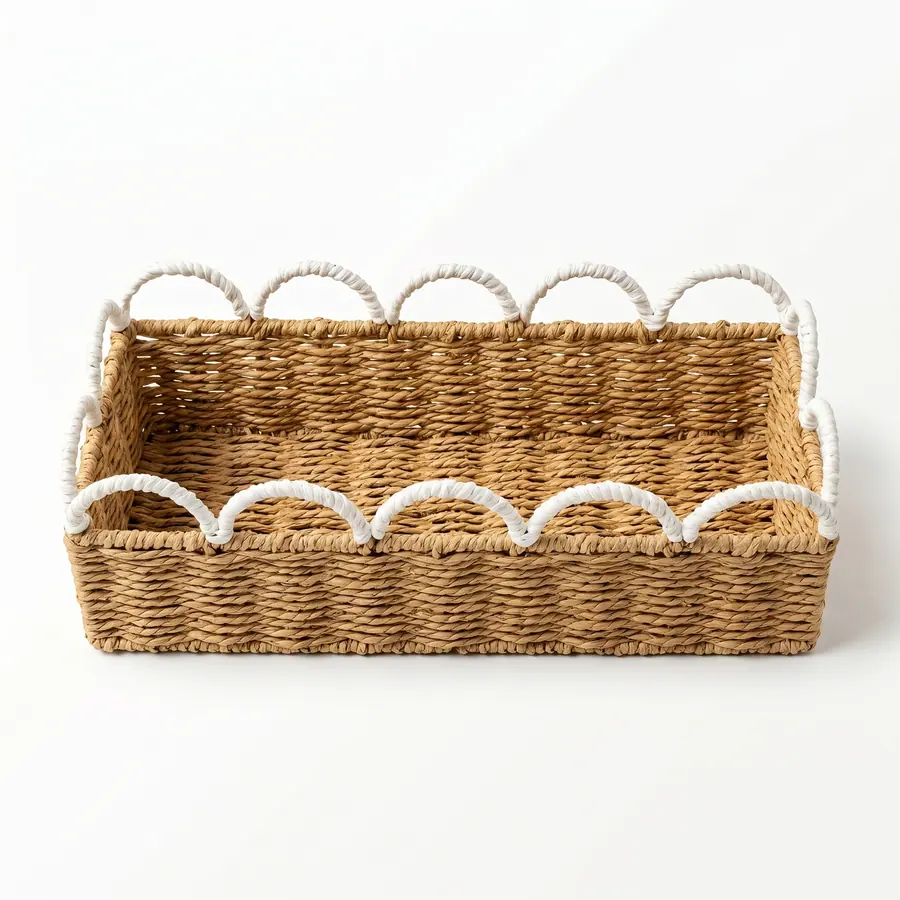
Choose OEM when the buyer can issue a controlled product specification and wants a supplier to manufacture against it. Choose ODM when the buyer has a category goal, moodboard, price position, or use case but needs the supplier to propose a workable product direction. Neither route is automatically faster, cheaper, or better. The right route is the one that matches how many product decisions are already made and who will own the remaining development work.
For woven baskets, the distinction should be written into the project brief. A reference photo alone does not make a project OEM, and asking a factory for ideas does not transfer every design responsibility to the supplier. Define inputs, deliverables, approval rights, and change control before paying for samples.
Use OEM When the Specification Is the Product Authority
An OEM brief should identify the product at component level: material, frame, weave, rim, base, dimensions, colors, handles, liner, lid, labels, packing, and intended use. It should also define measurement points, sample acceptance criteria, artwork status, quantities, and the commercial basis. The factory may still suggest manufacturability changes, but it should not silently redesign the product.
OEM is a strong fit when a brand has an existing product, technical drawing, approved reference sample, coordinated collection standard, or precise shelf and packaging constraints. It also works for repeat orders when the approved specification is current. The buyer remains responsible for deciding whether a proposed change preserves the product intent.
A weak OEM brief creates false certainty. If dimensions are approximate, the material is unknown, and the only reference hides the base and handle attachment, the project still contains development work. Mark those gaps instead of treating them as fixed.
Use ODM When the Supplier Must Develop the Direction
An ODM brief begins with boundaries rather than a finished construction. Provide the use case, target customer context, target retail position, preferred material family, approximate size, visual references, required features, quantity range, packing route, prohibited features, and launch window. Ask for a defined number of concepts and state what each concept submission must contain.
Useful ODM deliverables can include annotated concept images, a preliminary construction description, target dimensions, material and color proposals, expected sampling route, quotation assumptions, and unresolved questions. The buyer should decide whether the supplier may adapt an existing platform or must create a materially different design.
ODM does not mean approve by appearance only. Before sampling, convert the selected concept into a revision-controlled specification. Otherwise, the buyer may approve a picture while the sample room interprets hidden details independently.
Compare the Routes at the Decision Gates
| Decision area | OEM route | ODM route |
|---|---|---|
| Starting input | Buyer specification or approved reference | Use case, range brief, moodboard, and constraints |
| Supplier role | Feasibility review and manufacture | Concept proposal plus development and manufacture |
| Buyer workload | Prepare and maintain detailed inputs | Evaluate concepts and close open specifications |
| Main early risk | Missing or contradictory specification | Vague concept scope and uncontrolled iteration |
| First approval | Feasibility exceptions to buyer brief | Selected concept and development direction |
| Production authority | Approved specification and sample | Specification created from approved concept and sample |
A hybrid route is possible. A buyer may fix size and brand language while asking the supplier to propose weave, handle, or nesting solutions. Label every fixed element and every supplier-development element. Calling the whole project OEM or ODM is less important than assigning each decision.
Define Design Ownership and Reuse Before Sampling
Do not assume that paying a sample fee automatically assigns drawings, tooling, patterns, photography, or exclusivity. Record who owns buyer-supplied materials, supplier-created concepts, final drawings, physical samples, custom tooling, and approved artwork. Also record whether either party may reuse unselected concepts, generic construction knowledge, or project-specific combinations.
If confidentiality, exclusivity, territory, or design registration matters, obtain appropriate contract advice for the relevant jurisdictions. This article cannot establish legal ownership terms. Its sourcing purpose is to surface the questions before development value is created.
Use version numbers on concepts and specifications. Approval of concept C2 should not be confused with approval of sample S1 or production specification P1. Each stage needs a dated record and named approver.
Scope the Sample and Revision Process
OEM sampling tests whether the supplier can execute the buyer's specification. ODM sampling tests both the selected concept and the emerging specification. The fee, revision allowance, material availability, approval evidence, and courier arrangement may therefore differ by project.
Before payment, write what the first sample includes, what may remain provisional, how comments will be submitted, what counts as a revision, and when a change becomes a new development. The guide to sample-fee confirmation covers these commercial boundaries. Then use the custom sample timeline to schedule feasibility, first sample, revision, packaging, and production release.
Do not set an unsupported universal number of revisions. Complex changes to material, frame, dimensions, or packing may require a different scope from a color or label correction.
Control Cost and MOQ Without Mixing the Routes
Compare OEM and ODM offers on the same cost headings: concept or engineering work, sample fees, tooling, unit price, custom components, packaging development, courier, inspection support, and delivery basis. ODM development cost may be shown separately or handled under project-specific terms; ask the supplier to state the method rather than assuming it is free.
MOQ must also be tied to the selected construction and SKU plan. A supplier-led concept using available components may have a different quantity basis from a buyer design requiring custom materials, but no universal outcome follows from the route label. Review the handmade basket MOQ drivers after the concept and construction are clear.
When requesting prices, send a controlled package through the RFQ form and require every alternative to identify its specification and scope.
Build One Approval Record for Production
Whichever route is chosen, production should not start from a moodboard, an email thread, or an unlabeled sample. Create one approved package containing:
- product purpose and SKU identity;
- material, construction, dimensions, and component colors;
- handle, liner, lid, label, and artwork details;
- measurement and visual acceptance points;
- approved sample identity and dated photographs;
- retail and export packing specifications;
- approved exceptions and prohibited substitutions;
- order quantities and commercial quotation revision;
- change authority and escalation contacts.
The OEM/ODM service path is the commercial next step for discussing development responsibilities. The package should evolve from concept to production authority without losing the decision history.
Choose by Readiness, Not by Label
Use OEM if the buyer can answer what must be made and how approval will be judged. Use ODM if the buyer can define the commercial and user problem but needs structured product proposals. Use a hybrid when some components are fixed and others genuinely need supplier input.
Before choosing, ask five questions: Is there a complete specification? Which decisions remain open? What exactly must the supplier deliver before sampling? Who approves and owns each result? What record will authorize production? If those answers are clear, the route supports accountable development. If they are not, changing the label from OEM to ODM will not remove the ambiguity.
Delivery terms belong in the final quotation, not in the development label. The International Chamber of Commerce Incoterms explanation notes that the rules clarify delivery tasks, costs, and risks. Confirm the selected rule and named place separately from design scope. That separation keeps product responsibility, commercial cost, and delivery responsibility visible from the first concept to the first order.