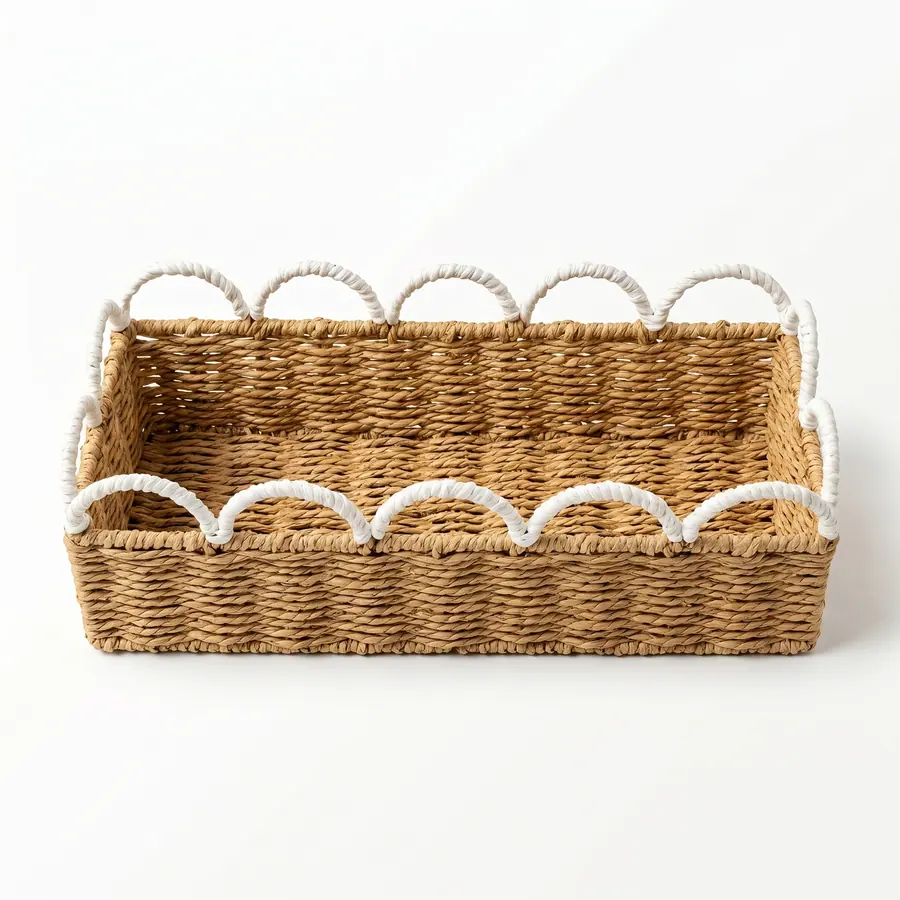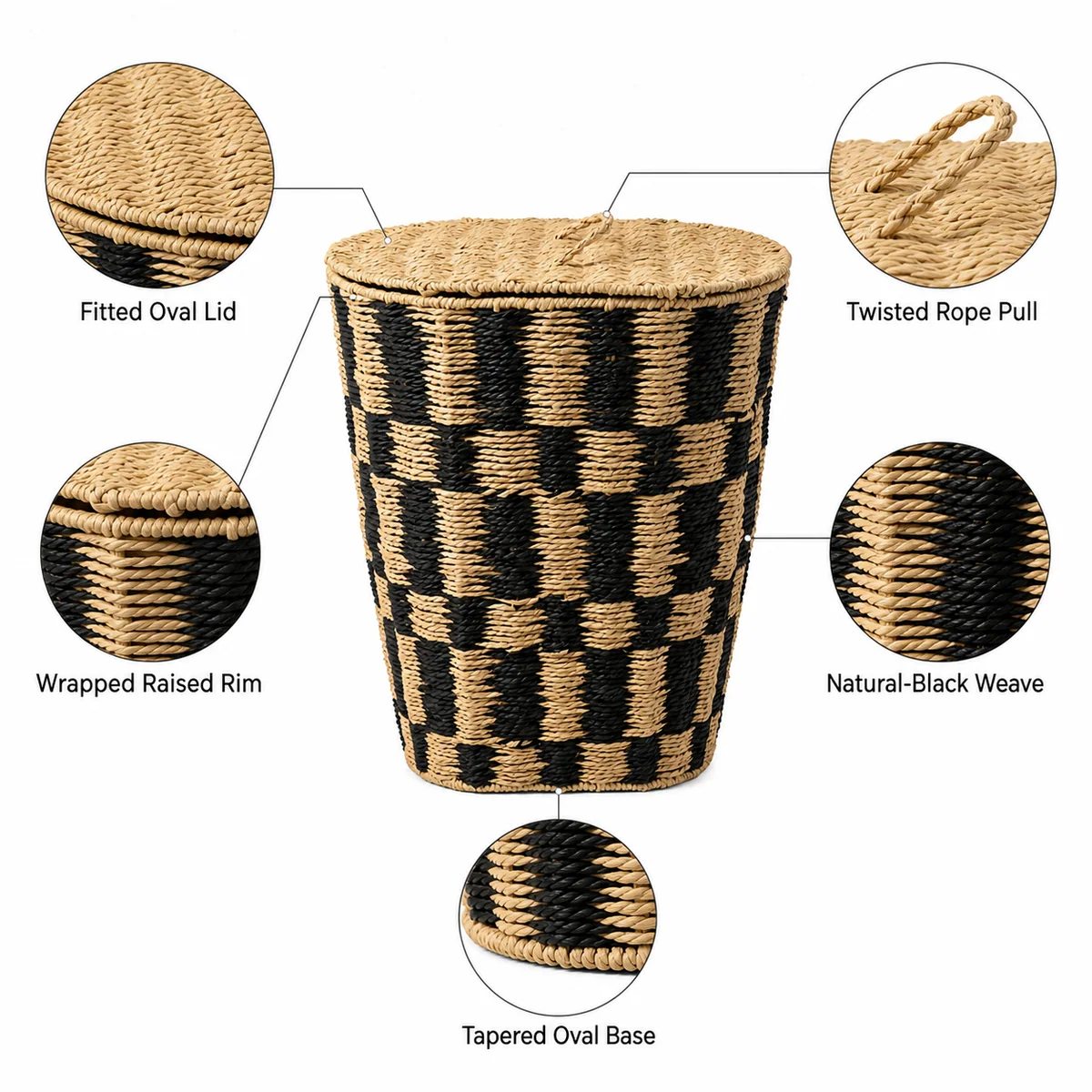
A wholesale laundry hamper program should be sourced from a controlled brief, not from a single lifestyle image. The buyer needs to define the use case, material direction, dimensions, liner and lid requirements, handle expectations, packing route, inspection evidence, and quotation terms before comparing suppliers. When those inputs are missing, a factory can only quote assumptions, and the lowest price may represent a different hamper, a different carton, or a different approval scope.
This guide follows the program from brief through shipment. It is written for importers, wholesalers, and private-label buyers of woven laundry hampers. It does not assign one universal MOQ, lead time, tolerance, capacity, test result, or compliance status. Those decisions must be confirmed for the actual product, market, quantity, sample, and contract.
1. Start with the retail and use-case brief
Write the business purpose before asking for a price. A hamper for a bathroom corner, bedroom floor, closet system, student dorm, ecommerce bundle, or coordinated storage collection may need different dimensions, handles, lids, liners, colors, and packing. State the selling channel, target price architecture if relevant, expected contents for review, product position in the collection, and whether the order is for one hero SKU or several related sizes.
The brief should also separate must-have features from open questions. A must-have may be a lid, removable liner, specific color, handle style, barcode position, or carton label. An open question may be whether paper rope, water hyacinth, seagrass, or another woven material best fits the look and packing plan. Marking uncertainty is better than hiding it; the supplier can then quote a base option and alternatives.
Use the laundry baskets category to collect shape and material references, then convert the selected references into order-specific requirements. A category page is a starting point, not a purchase specification.
2. Choose material and construction for the actual function
Laundry hampers are larger and more frequently handled than many small storage baskets, so the construction discussion should cover more than appearance. Define the woven material, frame or support structure, rim treatment, base, lid, handle method, liner, label placement, and expected handling scenario. If the product must be carried with contents, the buyer should define the check method and acceptance criterion rather than relying on a general strength claim.
Paper rope can support many visual directions, including open vertical looks, checker patterns, color-blocked details, and fabric-lined designs. Natural woven materials can have visual variation that needs approval language. A supplier recommendation should identify which parts of the proposed construction are fixed and which parts can change without resampling.
The open-weave versus wide-checker hamper guide is useful when the buyer is comparing two paper rope visual directions. For broader custom work, the OEM and ODM page helps frame which inputs the buyer should provide before development.
3. Define dimensions, capacity expectations, and shape criteria
A hamper brief should list outside dimensions and usable inside dimensions. For round products, include top diameter, base diameter, height, opening size, lid overlap, and handle opening where relevant. For oval or rectangular products, include length, width, height, corner radius, base footprint, lid fit, and liner drop. For nested sets, record the dimensions of every piece and the clearance needed for nesting and removal.
Avoid vague capacity language unless the buyer defines how it will be assessed. A marketing volume, a household-use expectation, and a carton-efficiency target are different questions. If capacity matters, decide the review method before sampling and record the result as project evidence, not as a universal product claim.
Shape criteria deserve written language. Decide whether rim waviness, leaning walls, rocking base, handle asymmetry, or lid gap is critical for the retail plan. Handmade woven products can be controlled, but they still need product-specific measurement points and acceptance ranges.
4. Specify liners, lids, handles, and branding together
Liners, lids, handles, and branding often interact. A removable liner may cover the inside wall, soften the opening, hide the weave, or add bulk in the carton. A lid may require a straighter rim and a defined overlap. A handle may be decorative, load-bearing, or both, but the buyer must define how that expectation will be checked. A label may need a clean woven area, a sewn patch, a hangtag, or a carton-only mark.
For liners, state fabric direction, color, height, seam location, attachment method, tie length if ties are used, care wording responsibility, and whether the liner is removable. The fabric liner specification guide covers those details in depth. Do not leave the liner until the end of sampling because it can change fit, appearance, packing, and cost.
Branding files should be final or clearly marked as draft. Provide artwork, barcode data, SKU stickers, hangtag content, country-of-origin wording if applicable, and carton marks. Confirm who owns legal wording and market-specific labeling decisions.
5. Build a sampling path with decision gates
Sampling should answer feasibility, appearance, fit, function, and packing questions in sequence. A first sample may confirm construction direction. A revised sample may confirm corrected dimensions, liner, lid, handle, color, and labeling. A pre-production sample should represent the approved product and packing plan. Skipping these distinctions can push unresolved decisions into production.
Each sample review should include dated photos, annotated measurements, color references, liner and lid notes, handle-root photos, label placement, and packing observations. Use clear outcomes: approved, approved with stated corrections, or revise and resubmit. If the buyer approves with corrections, record how those corrections will be verified before production.
The sample development guide gives a practical framework for moving from idea to approved sample. Keep the latest specification, sample photos, and supplier responses in the same record so purchasing, merchandising, QC, and packing teams do not work from different versions.
6. Quote MOQ, price, and timing only after the scope is stable
MOQ and price can change when the buyer changes material, color, size, liner, lid, handle, label, packaging, or assortment. Ask the supplier which variable drives the quoted quantity and whether the quantity applies per style, color, size, set, or total program. If the target quantity is difficult, request specific alternatives such as fewer colors, shared material, a simplified liner, or a revised carton arrangement.
A comparable quote should state currency, unit or set definition, included packing, sample or development charges if any, payment terms, quotation validity, timing start point, requested delivery term, named place or port, inspection responsibility, and exclusions. Do not treat a one-line price as a final offer when it omits labels, inner packing, carton marks, or testing responsibilities.
The International Chamber of Commerce overview of Incoterms rules explains that those delivery rules allocate tasks, costs, and risks. The buyer still needs to write the selected rule with a named place in the purchase documents.
7. Design retail packing and export cartons before production
Laundry hampers take up carton space, and packing can affect shape after arrival. Decide whether products nest, whether lids are attached or protected separately, whether liners are installed or folded, whether handles need supports, and whether the selling unit needs an inner bag, belly band, insert, or box. Ask for a proposed pack-out before approving bulk production.
The packing table should include pieces per carton, orientation, nesting order, protection materials, carton dimensions, net weight, gross weight, marks, barcode or SKU label placement, and assortment rules. If ecommerce parcel handling is part of the route, define the needed checks separately from standard export-carton handling.
The buyer should also decide whether humidity control, abrasion checks, carton compression review, or shape-recovery observations are needed. These are not default promises. They become useful only when the method, sample basis, acceptance criterion, and responsible party are written.
8. Tie QC evidence to the approved specification
QC evidence should prove that defined checkpoints were reviewed. Useful records may include material close-ups, full-product photos, top and base measurement photos, liner position, lid fit, handle-root detail, color comparison, label placement, barcode view, packing stages, carton marks, and selected sealed cartons. The checklist should map each checkpoint to an acceptance rule.
The buyer should define defect categories for the exact order. A broken handle, missing label, wrong carton mark, severe shape distortion, incorrect liner color, or unacceptable lid gap may not have the same severity. Write the categories before inspection, not after a dispute appears.
The factory and quality-control overview can support the inspection conversation. The order-specific specification, approved sample, and written inspection plan should control shipment release.
9. Prepare shipment release documents
Before shipment, gather the approved quote, latest specification, approved sample record, final artwork, carton marks, packing data, inspection evidence, and commercial documents required by the selected delivery term. Check that the shipped unit matches the quoted unit: one piece, set, color assortment, or mixed carton.
If a deviation appears, decide who can approve it and what evidence is required after correction. Some deviations can be corrected through rework or replacement. Others may require buyer approval, revised labels, new packing, or a shipment hold. This escalation path should be written before production is packed.
When the program is ready, send the final inquiry or repeat-order update through the structured RFQ form. A complete sourcing record makes the first order easier to execute and gives the next reorder a clearer starting point.