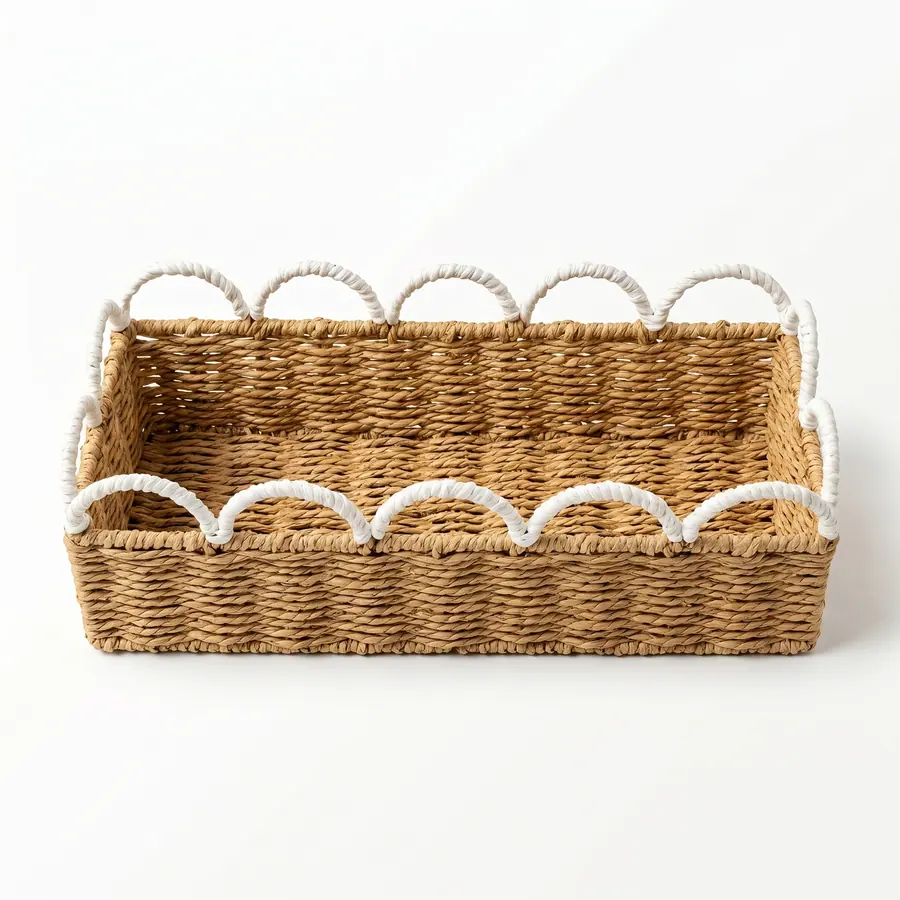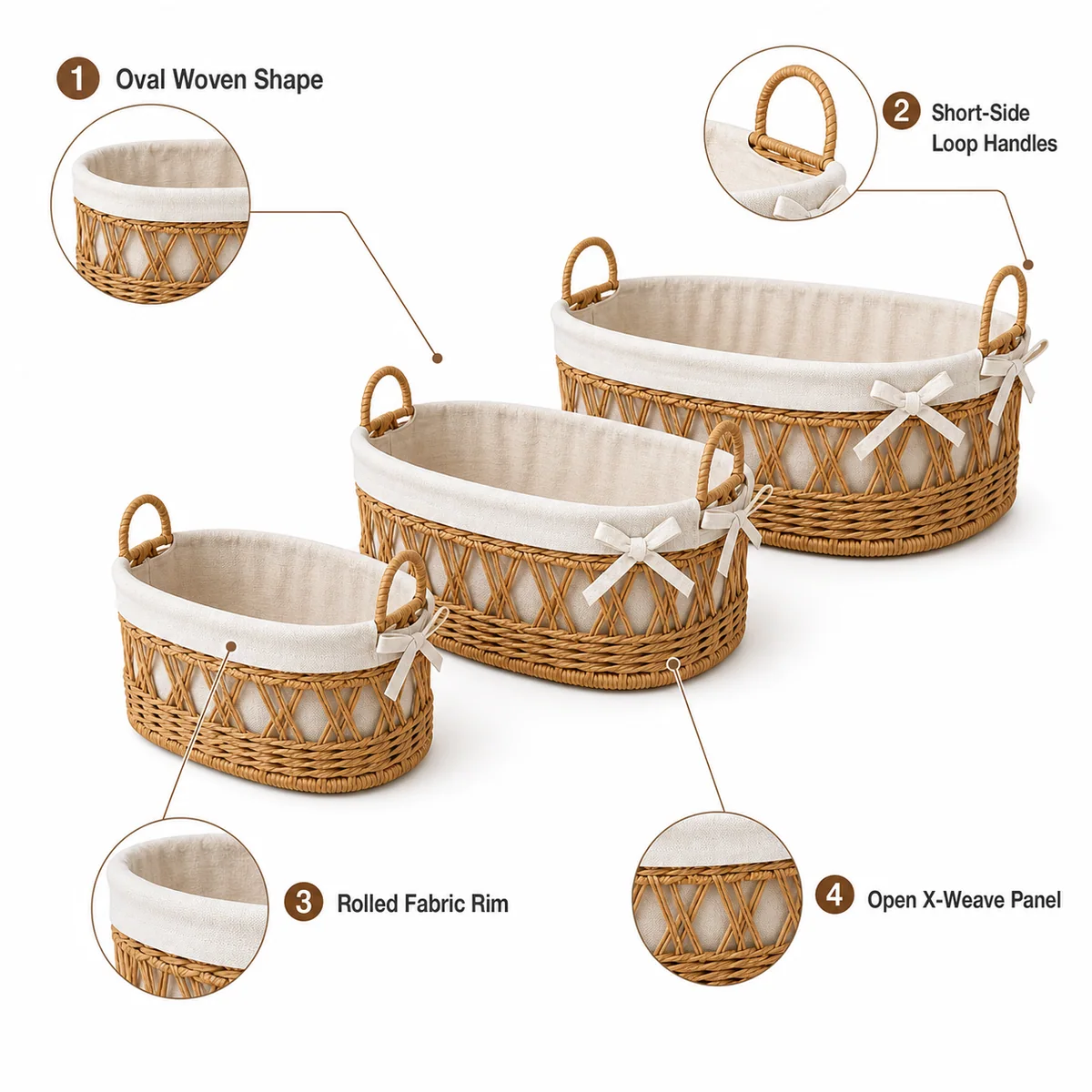
A fabric liner should be specified as a functional component of the woven basket, not as a late decoration. The liner affects inside dimensions, rim appearance, color balance, packing volume, sample approval, care wording, and the way a consumer handles the product. Buyers should define fit, attachment, fabric direction, color, seams, removability, label position, care responsibility, and inspection evidence before approving the basket sample.
This guide is for importers, wholesalers, and private-label teams sourcing woven storage baskets with fabric liners. It does not claim that one fabric, seam, or attachment method fits every product. The right answer depends on basket material, size, use case, destination, retail packaging, and buyer-defined care or compliance requirements.
1. Decide what job the liner must perform
Start by naming the liner's purpose. It may soften the inside touch, cover an open weave, create a color accent, protect the woven body from direct contact with contents, support a private-label look, or make the basket feel more finished at retail. These purposes lead to different specifications. A liner that hides an open weave may need a different height from a liner that only folds over the rim for decoration.
State the intended use and contents used for sample review. A desktop basket, shelf bin, laundry hamper, nursery organizer, and gift basket do not need the same liner fit. If the liner is expected to be removed, washed, tied, buttoned, or left in place during packing, those decisions should be made before the sample is sewn.
For custom programs, connect the liner decision to the broader development route on the OEM and ODM page. The supplier needs the basket body, liner, label, and packing requirements at the same time because each can affect the others.
2. Specify fabric direction without inventing performance claims
A fabric description should include fiber or fabric direction if known, color reference, weight or hand-feel target if the buyer has one, weave or print direction, lining side, seam finish, and approved sample reference. If the buyer does not know the exact textile specification, the RFQ should say that supplier recommendations are requested and must be approved through samples.
Avoid unsupported statements such as shrink-proof, washable, stain-resistant, flame-retardant, sustainable, or compliant unless the buyer supplies the required method and verified evidence for the actual fabric and product. If care performance matters, define the required care wording, test responsibility, sample basis, and acceptance result with qualified resources.
Official regulators can be relevant when a buyer sells into a specific market. For example, the U.S. Consumer Product Safety Commission textile flammability regulation page is a primary source for U.S. textile flammability business guidance. That does not mean every basket liner is automatically in scope; the importer must confirm the product category, market, and applicable requirements.
3. Control liner fit with measurement points
Fit should be measured, not judged only by appearance. Define the basket's inside length, width, diameter, height, rim thickness, corner radius, and taper. Then define the liner drop, fold-over height, seam allowance, bottom panel size, and opening position. For round or oval baskets, identify how the liner should sit around curves. For rectangular baskets, identify how corners should be shaped or pleated.
A removable liner needs clearance so it can be inserted and removed without distorting the basket. A fixed liner needs an attachment plan that does not pull the rim out of shape. A fold-over liner needs a visible height that looks intentional from the front, side, and top. If the liner covers handles or interferes with a lid, revise the design before approving the sample.
Use a sample table to make fit decisions visible:
| Fit area | Buyer decision | Evidence to request |
|---|---|---|
| Liner height | Inside-only, fold-over, or full-height visible liner | Front, side, and top sample photos |
| Bottom fit | Flat, boxed, gathered, or loose bottom | Inside photo with corners visible |
| Rim relationship | Hidden edge, fold-over edge, tie points, or stitched edge | Close-up of rim and attachment |
| Removability | Fixed, removable, or removable only for sample review | Photo showing installation and removal path |
| Lid clearance | No lid, lid over liner, or liner below lid seat | Closed-lid side view |
4. Choose attachment before confirming the basket body
Attachment method affects both the liner and the woven body. Common decisions include loose drop-in liner, tie-on liner, buttoned liner, elasticized liner, stitched liner, hook-and-loop points, or a removable bag construction. Each method changes the look, labor, repair risk, packing bulk, and inspection points. The buyer should choose the simplest method that meets the product purpose.
For tie-on liners, define tie material, length, width, position, quantity, knot or bow appearance, and whether ties should be visible outside the basket. For stitched liners, define stitch route, thread color, edge finish, and whether stitching may show on the exterior. For removable bag liners, define how the bag bottom sits and whether it must stand upright when empty.
If the liner is part of a laundry hamper, compare it with the broader wholesale laundry hamper sourcing guide. A hamper liner can influence handle access, lid closure, carton height, and final retail photography.
5. Approve color, seams, and visible appearance
Color approval should name the reference and the component being compared. A white liner, natural basket, and printed label can shift visually under different lighting. The buyer should decide whether the liner should match the basket, contrast with it, or support a collection color story. Record approved sample photos and any acceptable color variation language.
Seams and edges matter because liners are handled closely. Define seam placement, seam allowance, visible stitch length if relevant, loose-thread treatment, corner shaping, fold-over symmetry, label placement, and whether raw edges are allowed. A liner that looks acceptable empty may pull or wrinkle when typical contents are placed inside, so the sample review should include contents chosen by the buyer.
If the product is sold online, request photos that show the liner from front, top, inside, and detail angles. The image should not hide construction issues with styling. The buyer needs enough evidence to approve the liner and to write accurate product content later.
6. Write care wording and labeling responsibility into the RFQ
Care wording is not a decoration choice. It affects labels, instructions, customer service, and sometimes market compliance. Decide whether the liner has a sewn care label, hangtag wording, package insert, or online-only care statement. State who writes the wording, who reviews it, and whether any testing or legal review is required for the destination market.
Do not ask the supplier to invent market claims without evidence. If the buyer wants washable, wipeable, recycled, organic, flame-resistant, or child-safe language, the buyer must identify the applicable standard, test method, documentation, and approval owner. The supplier can help review feasibility, but the final claim should be supported before it appears on product labels or ecommerce pages.
For U.S. product discussions, the CPSC textile guidance is an official source to consult when textile flammability questions may be relevant. For EU product safety planning, the European Commission General Product Safety Regulation page is an official source for general product safety rules. Applicability still depends on product type and market route.
7. Include liner bulk in packing and carton planning
A liner can change carton efficiency even when the basket dimensions stay the same. Fold-over fabric adds thickness at the rim. Ties can tangle or leave pressure marks. Removable liners may need to be folded, bagged, inserted, or packed separately. Printed or light-colored fabric may need protection from abrasion or transfer during nesting.
Ask the supplier to show the proposed pack-out with the liner installed or packed as intended. The record should include orientation, nesting order, separators, inner bags, label protection, carton dimensions, net weight, gross weight, and any assortment rules. If the packing changes after sample approval, check whether the liner appearance and basket shape still match the approved record.
The structured RFQ form should receive packing requirements together with liner decisions. Splitting those decisions across separate emails increases the chance that the sample room and packing team work from different assumptions.
8. Inspect liner evidence at sample and shipment stages
The sample checklist should include fabric reference, color, liner height, bottom fit, rim fold, attachment points, seam quality, tie position, label position, removability, lid clearance, and packed appearance. Photograph the liner installed, partially lifted, and packed. For fixed liners, include close-ups of attachment points. For removable liners, show how the liner comes out and goes back in.
At shipment stage, the QC evidence should match the approved specification. Useful records include full basket photos, inside liner photos, seam and tie close-ups, color comparison, label view, packing stages, carton marks, and any buyer-defined check results. If the buyer requires care-related or regulatory testing, the method, responsibility, and acceptance result should be documented before production.
The factory and quality-control overview can help structure the inspection conversation. It should not replace the product-specific liner specification.
9. Send a liner-ready development brief
Before asking for a final quote, send one brief that includes basket reference, material direction, inside dimensions, liner purpose, fabric direction, color reference, fit method, attachment method, label and care wording, packing plan, destination market, quantity by SKU, sample approval path, and open questions. Require the supplier to mark assumptions and exceptions.
A fabric liner is a small component with a large effect on the finished basket. When it is specified early, the buyer can compare quotes more fairly, approve samples with better evidence, and avoid late changes that affect packing or labels. When the brief is ready, submit it through the structured RFQ form with the rest of the woven basket program.