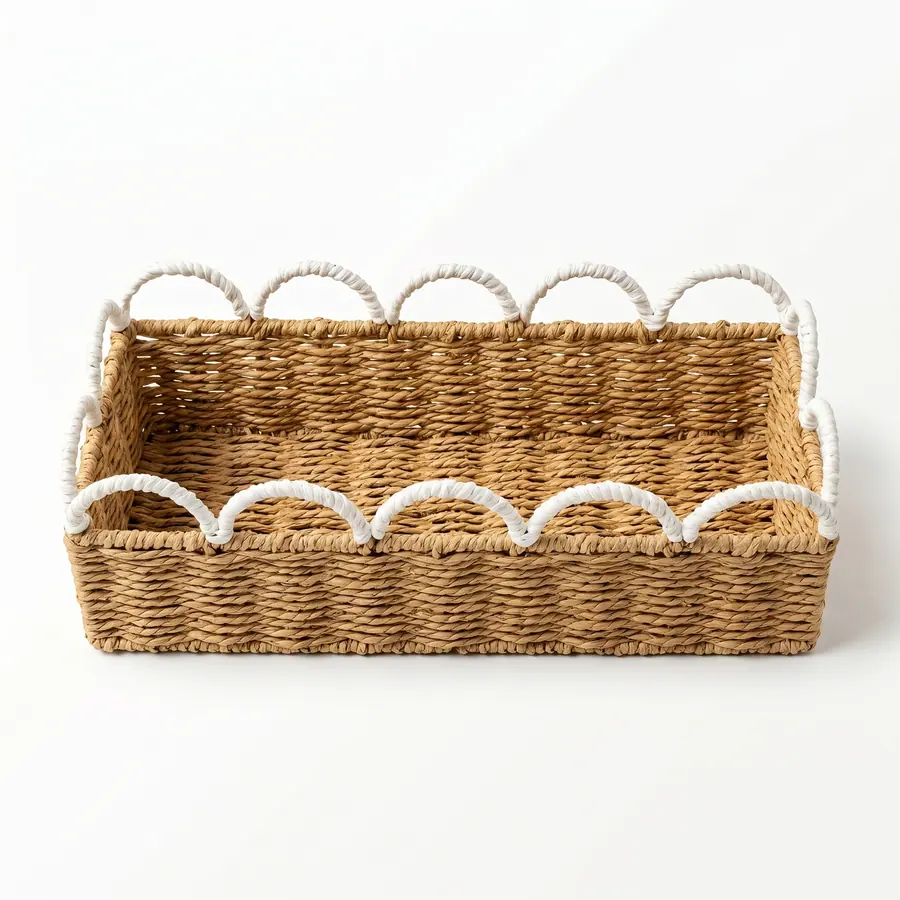
Before booking a paper rope basket pre-shipment inspection, the buyer should send one controlled brief that identifies the order, approved product revision, quantities, inspection location and timing, checks, evidence, contacts, and reporting rules. The brief should separate factory readiness from buyer acceptance, define what the inspector must observe and record, and state how late changes or blocked checks are escalated.
1. Define the inspection decision before choosing a date
Start with the decision the visit must support. A pre-shipment inspection may help a buyer decide whether identified goods can proceed under the purchase agreement, whether a defined issue needs review, or whether specified evidence is still missing. The booking should not begin as a calendar request with the product scope left for the inspector to reconstruct later.
Write the order reference, buyer entity, supplier entity, destination, planned inspection stage, and decision owner at the top of the brief. Then name every included product identity and the revision that controls it. If one purchase order contains several paper rope basket sizes, colors, sets, or packaging versions, list them separately rather than writing only "paper rope baskets."
Browsing the paper rope basket category can help a buyer collect physical references. Once a style enters an order, the inspection file must point to its approved codes and revisions; a website path or photograph alone cannot tell an inspector which commercial version controls.
2. Separate factory QC from the buyer's inspection brief
Factory QC records and a buyer-directed pre-shipment inspection serve adjacent but different controls. Factory teams may record material receipt, in-process work, finishing, packing, or internal release according to the project. The buyer's booking brief defines what an assigned inspector must check, which evidence must appear in the report, and who decides exceptions for that order.
The factory QC guide explains how buyers can agree factory stages and records. Do not copy that entire workflow into an inspection booking. Instead, identify the factory records the inspector must see, the finished goods or cartons that must be available, and the buyer criteria against which observations will be reported.
A supplier statement that goods are "ready" does not replace the buyer's scope. Likewise, the inspection visit does not prove every unit, process, claim, or shipment condition unless the agreed scope and evidence actually cover it. Keep those boundaries visible in the booking.
3. Freeze the identity and approval references
Build the inspection brief from the current purchase order, supplier acknowledgment, approved specification, approved sample record, artwork files, packing instructions, and controlled product-code map. Record each file name or reference, revision, approval date, and owner. Do not attach two conflicting versions without saying which one controls.
Before booking, reconcile the accepted order identities and revisions with the production-release record described in the purchase order acknowledgment guide. When a later change has written approval, add that authorization and mark the former field as superseded instead of leaving both active.
Product code, buyer SKU, color, size or set role, barcode or label identity, and carton identity should reconcile. Similar-looking baskets are not interchangeable merely because they share a material or shape. A three-size lidded set, for example, may require three component identities under one selling-set identity. State that relationship rather than asking the inspector to infer it from nesting.
4. Build one inspection booking table
The table below is a buyer-control template, not a universal inspection standard or a record of JINZHAO CRAFT's process. Adapt every field to the contract, product, destination, and inspection provider.
| Booking field | Controlled entry | Evidence to send | Question it resolves |
|---|---|---|---|
| Order identity | PO, line, supplier acknowledgment, buyer entity | Current commercial references | Which order is being inspected? |
| Product scope | Buyer SKU, supplier code, size, color, set role, revision | Code map and approved specification | Which goods belong in scope? |
| Quantity basis | Ordered, produced, packed, and available quantities by identity | Current quantity statement | What is available for selection? |
| Location | Exact factory or warehouse area and site contact | Address and access notes | Where can the checks occur? |
| Timing | Proposed date, readiness confirmation point, report need date | Agreed booking schedule | When must goods and records be ready? |
| Approval references | Sample ID, specification, artwork, label and pack revision | Controlled files or physical reference plan | What does the inspector compare against? |
| Check scope | Identity, workmanship, dimensions, color direction, components, labels, pack-out or other buyer-defined checks | Inspection instruction | What must be observed or measured? |
| Evidence scope | Required counts, measurement records, photographs, document views and exception notes | Report template or evidence list | What must the report show? |
| Escalation | Buyer, supplier and inspector contacts with decision authority | Contact matrix | Who answers blocked or conflicting instructions? |
| Release boundary | Pass, hold, review or other contract-defined outcome owner | Written decision rule | Who decides what happens after the report? |
Send the table as one revision-controlled file or clearly indexed package. Scattered chat messages can be supporting correspondence, but they should not be the only place where the inspection scope exists.
5. State readiness in inspectable terms
Define readiness by the goods and records needed for the approved scope, not by a vague percentage or a verbal assurance. List which SKU quantities must be finished, which units or cartons must be accessible, whether packaging must be complete for pack-out checks, and which approved samples or files must be present. The buyer or inspection provider should confirm the applicable readiness condition for the actual project.
Ask the supplier to return a dated quantity statement by product identity before the visit. Keep ordered, produced, packed, and available quantities in separate columns. If some goods are at another site, not packed, or not accessible for a required check, record that limitation before the inspector travels.
Also confirm practical access: site address, working area, site contact, permitted hours, required visitor information, availability of measurement tools or agreed references, and any restrictions on photographs or document viewing. These are booking facts, not product acceptance results.
6. Write checks as observable instructions
An instruction such as "check quality" is not enough. Name the feature, reference, method, recording requirement, and decision boundary that the buyer has approved. For dimensions, identify measurement points and the controlling specification. For appearance, identify the approved sample or image set and the allowed comparison conditions. For labels, identify the artwork revision, placement, product identity, and selling-unit level.
The pre-production sample guide shows how to preserve sample identity and open issues. Carry those approved references into the inspection pack, but do not pretend the sample proves attributes it never established. If the buyer has no approved criterion for a feature, mark it as an observation or resolve the gap before booking; do not ask the inspector to invent a tolerance on site.
Keep project-specific sampling instructions explicit. State the buyer's or inspection provider's selection basis, the population to which it applies, and how mixed SKUs, sets, cartons, or locations are handled. This guide does not prescribe an AQL, sample size, test method, or acceptance threshold. Those choices require the applicable contract, risk assessment, and qualified decision owner.
7. Define evidence before the visit
A useful report lets a remote decision owner understand what was checked and what was not. Specify the required product and carton identities in photographs, measurement records with units and points, counts by SKU or set, label and mark views, approved-reference comparisons, and clear exception descriptions. Ask for context views as well as close-ups when location or identity matters.
Evidence should not imply more than it shows. A photograph of one correct lid does not prove all lids fit. A carton-mark photograph does not prove the contents. A quantity statement does not prove finished condition. Link each piece of evidence to its observation and sample identity so the report remains auditable.
JZ10135 is a visible natural honey brown rectangular three-piece lidded paper rope storage box set. Its product page and original image support the visible three-size lidded set identity. They do not establish any inspection booking, readiness, sample selection, result, tolerance, order, MOQ, lead time, performance, or shipment, and none is inferred here.
8. Plan live questions and blocked checks
Give the inspector one contact for instruction questions and one buyer decision owner for exceptions, with an alternate where the project requires it. Define which questions may be clarified without changing the inspection scope and which changes require written buyer approval. A supplier explanation may add context, but it should not silently replace the buyer's approved criterion.
List likely blocked-check scenarios: missing approval file, inaccessible cartons, conflicting SKU labels, unavailable reference sample, incomplete packing, or a feature for which the instruction is ambiguous. Require the report to name the blocked check, affected identity, reason, available evidence, person contacted, and response. Do not convert "not checked" into "pass."
If the inspection date or scope changes, issue a revised booking brief and keep the old revision. This preserves which instructions the inspector actually received. An email that says "please also check this" should be incorporated into the controlled scope when it changes the required evidence or decision.
9. Review the report against the booking pack
When the report arrives, first reconcile its cover information with the booking: order, supplier, site, date, product identities, available quantities, selected identities, and controlling revisions. Then verify that every required check has a recorded result or a clear blocked/not-applicable statement. Missing evidence is a report gap even when the summary looks favorable.
Separate observed product issues, quantity or identity mismatches, blocked checks, document conflicts, and report omissions. The buyer's authorized owner should decide the commercial disposition under the purchase agreement. The inspector's report supplies evidence; it should not silently expand authority beyond the agreed service and decision rules.
If correction or reinspection is required, issue a scoped action list that preserves the original finding and identifies what must be rechecked. Do not overwrite the first report or assume a correction for one SKU applies to other sizes, colors, sets, cartons, or orders.
10. Copy this pre-shipment inspection booking checklist
Before confirming the visit, verify that:
- the inspection decision, order, supplier, site, date, and decision owner are named;
- every included SKU, size, color, set component, label, and carton pattern has a controlled identity;
- current PO, acknowledgment, specification, sample, artwork, packing, and code-map revisions agree;
- ordered, produced, packed, and accessible quantities are recorded separately by identity;
- readiness is stated in inspectable terms for the agreed scope;
- each check names its feature, reference, method or observation basis, and evidence requirement;
- sampling and acceptance rules come from the authorized project instruction, not an assumption;
- required photographs, measurements, counts, document views, and exception notes are listed;
- site access, contacts, live-question authority, blocked-check handling, and report timing are confirmed;
- report review preserves missing checks, exceptions, revisions, and any reinspection scope.
Buyers can send the product list, approved revisions, quantity statement, packaging scope, and requested evidence through the RFQ form when discussing a project. JINZHAO CRAFT should confirm project-specific feasibility and booking inputs; this guide does not promise an inspection service, result, fixed MOQ, sample time, production lead time, capacity, certification, or shipping outcome.
11. Frequently asked questions
Is factory QC the same as a buyer's pre-shipment inspection?
No. Factory QC can include internal material, production, finishing, and packing controls, while a buyer's inspection brief defines the checks, evidence, scope, and decision contacts for a particular order visit. Buyers should connect the records without treating the two controls as interchangeable.
What files should a buyer send with an inspection booking?
Send the current purchase order and acknowledgment, product-code map, approved specification and sample reference, artwork and label files, packing instructions, quantity statement, inspection scope, evidence requirements, site details, contacts, and reporting rules. Identify every controlling revision.
Should the inspector choose tolerances or sampling rules on site?
No. The authorized buyer, contract, or qualified inspection plan should define applicable tolerances, selection rules, sample size, and acceptance criteria before the visit. If a criterion is missing or conflicting, record and escalate the gap instead of inventing a limit during inspection.
How should mixed SKUs or nested sets be described in the booking?
List each buyer SKU and supplier code, size, color, component role, selling-set relationship, ordered quantity, available quantity, and carton identity. State whether selection and reporting apply by component, selling set, SKU, carton pattern, or another approved basis.
What should happen when a required check cannot be completed?
Record the blocked check, affected product identity, reason, available evidence, person contacted, response, and impact on the report. Mark it as blocked or not checked rather than passed, then let the authorized buyer decide whether clarification, additional evidence, correction, or reinspection is required.