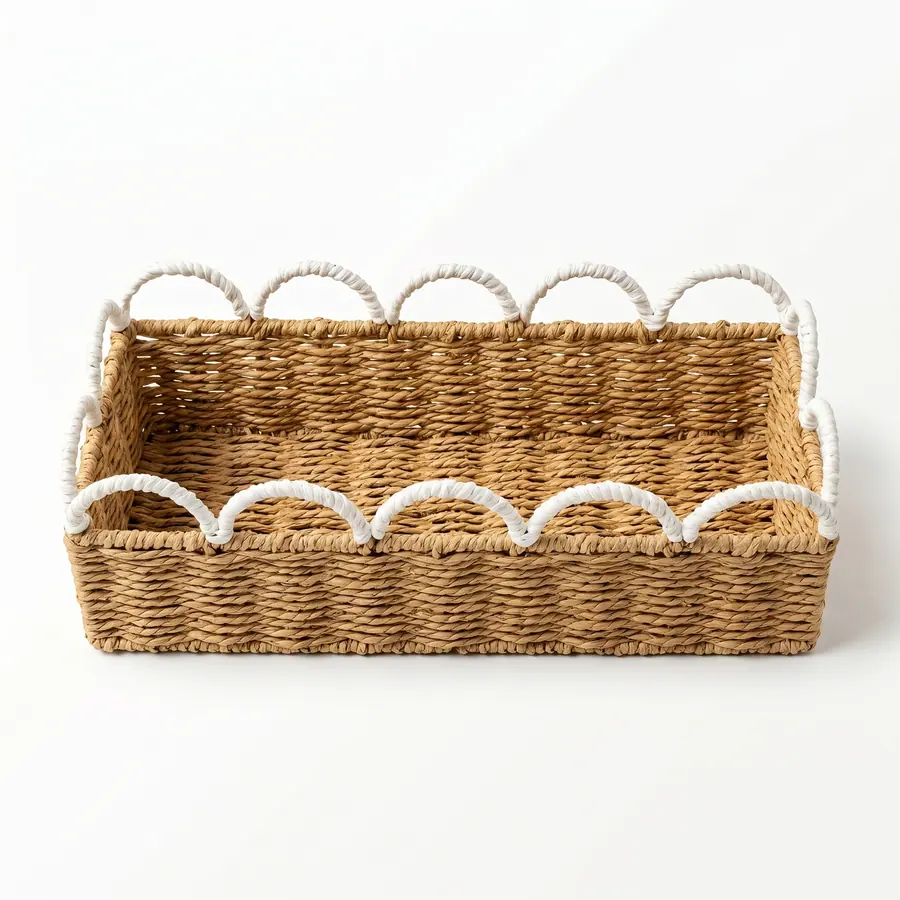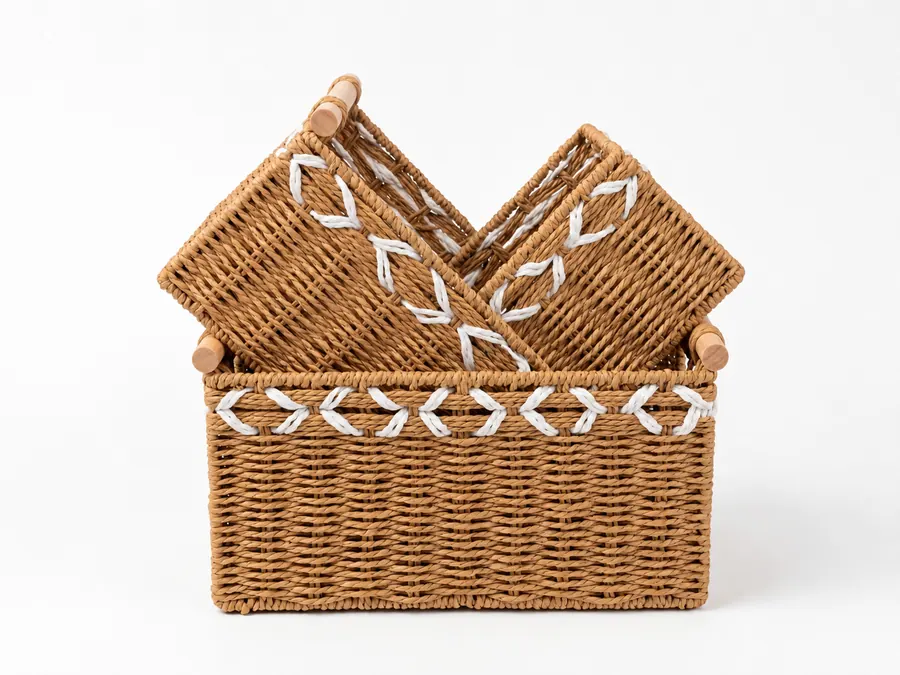
Paper rope is suitable for a storage basket program when the desired appearance can be produced with a defined rope, weave, frame, and finish, and when the buyer is prepared to control shape, use conditions, and packing through a project-specific specification. It should not be selected from a material name or lifestyle image alone. The same visual direction can produce very different results when rope construction, internal support, rim treatment, basket size, or packing changes.
The practical decision is therefore not whether paper rope is generally good or bad. It is whether a particular paper-rope construction can meet a particular retail brief. Buyers should approve the material and structure together, define what the basket is expected to hold, and treat moisture exposure, deformation, abrasion, and color variation as variables to manage rather than assumed properties. The paper rope basket range is useful for identifying visual and construction directions, but the order specification must define the actual product.
1. Start with the program, not the material label
Paper rope can support many storage-basket looks, including natural tones, colored surfaces, contrasting stitches, open or close weaving, and different silhouettes. That breadth is useful when a buyer needs a coordinated collection, but it can also hide important differences. Two baskets described as paper rope may use different rope profiles, frames, bases, rims, handles, or decorative details. Their quotations and production risks are not comparable until those elements are stated.
Begin with the intended location and task. Is the basket for a shelf, wardrobe, desk, nursery display, gift set, or general decorative storage? Will it be lifted regularly, nested for sale, fitted into a fixed cube, or shipped through parcel distribution? Record the outside dimensions and any minimum usable inside dimensions. Identify the surfaces that will remain visible at retail and the features that cannot move, such as a handle opening, label panel, contrast stitch, or lid alignment.
The intended use should also set a boundary. A decorative organizer and a basket expected to carry a specified load are different briefs. If the program has a load, stability, handle, abrasion, or drop requirement, the buyer must define the check method and acceptance rule. The term “storage basket” does not supply that information.
2. Understand what paper rope can offer without overpromising
The material is most useful when buyers value a woven surface, design flexibility, and the ability to coordinate material color with a collection. Those are design opportunities, not established performance results. A buyer still needs to approve the rope sample, weave, frame, and finished basket because the visible effect comes from their combination.
Use a controlled material board rather than a color name alone. The board can show the approved rope, target color or color relationship, twist or profile, sheen, surface character, and any contrasting component. Review it next to the complete sample under the lighting relevant to approval. If several sizes share one color, place them together so the collection is judged as a group.
Paper rope should not automatically be described as heavy-duty, washable, waterproof, or suitable for damp locations. Those words imply performance that must be established for the exact construction and use. If the brief includes regular wet handling, outdoor exposure, a bathroom environment, or cleaning with liquid, pause the material decision and define what evidence would make the use acceptable. A dry decorative storage application may require a different review than a frequently handled utility basket.
3. Specify the construction that creates the basket
A buyer-ready specification separates the visible wrapping material from the structure beneath it. Record the paper rope reference, strand or braid appearance, weave pattern, weave density, internal frame where used, base construction, rim finish, corners, handles, lid, lining, and decorative stitching. Add close photographs of the approved transitions: base to wall, wall to rim, handle opening, seam or end termination, and lining attachment.
The frame deserves special attention because it can influence shape, edge definition, and how the basket responds to handling. Do not assume that a visually similar sample uses the same support. Ask the supplier to identify the proposed construction and to flag any area where the reference image cannot be repeated as drawn. If the basket must fit a shelf or nest into another size, dimensional control and structure should be reviewed together.
Substitution control belongs in this section. State that changes to the rope, frame, weave, base, lining, label, or protective packing require written buyer review before production. If a change affects appearance, fit, use, or packing, define whether a new sample or partial re-approval is required. This turns a material choice into a controlled product definition.
4. Convert “natural appearance” into observable criteria
Words such as natural, handcrafted, warm, or premium are useful for a mood board but weak as acceptance criteria. Translate them into points that can be seen and recorded. These may include the approved color relationship, visible strand profile, weave direction, permitted spacing character, rim level, corner shape, exposed frame, loose ends, surface marks, stitch placement, and symmetry.
Do not attempt to eliminate every visible difference with one vague instruction for perfect consistency. Instead, divide the appearance into three groups: features that must match the approved reference, variations that can be accepted within an agreed visual range, and defects that are not acceptable. Use full-basket views and detail images for each group. A range sample can be more informative than one isolated “golden” view when the product intentionally retains a handmade surface.
Color approval needs its own conditions. Identify the reference system or physical sample, approval lighting, component-to-component relationship, and action when a later material lot appears different. A screen image is not a stable color standard. For repeat orders, retain the approved record and review whether the new material should be compared with the original reference, the latest approved production, or both.
5. Treat shape, load, and handling as separate questions
A basket can look correct and still be unsuitable for its intended routine. Review base stability, wall alignment, rim shape, handle position, nesting clearance, lid fit, and recovery after the agreed packing arrangement. If consumers will lift the basket, state what it will contain and how the lifting check is performed. If it sits inside a shelf, identify critical outside and inside dimensions and exact measurement points.
Avoid importing a tolerance or load number from a different product. Size, frame, weave, handle design, and intended use all affect the appropriate method and acceptance value. The buyer and supplier should agree on these values after feasibility and sample review. The factory and quality-control overview can help organize the discussion, but it does not replace the approved product specification.
A simple decision table keeps the questions distinct:
| Program requirement | What to define | Evidence before order release |
|---|---|---|
| Shelf or cube fit | Outside and usable dimensions, measurement points | Annotated measurements on the approved sample |
| Freestanding shape | Base contact, rim profile, wall and corner criteria | Full views on a flat surface |
| Carrying use | Intended contents, handle construction, check method | Agreed functional record for the sample |
| Nesting | Size sequence, clearance, contact and protection points | Nested and separated sample views |
| Lid or lining | Fit, attachment, alignment and allowable movement | Detail photos and approval comments |
6. Control moisture and surface risk through the actual route
“Keep dry” is directionally useful but incomplete. Map where exposure could occur: material storage, work in process, finished-goods holding, packing, container loading, transit, destination warehousing, retail storage, and consumer use. Then assign preventive actions, inspection points, and escalation rules to the stages relevant to the order.
The buyer should confirm whether a project-specific moisture condition or check is required, who performs it, the instrument or method, the timing, and the acceptance threshold. No universal figure should be assumed for every paper-rope basket. Odor, staining, softening, transfer, or shape change should be evaluated against defined observations and the intended route, not covered by a general promise.
Surface abrasion and compression also require a pack-out review. Nested baskets may contact at rims, corners, handles, or decorative stitching. Separators, sleeves, orientation, carton fill, and closure can change both appearance protection and carton efficiency. Ask for a packing sample or complete pack-out sequence before finalizing the quotation. Inspect the basket after it has spent the agreed period in the proposed pack, not only before packing.
7. Decide whether paper rope is a fit at the sample gate
Use the sample review to make a decision, not merely collect comments. The outcome can be approved, approved with recorded corrections and a verification method, or revise and resubmit. Critical issues such as material identity, dimensions, handle construction, color, artwork, or packing should not remain open behind a general approval email.
Score the sample against the program rather than against an abstract material preference:
- Does the complete construction deliver the intended retail appearance?
- Are the critical dimensions and usable space compatible with the fixture or assortment?
- Is the shape acceptable before and after the proposed nesting and packing?
- Have the intended handling and any functional checks been defined and completed?
- Are color and handmade variation expressed as an executable approval range?
- Are moisture, abrasion, and compression controls appropriate for the route?
- Can a repeat order identify the same approved rope, structure, finish, and packing revision?
If paper rope cannot meet a critical requirement without an uncertain assumption, compare another construction rather than forcing the original label. The focused guide to changing among paper rope, water hyacinth, and cotton rope explains when a substitution should trigger renewed development.
8. Send an RFQ that exposes the remaining risks
The RFQ should request a comparable answer, not invite each supplier to invent a different basket. Include the intended use, dimensions and measurement points, quantity by SKU and color, material reference, weave and frame, rim and base, handle or lid, lining, branding, packing route, and any required checks. Mark each unresolved item as a question and ask the supplier to state assumptions and alternatives separately.
Commercial details should identify currency, quantity basis, included packing, sample or development charges where applicable, payment terms, quote validity, delivery rule and named place, and timing start conditions. The International Chamber of Commerce explains that Incoterms rules clarify tasks, costs, and risks in delivery; they do not define basket quality or material suitability. Keep the commercial rule alongside, but separate from, the product acceptance record.
Before release, ask for the supplier’s proposed specification, sample path, packing arrangement, and exceptions. Submit the completed brief through the structured basket RFQ. Paper rope is a sound direction only when the material, construction, appearance, use, and route are all visible in that package. That is the point at which a buyer can compare options without turning a design preference into an unsupported performance promise.