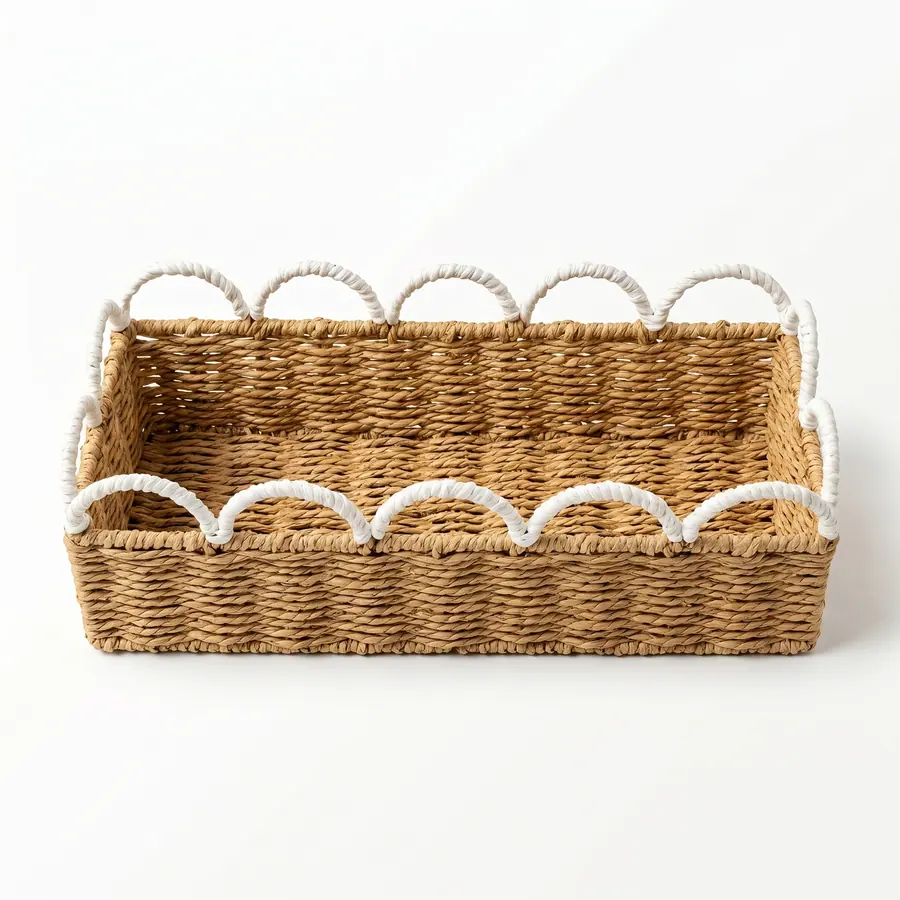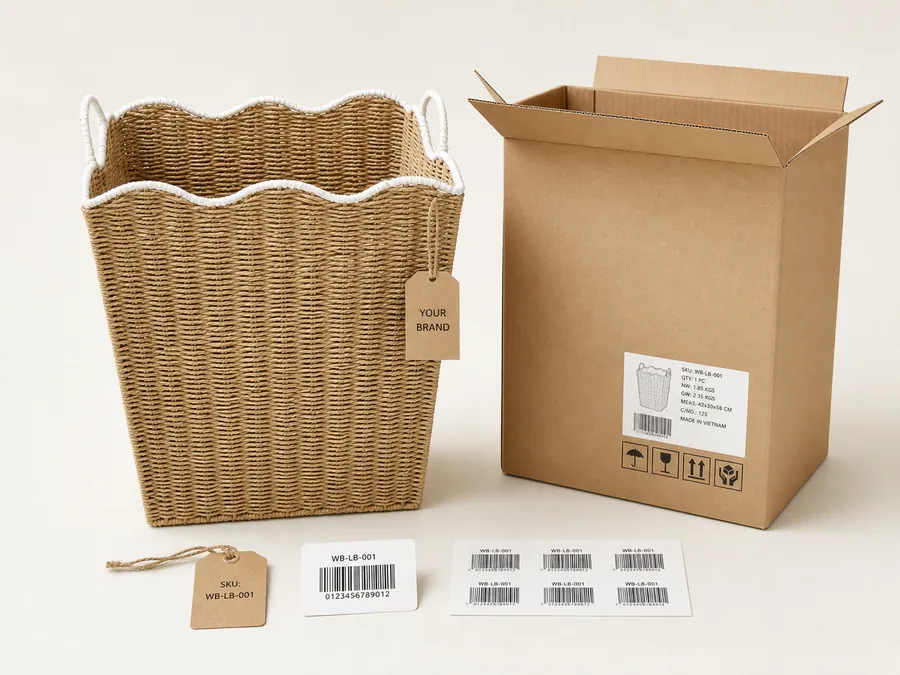
Private-label packaging should be chosen from the selling unit outward. A woven basket can carry a fabric label, hangtag, sticker, belly band, sleeve, insert card, inner box, master carton mark, or a combination of these. The right format is the one that identifies the product clearly, protects the retail presentation, and can be repeated during packing without damaging the basket.
This article focuses on packaging format selection for woven basket orders. It does not promise one universal label material, barcode result, retail compliance outcome, or packing cost. Those points depend on the buyer's brand rules, destination, artwork, product shape, and distribution channel. The goal is to help buyers decide what to specify before requesting an OEM or ODM basket quotation.
1. Define the retail selling unit before choosing decoration
Start by deciding what the shopper or warehouse receives. A single open basket may need a simple hangtag and SKU sticker. A nested set may need a belly band or insert that explains the set composition. A hamper with a liner may need a care label on the textile component and a separate product label on the basket. A gift basket may need an insert card or retail sleeve that stays visible in photography.
The selling unit drives the packaging format. If the product is sold as a set, the label should not make one inner basket look like a separate sellable item unless that is intended. If the basket is photographed for ecommerce, the label should support the hero angle instead of hiding the weave or distorting the rim. If warehouse receiving depends on carton-level identification, master carton marks must be planned alongside retail labels.
Use the same description in the RFQ, sample approval, and packing file: item code, selling unit, included pieces, label format, barcode owner, placement, and pack-out. When those words change, the packaging quote can change too.
2. Compare common private-label formats
There is no single best packaging format for every woven basket. The following table helps narrow the choice without overcomplicating the program.
| Format | Where it fits | Buyer checks before approval |
|---|---|---|
| Sewn or woven label | Fabric liner, rim, handle area, or soft component | Size, color, stitch position, edge comfort, visibility |
| Hangtag | Open baskets, hampers, gift baskets, shelf storage | Attachment point, swing, abrasion, barcode panel, removal |
| Sticker or SKU label | Smooth tag, insert, sleeve, polybag, carton | Adhesion surface, readability, residue risk, position |
| Belly band | Nested sets, shelf baskets, ecommerce presentation | Band length, closure, pressure on rim, set description |
| Insert card | Gift baskets, care information, brand story | Card size, paper weight, placement, language ownership |
| Sleeve or inner bag | Dust protection or retail handling | Fit, ventilation needs, label visibility, packing labor |
| Retail box | Higher presentation or fragile decoration | Box size, window, insert, carton volume, artwork approval |
| Carton mark or case label | Warehouse and shipment identification | PO, SKU, quantity, carton number, destination, barcode data |
The decision should be documented through a labeled sample or pack-out photo. A mockup alone may not show how a hangtag rubs against a rough weave or how a belly band behaves around an oval rim.
3. Match format to basket material and surface
Woven surfaces are not flat paperboard. Paper rope, water hyacinth, seagrass, rattan-like materials, cotton rope, and fabric liners create different attachment choices. A sticker may work on an insert card but not on a textured weave. A sewn label may be appropriate for a liner but not for a rigid rim. A hangtag may be simple, but the string position can mark the product if it is pulled tight during packing.
Specify the attachment point with a photo. Mark whether the label sits on the front, side, bottom, handle, liner, sleeve, or carton. Show the product in the selling orientation so the supplier does not place the label on a surface hidden in retail display. If the basket will nest, check whether labels are protected or crushed between pieces.
Packaging and product development should move together. The sample development guide is useful because packaging often changes after the first physical sample. If the buyer changes a rim, liner, handle, or set composition, the label size and attachment may need to be reviewed again.
4. Control artwork, barcode data, and language ownership
Final artwork should come from the buyer or be approved by the buyer in writing. The file should state dimensions, colors, material, finish, position, print side, language, barcode data, SKU, item description, and revision number. Do not ask the supplier to infer legal wording, recycling claims, country-specific statements, or brand rules from an old reference.
GS1 is an organization that provides barcode and identification standards used for products, cases, cartons, locations, and logistics units. Buyers using GS1 identifiers should confirm data ownership, symbol type, size, quiet zones, print quality expectations, and scan approval with their own retail or logistics requirements. The supplier can place and print the approved code, but the buyer must define what code is correct for the selling unit.
Keep barcode planning connected to the dedicated retail label and barcode guide. In the private-label packaging file, focus on what the factory must execute: which code goes on which label, where it sits, what proof is required, and whether a scan or photo approval is needed before mass production.
5. Check packaging against export carton planning
A label format that looks good on one basket can fail when placed inside a master carton. Hangtags may bend, belly bands may crease, stickers may rub, and inserts may shift. Before approving mass packing, test the selected format inside the proposed carton with the intended nesting direction and protection.
The export carton planning guide explains why pack-out evidence matters. For private-label orders, the trial carton should show labeled products before packing, layer sequence, protected label areas, carton marks, and products after reopening. If a label moves or becomes unreadable, revise the packaging method before carton materials are purchased in quantity.
Ask whether branded packaging changes the quote. Custom labels, printed bands, insert cards, retail boxes, extra labor, artwork proofing, and separate carton marks can affect cost and timing. The quotation should identify what is included, what is excluded, and what approval starts production.
6. Prepare an approval file for OEM and ODM work
Private-label packaging is part of the product record. The approval file should include the basket specification, final artwork, label material, label size, attachment method, placement photo, barcode data source, language owner, packaging sample, carton plan, and approval date. If several sizes or colors share one label design, record whether every SKU was reviewed.
For ODM projects, the factory may propose a format based on available structures or previous development experience. That proposal still needs buyer approval before it becomes the order standard. For OEM projects, the buyer may already have brand rules; the supplier needs those rules early enough to check feasibility and pack-out.
Use OEM and ODM development support to organize the decision path, and send the final packaging package through the RFQ form when pricing or sample development is needed. A clear file prevents the common problem where a buyer approves the basket but leaves the label, barcode, and carton identity unresolved.
7. Use a release checklist before production packing
Before packaging materials are produced or ordered, confirm:
- selling unit and SKU relationship;
- label, tag, band, sleeve, insert, box, and carton mark format;
- final artwork file, revision number, dimensions, colors, and material;
- barcode owner, data, symbol position, and approval method;
- language, care wording, origin wording, and legal responsibility assigned by the buyer;
- product placement photos for every size, color, and set configuration;
- interaction with nesting, inner protection, and export carton plan;
- sample or first packed carton evidence required before mass packing;
- cost, timing, and approval assumptions in the quotation.
If the buyer cannot answer one row, mark it as an open question instead of letting the factory choose silently. Private-label packaging works best when it is practical for the packing team, clear for the warehouse, and visible enough for retail without hiding the woven product selected at the point of sale.