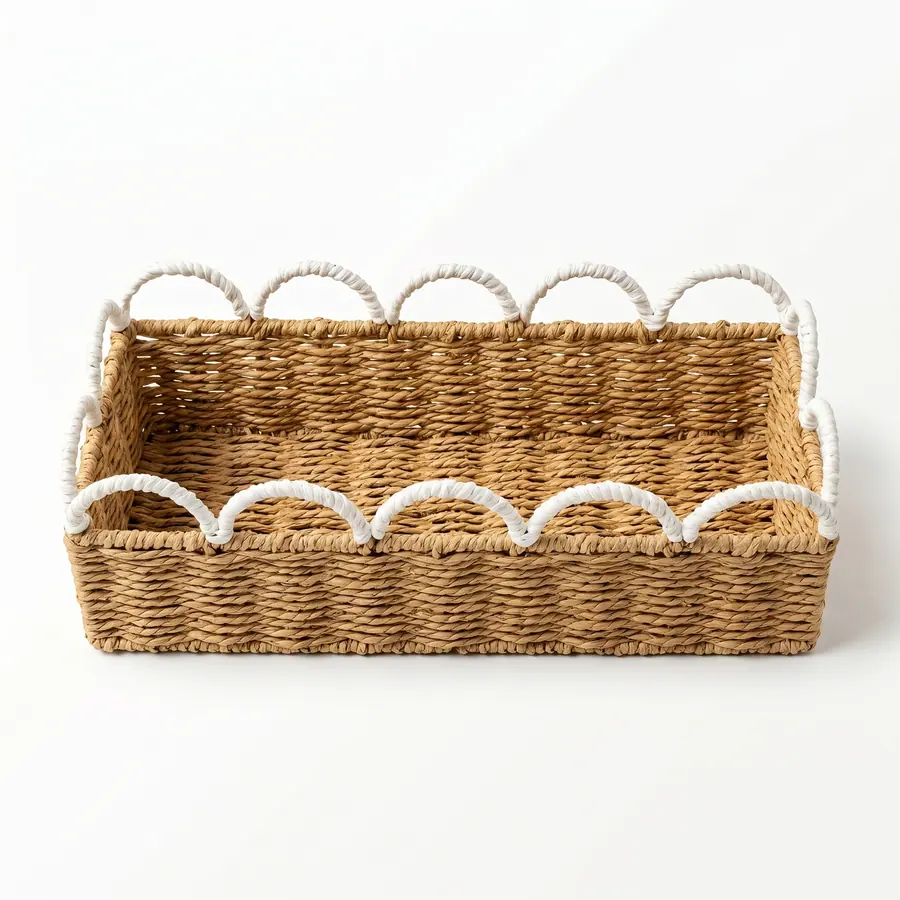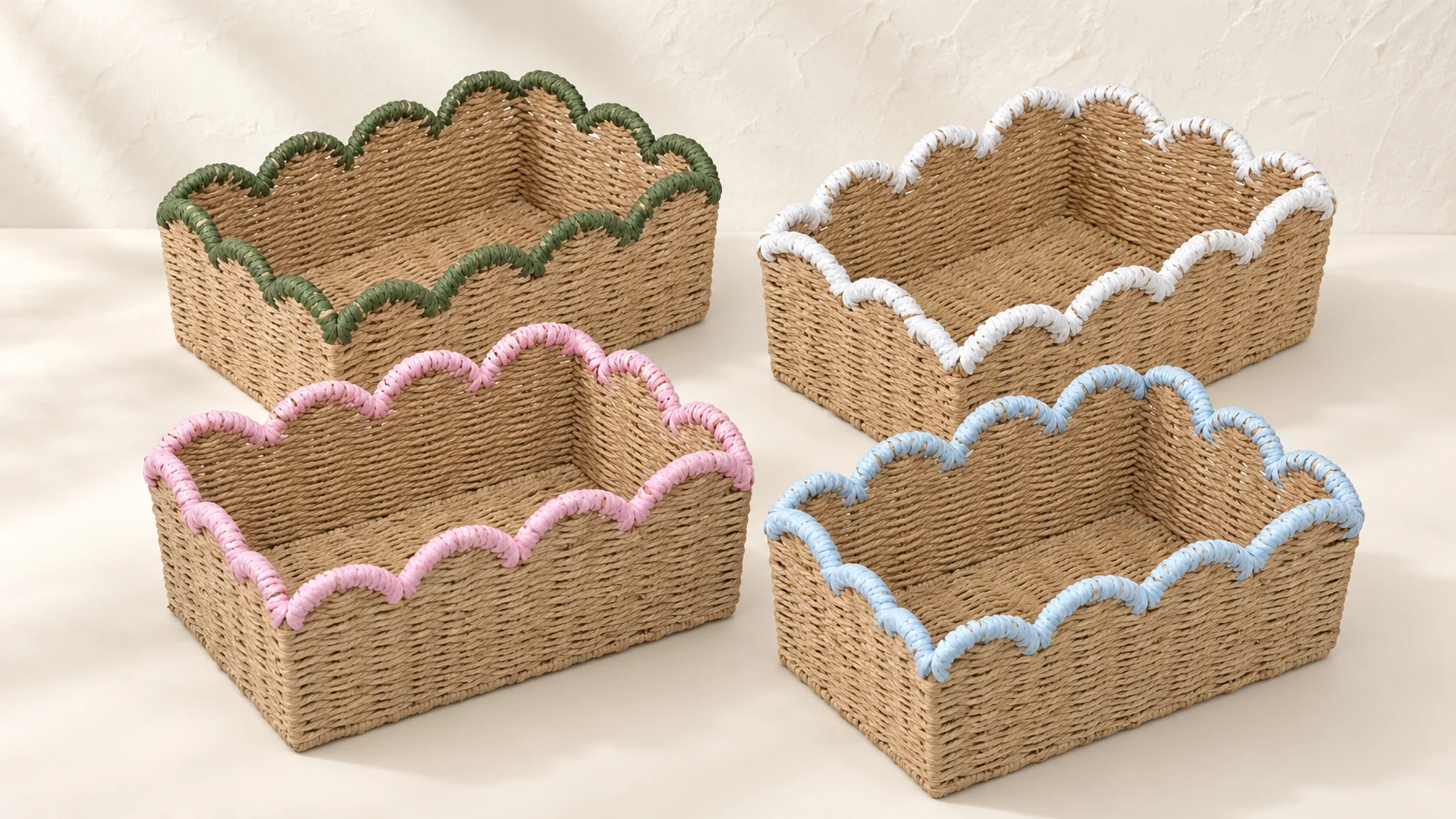
A colored edge changes how a basket sits within a collection. Here, the same natural-colored paper rope body is framed in green, white, pink or light blue. The rectangular shape stays consistent; the scalloped outline gives each version its character.
For a homeware buyer, the useful question is which trim belongs alongside the products already on the shelf—and whether a second color would add a distinct styling option.
This photo study looks at those choices through one design, shown in three nesting sizes.
Images are digitally retouched and composed from JINZHAO CRAFT sample photographs. Use the physical samples to confirm color and construction.
Start with the scalloped outline
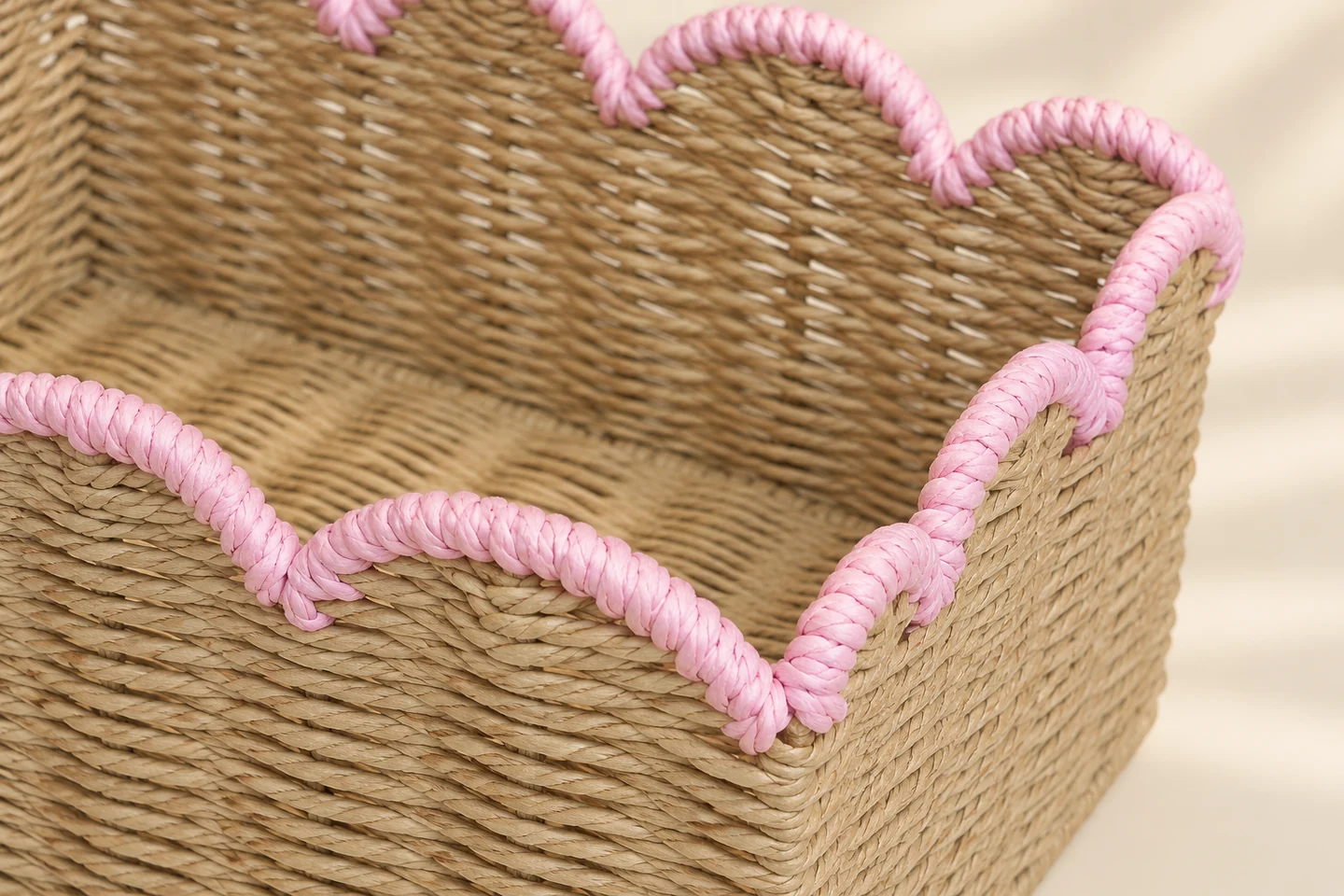 The colored border follows the scalloped outline. Digitally retouched detail from the sample photographs.
The wave-shaped rim is the detail that holds the collection together. Colored trim follows that line around the opening, while the natural-colored woven body provides a consistent background.
Seen from above, the rectangular opening and repeating curves are especially clear. Seen from the side, more of the woven body enters the picture. Both views matter when choosing imagery: a top view explains the outline, while an angled view shows how the color relates to the basket as a whole.
Keep those angles consistent when comparing the four trims. Otherwise, differences in lighting or viewpoint can influence a color choice more than the trim itself.
Four trims, four styling directions
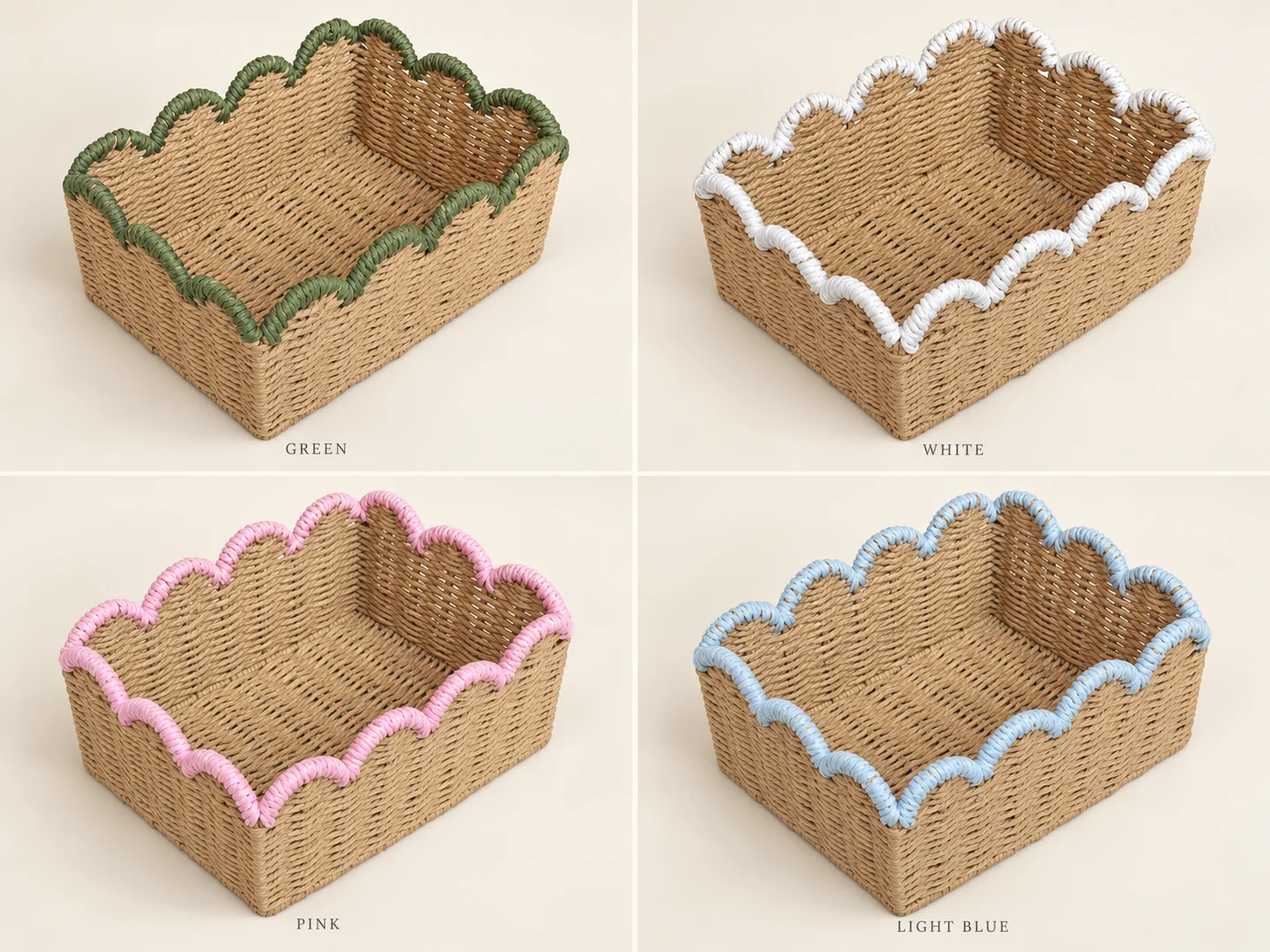 Four sample trim colors, presented together for comparison. Screen colors are a starting point for sample selection.
The following pairings are styling suggestions, rather than claims about customer demand. Use them as starting points, then compare the samples with your own textiles, packaging and display surfaces.
Green: a botanical palette
Green gives the scalloped outline a stronger presence against the natural-colored body. Try it beside muted green textiles, simple foliage arrangements or neutral packaging with a green printed detail.
Repeating the trim color in one nearby item is enough to make the display feel related. A green basket, a coordinated napkin and a plain background let the outline remain visible. Compare the actual greens together: shades that share a name can look quite different side by side.
White: a quiet neutral
White trim creates a light border that can sit comfortably with pale linen, cream ceramics or simple monochrome packaging. It is a useful option to explore when the basket needs to join a display containing several other colors.
Give the rim enough contrast to show its shape. Against a very pale backdrop, a slightly angled view or a natural-toned surface may make the scallops easier to read. The photographed white should still be checked against a sample before matching it to existing products.
Pink: a soft accent
Pink introduces a warmer-looking accent around the opening. Consider it alongside blush tissue, a printed gift sleeve or a textile with a small pink motif.
A restrained arrangement helps buyers see the product clearly: one wrapped gift and one coordinated detail may communicate more than a basket filled with several competing patterns. Keep the color choice tied to the collection's palette and presentation, rather than assigning it to a particular age group or customer demographic.
Light blue: a cooler note
Light blue offers a cooler-looking contrast with the natural-colored weave. Try it with white packaging, pale blue textiles or a small-scale stripe that repeats the trim color.
The combination can give a display a clear color connection without requiring every object to be blue. Keep enough space around the basket for the wave-shaped edge to remain visible. As with the other versions, assess the sample under the lighting used for your own photography or presentation.
Choose the role of each color in the collection
You do not need to feature all four colors equally. Start with the display you want to create and give each selected trim a reason to be there.
A single-color presentation makes the outline and size differences easy to compare. It may suit a tightly coordinated shelf or a product story built around one palette. Photograph that color in the same setting across the three sizes so the relationship remains clear.
A two-color presentation can connect two existing groups of products. For example, white might accompany a neutral grouping while green joins a botanical one. Pink and light blue could support two differently styled gift displays. These are creative directions to test with samples, not predictions of sales performance.
Showing all four together works best when color choice is the subject of the display. Keep the arrangement balanced, with similar spacing and viewing angles. That gives a buyer a useful comparison instead of making one color appear more prominent simply because it is closer to the camera.
Use the three sizes to explain the design
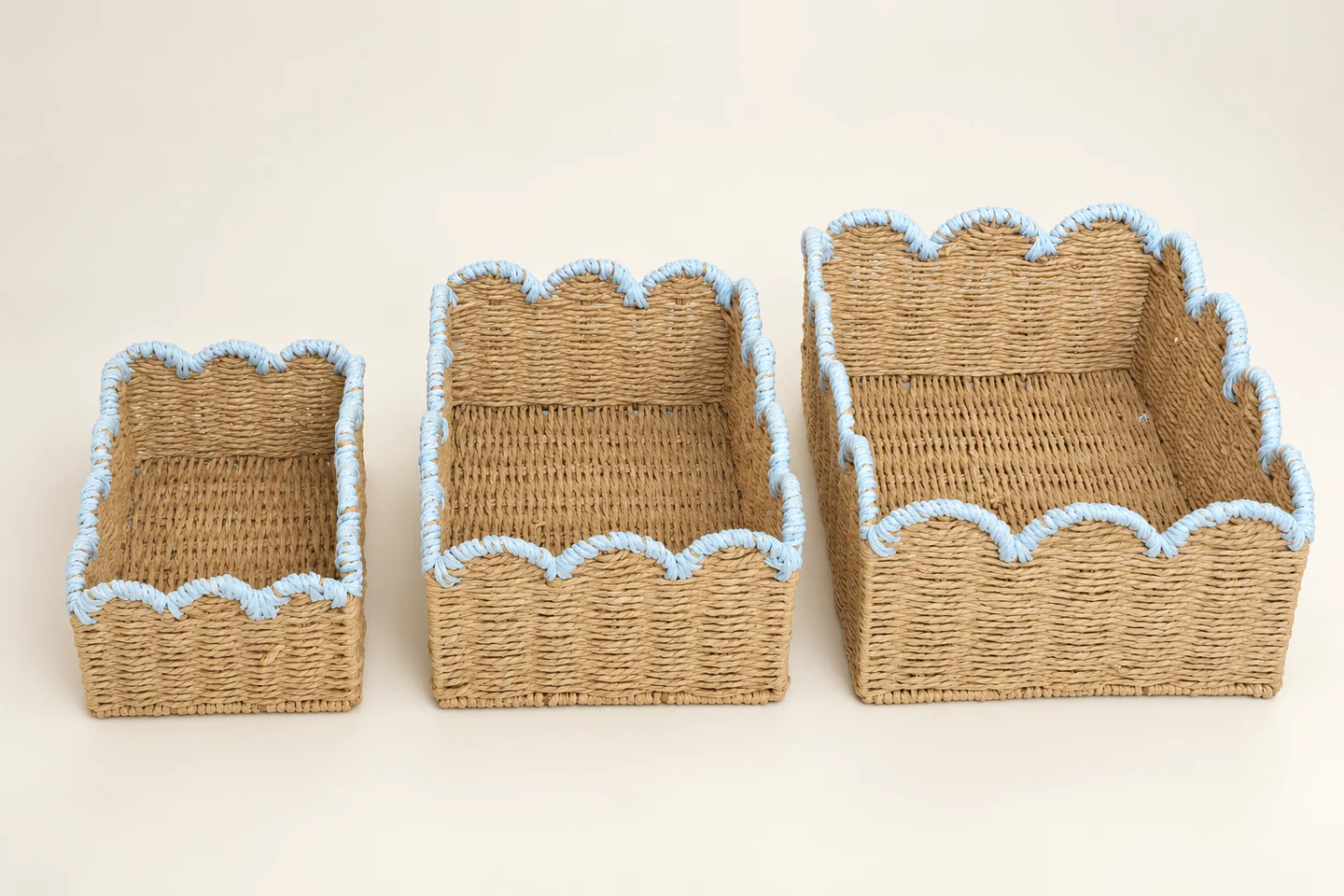 Three photographed sample sizes. Exact dimensions, set composition and ordering unit are confirmed for each request.
The photographs show three sizes that nest together. A nested view explains their relationship quickly, but it hides much of the smaller baskets. Include a separated view so the buyer can see each outline and opening.
For a styled photograph, give each size a distinct visual role: one can hold a small grouping of stationery, another a wrapped gift, and the third can remain empty to show the weave. Check the real dimensions before selecting props; a photograph alone does not establish capacity.
There is also value in a simple overhead arrangement with no contents. It lets the repeated scallops and proportions carry the story. If you are considering how these sizes should be sold together, our guide to planning nested basket sets for retail and ecommerce explores that separate decision. The sample photographs here do not establish the ordering unit or confirm a three-piece retail set.
Compare colors in the setting you actually use
A practical selection exercise needs only a few existing objects. Place each trim beside the same textile, gift box or packaging sleeve. Keep the surface, light and camera position unchanged, then review the four images together.
Look at three things: whether the rim remains visible, whether its color connects to another item, and whether the woven body still feels at home in the display. This helps distinguish a color you like on its own from one that works within your collection.
Record the preferred sample and the intended pairing in a short note. If a close color relationship matters, use physical references when discussing it. Our guide to communicating color requirements for handmade woven products explains that conversation in more detail.
Questions buyers often ask
Is the whole basket colored?
The versions shown have a natural-colored paper rope body with green, white, pink or light blue trim along the scalloped rim. The color variation is concentrated at the edge, so the body remains visually consistent across the four examples.
Are the three sizes supplied as a set?
The photographs show three sizes nested together. That demonstrates the sample arrangement, but it does not confirm how they are supplied. Ask about individual sizes, set composition and packing before planning a retail offer.
Which trim should I choose first?
Start with the products it will sit beside. Compare a sample against your packaging, textiles and display surface. Choose the color that creates a clear relationship with that setting; add another when it serves a different presentation within the collection.
Can I request another trim color?
Share the color reference you have in mind and ask what can be offered for this design. The four photographed versions do not establish a wider customization range. Confirm feasibility and order requirements before adding another color to a buying plan.
Bring your collection brief to the conversation
To discuss this design, share the trim colors you are considering, the sizes you need, your intended use and an estimated quantity. A photograph of your packaging or display palette can help explain the visual direction.
Browse the paper rope collection for related products, or send JINZHAO CRAFT your sourcing brief to confirm dimensions, available options and ordering details for your project.