Direct answer
A golden sample is useful only when its role, covered specification, identifier, revision, condition, location, custody, photographs, approval, and replacement rules are controlled. It should not be confused with a concept sample, development sample, pre-production sample, or limit sample. The pre-production sample demonstrates the intended production baseline before release; the golden sample is a named approved reference for the attributes it actually covers; limit samples illustrate agreed decision boundaries. None replaces drawings, material records, measurement methods, tests, or market review. Every proposed change needs an impact assessment across materials, appearance, dimensions, function, packaging, labels, compliance evidence, production, and previous approvals. Buyers and suppliers must name who proposes, reviews, approves, implements, verifies, and records the change. No silent substitution or universal sample lifetime is acceptable.
Direct answer: control the baseline, not just the physical sample
- A physical sample cannot serve as a production standard unless the parties know what it represents. The controlled baseline should combine a named sample role with specification revision, drawings, material and component records, appearance references, measurement methods, packaging, label artwork, approved deviations, and release status. The object alone may age, deform, fade, lose labels, or be interpreted differently.
- This standard distinguishes concept sample, development sample, pre-production sample, golden sample, and limit sample. It covers identification, custody, condition, version, approval, duplicate references, production access, deviations, changes, impact assessment, verification, and retirement. It does not establish universal tolerances, sample quantities, validity periods, durability, certification, or legal compliance.
- The buyer defines commercial, functional, market, label, and evidence requirements and approves the agreed baseline. The supplier confirms manufacturability, actual materials and processes, production controls, samples, deviations, and implementation evidence. Each party should identify authorized approvers. A signature without named scope, revision, date, and disposition is not a controlled release.
Assign a distinct role to every sample stage
- A concept sample explores direction and may use substitute materials, provisional dimensions, hand-applied details, or non-production methods. A development sample resolves selected design and construction questions but can still contain open items. Neither should be called approved for production unless all release conditions are separately satisfied and documented.
- A pre-production sample should represent the intended production materials, components, construction, dimensions, finish, labels, and pack closely enough to support release decisions, with every remaining deviation declared. A golden sample is a specifically identified approved reference for named attributes and revision. It does not automatically cover hidden construction, chemical composition, test results, legal scope, or features that cannot be reliably judged from the object.
- A limit sample illustrates an agreed boundary for a named appearance or workmanship condition, such as the edge of acceptable variation or a defect disposition. It should identify attribute, severity or decision, viewing condition, covered product, revision, date, and approvers. Limit samples are not substitutes for measurable requirements and should not be created to authorize defects that conflict with safety, law, or unapproved function.
Create the sample identity, custody, and condition record
- Assign each controlled sample a unique sample ID, role, product and pack identifiers, specification revision, date made, material or component lot references where relevant, maker, current location, custodian, approval status, covered attributes, explicit exclusions, deviations, approvers, and effective date. Attach overall and critical-zone photographs with scale or orientation where useful.
- Define custody: who seals or marks the sample, who may access it, how factory and buyer duplicates are reconciled, where each copy is stored, how it is protected, and how condition is checked before use. If digital images or retained components supplement a physical sample, identify their authority and limitations. A photograph may preserve appearance context but cannot fully reproduce scale, texture, stiffness, or color.
- Set a review trigger rather than inventing a universal expiry. Review when the sample is damaged, contaminated, deformed, faded, lost, transferred, inconsistent with documents, affected by a material or process change, or older than the project-defined review interval. Record condition and comparison outcome. Replacing a sample requires a controlled decision, not an unlabeled new object on the production floor.
Link the approved sample to production and inspection evidence
- The sample-control sheet should cross-reference bill of materials, construction drawing, dimension map, approved color or variation references, packaging specification, label artwork, measurement methods, performance or compliance evidence, deviations, and purchase-order revision. The links define what remains authoritative when the physical sample cannot show an attribute.
- Before production, conduct a baseline review with buyer and supplier owners. Confirm which attributes are judged against measured criteria, physical reference, limit sample, drawing, process record, test report, or label master. Define viewing condition and measurement state. Do not use a golden sample to override a written requirement silently; resolve contradictions through documented revision and approval.
- During production and inspection, identify where controlled references are available, who checks them, which checkpoints use them, and how nonconformity is recorded. A production piece resembling the golden sample does not prove material composition, hidden construction, load, durability, packaging performance, or compliance. Preserve the evidence source appropriate to each decision.
Apply the change-request and impact-assessment gate
- Every proposed change should have an ID, requester, date, reason, current baseline, proposed state, affected product and pack revisions, timing, inventory impact, and requested decision. Assess material identity and lot, components, construction, appearance, dimensions, function, measurement, performance evidence, packaging, labels, claims, destination requirements, traceability, cost, MOQ, capacity, lead time, and previous approvals without assuming all are affected equally.
- The decision flow is: record proposal; stop unauthorized implementation; identify affected requirements and evidence; obtain supplier feasibility and buyer or specialist review; define required samples, trials, tests, artwork or documents; approve, reject, or conditionally approve; update baseline documents; implement at a named lot or order boundary; verify execution; and close the change with evidence. Emergency containment does not equal permanent approval.
- Use dispositions such as No impact with rationale, Document update, New development sample, New pre-production sample, Golden-sample replacement, New limit sample, Re-measurement, Re-test or specialist review, Conditional deviation, Approved change, or Rejected. The matrix does not transfer responsibility or set universal reapproval rules. Named buyer and supplier owners confirm the path for the exact consequence.
Detect sample-role confusion and silent substitutions
- Common failures include calling the first attractive prototype a golden sample, approving an undeclared substitute, signing an object without a revision, and keeping factory and buyer references that differ. Another failure is using one sample to govern multiple sizes, materials, colors, sets, or packs without documenting which attributes transfer and which require separate evidence.
- Change-control failures include material or component substitution through purchasing, process adjustment through production, artwork correction through packaging, or dimensional change through tooling without a formal request. Small changes can affect appearance, fit, function, nesting, recovery, labels, testing, traceability, cost, or market scope. The requester should not decide alone that impact is negligible.
- Evidence failures include treating sample similarity as proof of hidden composition, using photographs for precise color without controlled conditions, accepting measurements taken in a different state, and retaining obsolete references on the factory floor. Remove or mark superseded samples and documents so they cannot direct production accidentally. Preserve the retirement decision and effective change boundary.
Preserve the sample baseline and complete change history
- The controlled package should contain sample register, IDs and roles, specifications, drawings, bills of materials, material and component evidence, photographs, viewing and measurement methods, approval records, duplicate and custody logs, condition reviews, limit-sample definitions, deviations, change requests, impact assessments, test or trial records, implementation lots, verification, retirements, and a current baseline index.
- ISO 10013 supports documented information tailored to organizational needs and is published with review activity shown. ISO 10012 supports measurement-management confidence. ISO 9001 provides general quality-management context and remains current at access while marked for revision; it does not prove JINZHAO CRAFT certification. GS1 traceability context can support consistent links among product, lot, sample, pack, process, and change records when adopted.
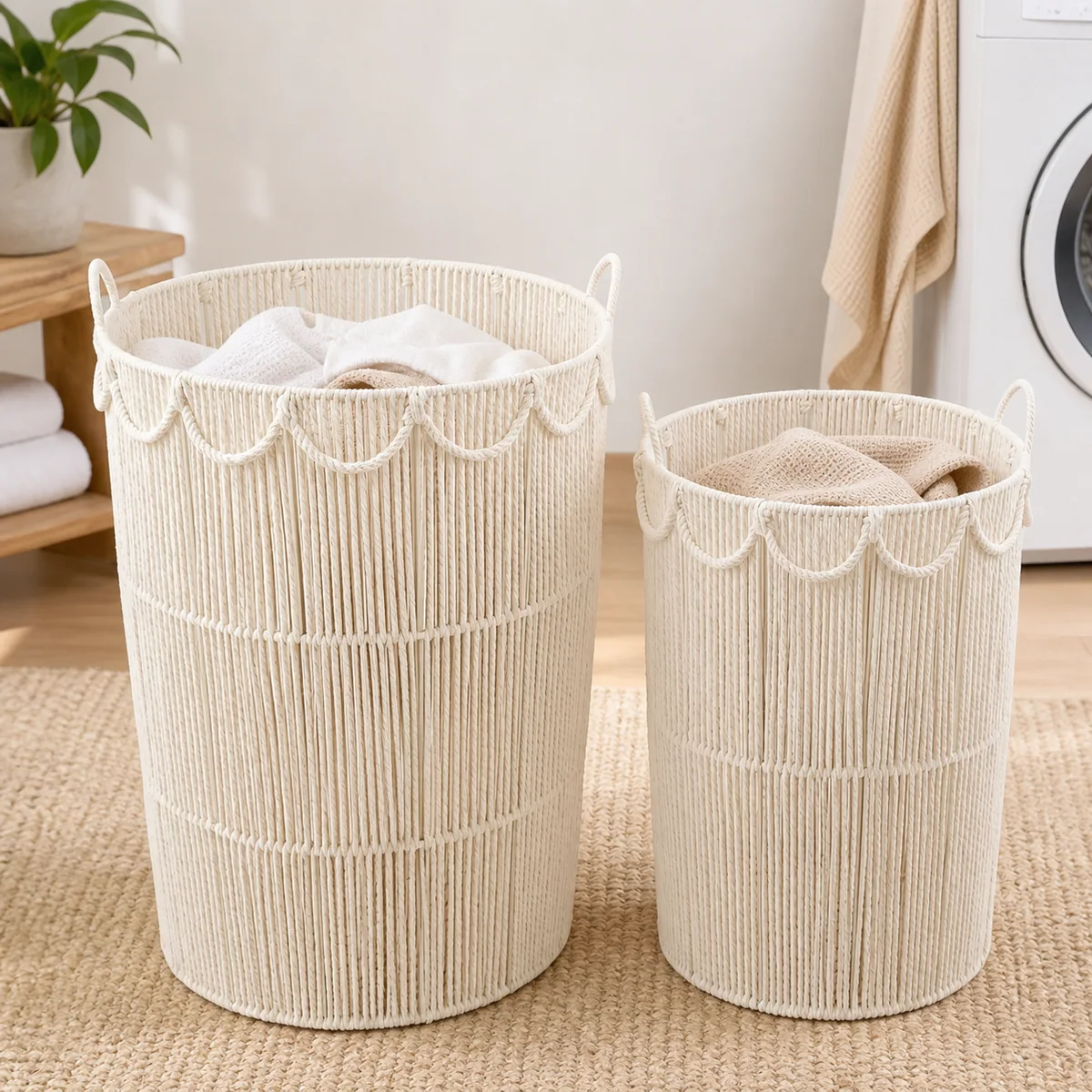
- The current catalog shows a gray nested storage set, a light-gray nested laundry-hamper set, and a water-hyacinth nested large-storage set. These first-party examples illustrate why size, color, material, member, and pack baselines need exact references; they do not prove approval or performance.
Keep sample approval separate from conformity and commercial commitment
- A golden sample is not a certificate, laboratory report, regulatory approval, production-capacity commitment, MOQ agreement, shipment authorization, or warranty. It supports only the attributes and revision named in its control record. Applicable legal, retailer, safety, chemical, labeling, packaging, and claim decisions need their own responsible evidence.
- A pre-production sample approval does not guarantee every production piece will be identical, and handmade variation should not be hidden behind a sample. Define measurable and visual boundaries, production controls, sampling and disposition separately. Likewise, a deviation accepted for one order or lot should not become the new baseline unless the change is formally approved and documents and references are revised.
- Use the RFQ route to submit baseline and evidence requirements and the factory route to discuss controlled production checkpoints. Final release records should identify role, revision, scope, exclusions, approvers, effective boundary, evidence, deviations, change status, and retirement. Supplier execution and buyer approval remain visible throughout the record.
Buyer comparison table
JINZHAO CRAFT factory recommendation
For a practical factory quote, share a reference image, target dimensions, material direction, expected order quantity, logo or label needs, retail/export packaging requirements and destination market. JINZHAO CRAFT can then discuss material feasibility, sample direction, MOQ, production timing and export carton planning for the woven storage product.
Primary sources
These references support the defined standards, regulatory context, or buyer process described above. Product-specific obligations and commercial terms still require confirmation for the actual order.
- ISO 10013:2021 Quality management systems - Guidance for documented information — International Organization for Standardization
Supports tailored documented-information development and maintenance and is published with review activity shown; it does not prescribe sample roles, approvals, values, or certification.
- ISO 10012:2026 Quality management - Requirements for measurement management systems — International Organization for Standardization
Supports confidence in managed measurement processes; it does not define product measurements, tolerances, sample validity, change rules, or results.
- ISO 9001:2015 Quality management systems - Requirements — International Organization for Standardization
Supports general quality-management, operational-control, documented-information, evaluation, and improvement context; it does not imply JINZHAO certification or product conformity.
- GS1 Global Traceability Standard — GS1
Supports identify-capture-share and traceability-data relationships; it does not assign identifiers, approve samples, define change control, or certify a product.
FAQ
What is the difference between a pre-production sample and a golden sample?
A pre-production sample demonstrates the intended production baseline before release. A golden sample is a uniquely controlled approved reference for named attributes and revision. One object can serve both roles only when both decisions and scopes are documented.
Can a golden sample replace drawings and measurement specifications?
No. A physical reference cannot reliably show every dimension, hidden component, material composition, method, label master, pack detail, test result, legal scope, or project criterion. Cross-reference the complete controlled baseline.
What should a limit sample contain?
Identify product, revision, attribute, boundary or severity, viewing condition, decision, date, approvers, custody, photographs, limitations, and relationship to measurable requirements. It must not authorize unsafe, illegal, or unapproved function.
When should a golden sample be replaced or reapproved?
Trigger review when condition changes, it is lost or transferred, documents conflict, material or process changes, the project-defined review interval occurs, or impact assessment identifies affected attributes. Do not use a universal lifetime.
Can a supplier implement a small substitution before buyer approval?
Not when it changes the approved baseline. Record the proposal, stop unauthorized implementation, assess affected requirements and evidence, obtain named approvals, update documents, implement at a defined boundary, and verify the result.
Products relevant to this guide
Review current factory product examples, then send target dimensions, quantity and customization requirements for an exact quotation.


Continue learning
Woven Basket Visual Defect Classification and Disposition Standard
Classify woven-basket observations, natural variation, defects, zones, severity, boundary references, records, and lot dispositions without inventing a universal AQL.
Read guide →Factory & QualityHandmade Basket Dimensional Measurement and Tolerance Framework
Define measurement condition, points, tools, raw readings, project-specific limits, deviation, conformance, and nesting clearance for handmade baskets.
Read guide →Product SpecificationsGeneral Storage Basket Functional Specification Matrix
Translate intended storage use into controlled fields for usable space, access, handles, contact surfaces, closure, liner, nesting, and pack verification.
Read guide →Packaging & LogisticsEcommerce and Retail Transit-Test Planning Reference
A distribution-path method for selecting candidate ISTA test procedures, representative samples, damage criteria, deviations, retest triggers, and responsibility for woven basket packaging.
Read guide →