Direct answer
A woven-basket visual standard should distinguish an observation from a defect and an approved natural variation. It should name the feature, location zone, reference boundary, severity rationale, quantity, evidence, and disposition. Severity follows the consequence for the approved product and sales channel, not a universal list. If acceptance sampling is used, the buyer must select the applicable system, lot definition, inspection level, AQL or other plan, and switching rules. ISO 2859-1 and ISO 28590 provide attribute-sampling frameworks; they do not define basket defects, choose project thresholds, guarantee zero defects, or certify JINZHAO CRAFT.
Direct answer: classify observations before sampling decisions
- Visual inspection starts with a controlled observation: what the inspector can see, where it appears, under which viewing condition, and how it compares with an approved reference. Only then should the team decide whether the observation is an allowed variation, a defect, or an unresolved condition requiring escalation. Starting with an AQL table cannot solve an undefined appearance requirement.
- This framework covers visible woven-product appearance, including weave continuity, strand condition, color distribution, shape presentation, joints, liners, handles, accessories, labels, contamination, and workmanship evidence. It does not set one defect catalog, severity level, acceptance quality limit, sample size, viewing distance, light source, color tolerance, dimensional tolerance, performance result, or disposition for all baskets.
- The buyer owns the intended appearance boundary and business consequence. The supplier confirms process terminology, feasibility, and records. Inspectors apply the approved revision without silently tightening or relaxing it. A natural material does not make every variation acceptable, while handmade production does not make machine-like uniformity an implied requirement.
Use controlled visual-inspection terms
- An observation is a neutral recorded fact, such as one raised strand on the front upper zone. A defect is an observation that fails an approved requirement. Natural variation is a defined range intentionally accepted for material or handwork. A zone is a named product area with a viewing or use priority. A boundary reference shows the edge between acceptable and unacceptable appearance for one feature.
- Severity is the assigned consequence class under the buyer's approved rules. Critical, major, and minor labels are common, but their meanings must be defined for the product and program rather than copied from another order. Disposition is the authorized outcome: accept, rework then re-inspect, segregate, concession request, reject unit, hold lot, expand review, or reject lot. A disposition is not the same as severity.
- Every defect code should contain a plain name, feature family, precise definition, exclusions, applicable zones, reference images or samples, severity by condition, recording unit, and permitted disposition path. For example, 'color variation' is too broad unless it states whether the issue is strand-to-strand variation, panel mismatch, set mismatch, contamination, staining, fading, or deviation from an approved range.
Create zones and boundary references for the SKU
- Draw a SKU-specific zone map before inspection. A practical map may separate front display face, side and back faces, upper rim, interior, base contact surface, handles, lid or closure, liner, joints, and concealed underside. Zone priority should follow how the item is sold and used. A desktop basket viewed from above differs from a laundry hamper displayed front-facing.
- Boundary evidence can include approved limit samples, annotated photographs, a defect atlas, color references, and written conditions. Images should show scale, product orientation, feature location, lighting or viewing setup, and whether they represent acceptable, limit, or reject conditions. A photograph without this context may hide depth, sheen, contrast, or overall shape.
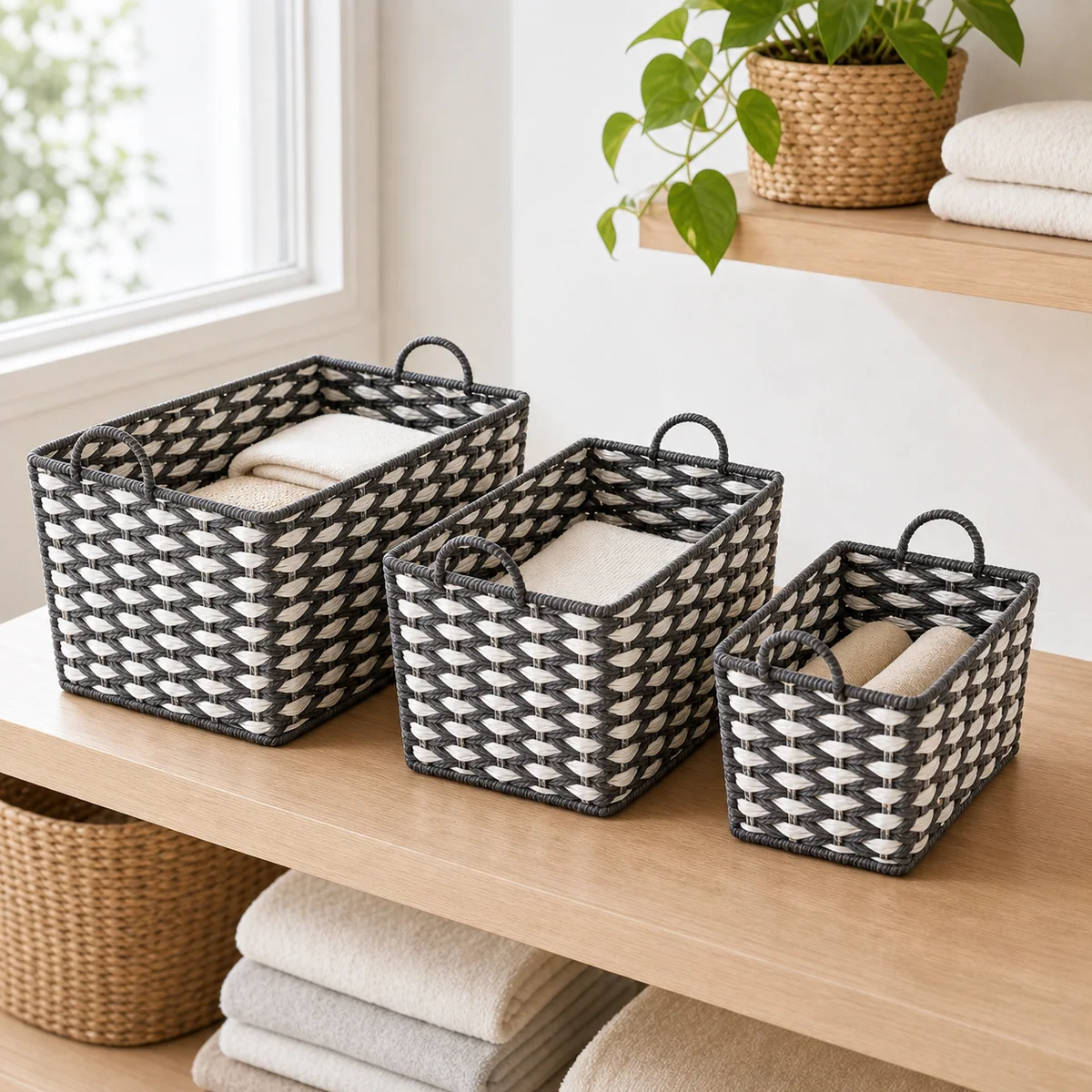
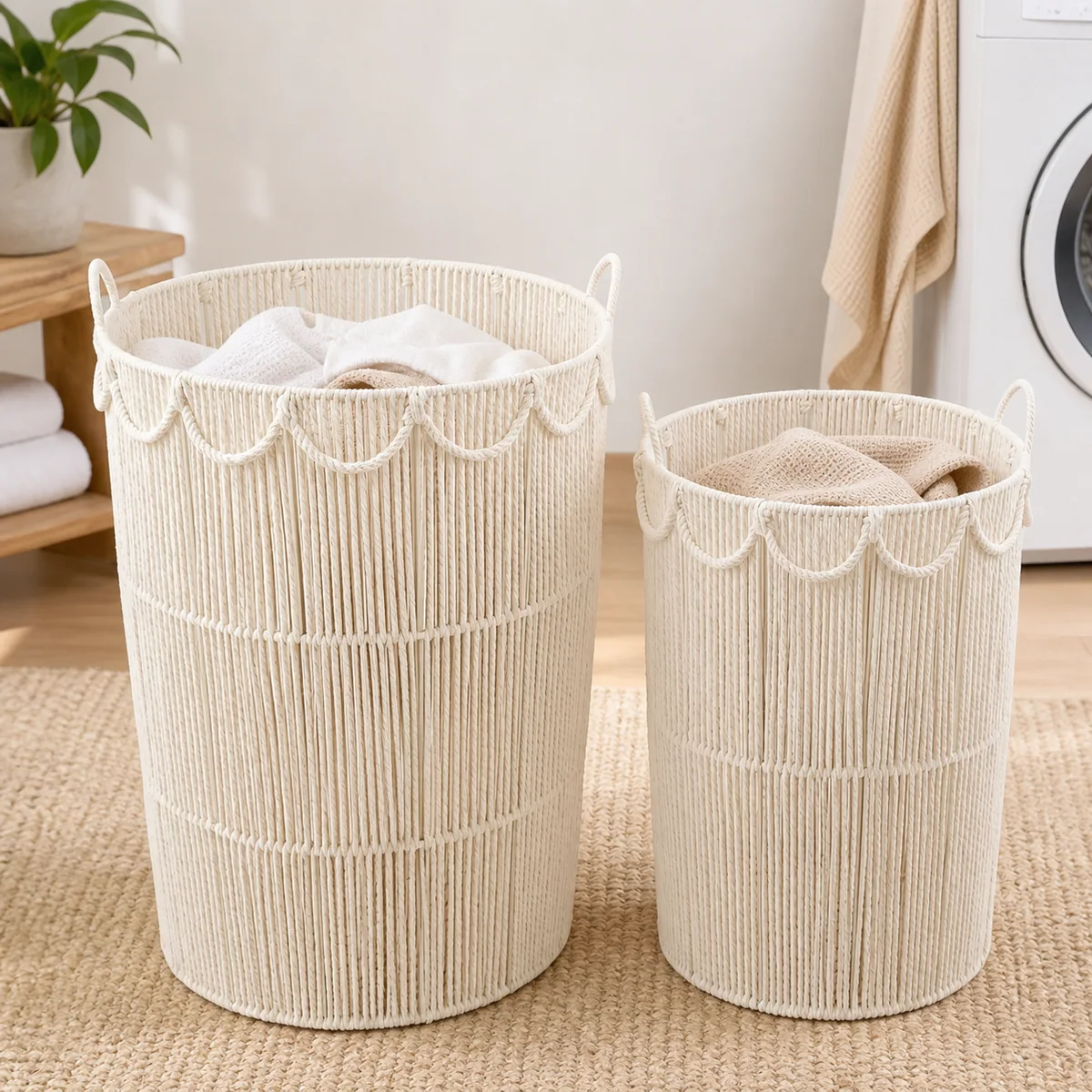
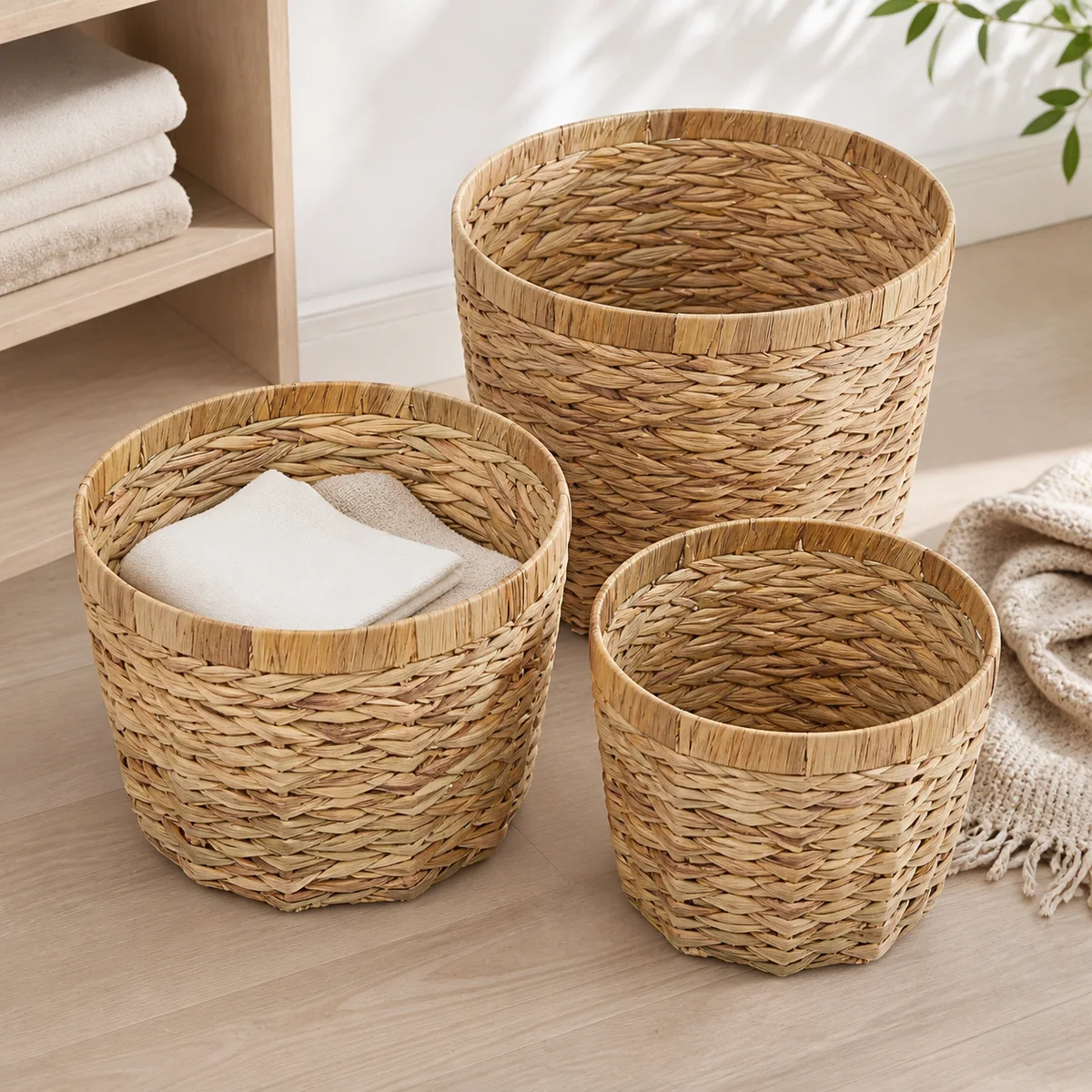
- Select references that represent the actual construction. A nested gray paper-rope set, a round laundry hamper set, and a water-hyacinth large-basket set need different zone maps and natural-variation boundaries. Their visible first-party pages are examples, not approved defect standards.
Assign severity through consequence, not appearance alone
- For each confirmed defect, assess four questions: Can it create a safety or regulatory concern for the approved use? Can it prevent intended function or required identification? Can it cause a typical customer rejection in the defined sales channel? Is it a limited cosmetic departure within or outside the approved visible zone? The approved severity logic should state which evidence answers each question.
- The same feature can have different consequences by location and degree. An exposed sharp component may require immediate hold and escalation; an open joint that weakens a handle may affect function; a prominent stain on the display face may be commercially significant; a small strand-end appearance on a concealed underside may fall within a defined natural boundary. These are examples of reasoning, not universal classifications.
- Do not upgrade or downgrade severity to obtain a desired lot result. If the defect atlas does not cover an observation, code it as unclassified, isolate affected units, document the condition, and ask the named buyer authority for a decision. Add the approved decision to the next controlled revision instead of relying on inspector memory.
Run the observation-to-disposition flow
- Step 1: record the observation with code, zone, unit, count, image, inspector, date, and inspection condition. Step 2: compare it with the current approved requirement and boundary. Step 3: classify it as allowed variation, confirmed defect, or unclassified. Step 4: for a defect, assign the approved severity and immediate unit action. Step 5: apply the buyer-approved lot rule, sampling plan, escalation, or 100 percent screen instruction.
- If sampling inspection is selected, define the lot, sampling unit, formation date, sample selection, inspection level, plan type, AQL or other index, acceptance and rejection numbers, treatment of critical conditions, switching rules, and authority for tightened, reduced, discontinued, or expanded inspection. ISO 2859-1:2026 provides AQL-indexed attribute-sampling schemes, while ISO 28590:2017 introduces attribute-sampling systems and selection. Neither source chooses these values for a basket order.
- The final disposition must name what happens next and who authorizes it. Reworked units need a controlled method and re-inspection. Concessions need the exact quantity, condition, destination, commercial approval, and expiry. A rejected lot remains identified and controlled until rework, replacement, re-screen, or another authorized outcome is documented.
Record failure modes that make inspection unreliable
- Inspection results become unreliable when references are outdated, zones are unnamed, images lack scale, viewing conditions change, inspectors combine different observations under one code, or severity is assigned by instinct. Other failures include inspecting nested products without separating pieces, checking liners only from the outside, or recording a set-level defect as one unit when the sampling unit was defined differently.
- Lot integrity failures matter as much as visual judgment. Samples selected from convenient top cartons, mixed production dates, reworked and unreworked units, or incomplete assortments may not represent the defined lot. Record where and how samples were selected. If the lot changed after selection, stop and decide whether a new sample or lot definition is needed.
- A supplier's historical quality, a buyer's target, or a low defect count does not turn sampling into a zero-defect guarantee. Attribute sampling has decision risks. Critical concerns may require separate controls, and observations outside the inspection scope remain unassessed. The inspection report must state limitations rather than implying that every unit and feature passed.
Assemble the visual lot-decision evidence
- The controlled package should include product and lot identity, specification revision, defect atlas revision, zone map, boundary samples or image references, viewing and preparation conditions, sampling instruction, sample-selection record, inspection sheet, defect counts by code and severity, photographs, inspector, date, immediate containment, and authorized disposition.
- ISO 10013 supports tailored documented information, and ISO 9001 provides general quality-management-system requirements. These sources support disciplined records and process context only. They do not define this defect list, demonstrate a particular supplier's certification, establish basket conformity, or replace objective evidence for the inspected lot.
- Use the factory overview and RFQ workflow only as first-party starting points for project discussion. Ask for order-specific boundary samples, inspection instructions, and records. The evidence package should preserve both conforming references and rejected examples so later teams can understand the decision boundary without relying on verbal descriptions.
Keep sampling and certification claims within scope
- This page is a classification framework, not a published basket-industry standard and not a substitute for the purchased ISO documents. It deliberately does not reproduce protected sampling tables. Teams using an ISO sampling system should obtain the applicable edition, ensure competent selection and implementation, and record their project choices.
- AQL is an index used within a sampling scheme; it is not the permitted defect percentage in each shipment and not a promise that accepted lots contain no defects. ISO 2859-1 does not provide basket defect names or buyer severity choices. ISO 28590 does not choose the inspection system for an unspecified project. Any statement to the contrary exceeds the cited sources.
- The buyer must separately evaluate functional tests, dimensions, chemical or product-safety requirements, labeling, packaging, and destination obligations. Visual acceptance cannot prove load capacity, moisture resistance, child suitability, food-contact suitability, compliance, or certification. Refer visible products through the catalog, then confirm the exact inspection boundary for the quoted SKU.
Buyer comparison table
JINZHAO CRAFT factory recommendation
For a practical factory quote, share a reference image, target dimensions, material direction, expected order quantity, logo or label needs, retail/export packaging requirements and destination market. JINZHAO CRAFT can then discuss material feasibility, sample direction, MOQ, production timing and export carton planning for the woven storage product.
Primary sources
These references support the defined standards, regulatory context, or buyer process described above. Product-specific obligations and commercial terms still require confirmation for the actual order.
- ISO 2859-1:2026 Sampling procedures for inspection by attributes - Part 1 — International Organization for Standardization
Supports published AQL-indexed attribute-sampling schemes and switching context; it does not define basket defects, choose AQL, guarantee zero defects, or certify JINZHAO CRAFT.
- ISO 28590:2017 Sampling procedures for inspection by attributes - Introduction — International Organization for Standardization
Supports introduction to attribute-sampling systems and guidance on system selection; it does not establish project thresholds or a basket inspection plan.
- ISO 10013:2021 Quality management systems - Guidance for documented information — International Organization for Standardization
Supports tailored documented information and is under review at access; it does not define this defect atlas, establish compliance, or certify a supplier.
- ISO 9001:2015 Quality management systems - Requirements — International Organization for Standardization
Supports general quality-management-system context and is marked for revision; it does not prove JINZHAO certification, basket conformity, or lot acceptance.
FAQ
What is the difference between a defect and natural variation?
A defect fails an approved requirement or boundary. Natural variation is a documented range intentionally accepted for the material or handwork. The label depends on the SKU, zone, degree, and approved reference, not on a generic statement that baskets are handmade.
Does ISO 2859-1 define woven basket defect categories?
No. ISO 2859-1 provides attribute-sampling schemes indexed by AQL. The buyer and supplier must define basket observations, defect boundaries, severity, lot, sampling unit, and project choices separately.
Can an accepted sampling result guarantee zero defects?
No. Sampling supports a lot decision under a selected plan and includes decision risks. It does not inspect every unit or guarantee that an accepted lot contains no defects. State the plan and limitations in the report.
Should every visible issue have the same severity in every zone?
No. Severity follows the approved consequence for the product, use, and channel. Location, degree, function, safety relevance, presentation, and boundary evidence can change the consequence, so zone-specific rules are often necessary.
What happens when an inspector finds an unlisted condition?
Record it as unclassified, isolate affected units, preserve photographs and samples, and obtain a decision from the named buyer authority. Do not force it into an unrelated defect code merely to complete the report.
Does a visual inspection prove basket performance or compliance?
No. It covers only the defined visible attributes under the recorded conditions. Dimensions, function, load, materials, packaging, labeling, product safety, destination rules, and certification require their own specifications and evidence.
Products relevant to this guide
Review current factory product examples, then send target dimensions, quantity and customization requirements for an exact quotation.
Continue learning
Pre-Shipment Inspection and Sampling Evidence Framework
A buyer-controlled framework for defining woven basket inspection lots, sampling parameters, defect criteria, measurement evidence, dispositions, and final shipment release.
Read guide →Factory & QualityHandmade Basket Dimensional Measurement and Tolerance Framework
Define measurement condition, points, tools, raw readings, project-specific limits, deviation, conformance, and nesting clearance for handmade baskets.
Read guide →Materials & ConstructionPaper Rope Construction and Finish Specification Reference
Define paper form, support, frame, weave, joints, finish, adhesive, accessories, liner, zones, evidence, and change control for paper-rope baskets.
Read guide →Compliance & ClaimsRetailer Requirement Intake Checklist for Woven Basket Orders
Collect retailer, marketplace, label, routing, data, and evidence requirements before quoting or producing woven basket orders.
Read guide →