Direct answer
A paper-rope basket specification should identify every component and visible zone, not rely on the material name alone. The controlled bill of materials should cover paper form and strand construction, support or frame, weave pattern and direction, joints and terminations, color and finish system, adhesive where used, handles, closures, accessories, liner, labels, and packaging contact. Each row needs a function, supplier declaration, approved reference, method, evidence, status, and revision. 'Paper rope' does not by itself prove fiber composition, recycled content, waterproofing, environmental benefit, durability, compliance, tariff classification, or supplier certification. Those conclusions require separate project-specific evidence and responsible review.
Direct answer: specify paper rope by component and zone
- Paper rope is a purchasing description that needs further definition. A finished basket can combine visible paper strands, internal supports, a structural frame, thread or ties, adhesive, coating or colorants, metal or other handle parts, closures, labels, fabric liner, and packaging-contact materials. Two products both sold as paper-rope baskets may therefore differ substantially in construction and finish.
- This reference controls how a buyer records component identity, visible form, location, function, construction, appearance, evidence, and revision. It does not define paper fiber composition, recycled content, virgin content, basis weight, moisture resistance, waterproofing, strength, durability, chemical compliance, environmental benefit, recyclability, biodegradability, or customs classification for an unspecified product.
- Use the RFQ route to request component-level responses and OEM/ODM to discuss approved alternatives. The supplier declares the actual bill of materials and process for the quoted item. The buyer decides which declarations require documents, samples, testing, legal review, or third-party evidence.
Create a complete bill of materials and zone map
- Assign every component a BOM ID, plain name, function, supplier description, material declaration, color or finish, quantity or usage basis, product zone, visibility, contact role, drawing reference, evidence, status, and revision. Separate components that look similar but have different functions, such as a visible wrap over a structural frame or a decorative tie over a joint.
- Create a zone map for front display face, side and back faces, upper rim, interior, base contact surface, handles, lid or closure, liner, joints, and concealed underside as applicable. Record whether a finish or color boundary applies to an entire component or only to one visible zone. A change hidden under the liner may still affect structure, contact, pack, or claims.
- The minimum component review includes visible paper form, support, frame, weave, joint, finish, adhesive, accessory, and liner. Add labels, tags, inserts, fasteners, thread, feet, hardware, or other components when present. A row marked Not applicable requires a reason; absence should not be inferred from a product photograph.
Define visible paper form and strand construction
- Describe the visible paper element without assuming its composition: flat or folded paper strip, twisted strand, braided element, wrapped element, multi-ply form, or another supplier-declared construction. Record nominal visual width or diameter with a measurement method where useful, number of visible elements, twist or braid direction if appearance-critical, color method, and approved variation boundary.
- Distinguish strand form from base paper claims. A twisted brown paper element does not prove fiber species, recycled percentage, post-consumer content, bleaching history, additives, coating, wet strength, or environmental performance. If the buyer needs these facts, request traceable supplier declarations and the specific supporting evidence appropriate to the claim.
- Use consistent units for measurable fields. NIST SI resources support quantity and unit communication but do not prescribe strand dimensions, tolerances, or composition methods. Record whether dimensions are nominal design targets, observed sample values, or approved limits so later teams do not treat one as another.
Specify support, frame, weave, and joint construction
- Support and frame rows should identify location, material declaration, cross-section or form, coverage, joining, corrosion or finish requirement where relevant, interface with the visible weave, and whether the component is exposed. Do not describe a basket as all paper when an internal or accessory component uses another material.
- Weave rows should name the buyer-approved pattern, element count or sequence where controlled, direction, spacing or openness reference, change zones, edge treatment, and appearance boundary. Terms such as open weave, checker, braided, wrapped, or tight weave need a reference image or physical sample because suppliers and buyers may use the same phrase for different structures.
- Joint rows should identify start and termination locations, overlap, tie, wrap, stitch, crimp, fastener, adhesive interface, concealed or visible status, finish, and boundary sample. The specification should show transitions at rims, corners, bases, handles, lids, and pattern changes. Joint acceptability cannot be inferred from the center panel alone.
Control finish, adhesive, accessories, and liner
- Finish rows should identify the component and zone, supplier-declared finish system, color reference, sheen or texture boundary, application stage, approved sample, restricted appearance, and evidence. A clear or colored surface treatment does not automatically make the product waterproof, washable, stain-proof, fade-proof, food-safe, or suitable for a humid environment.
- Adhesive rows should identify where adhesive is used, its function, supplier declaration, visible residue boundary, cure or process condition where controlled, and evidence requested by the buyer's responsible team. Absence of visible adhesive does not prove none is used. This reference does not prescribe adhesive chemistry or establish compliance.
- Accessories include handles, lids, closures, hardware, decorative elements, labels, and removable parts. Record material and finish by component, attachment, contact zones, movement, pack state, and approved evidence. Liner rows should define declared material, color, coverage, attachment, removability, seams, edge treatment, label, care statement, and interaction with usable dimensions and nesting.
Apply the construction-row approval flow
- For each component-zone row, ask whether it affects product identity, visible appearance, structure, contact, function, claim, packaging, customs analysis, or cost. If no, document why the row is not applicable. If yes, require either a buyer-confirmed value, a supplier proposal with evidence, or an open owner and due date. Do not allow an empty cell to become an assumed approval.
- Then classify the submitted evidence: supplier declaration, technical data, material sample, color or finish reference, drawing, physical product, process record, test report, or buyer approval. Match the evidence to the question. A visual sample can approve appearance but cannot by itself establish composition; a material declaration may identify composition but cannot prove finished-product performance.
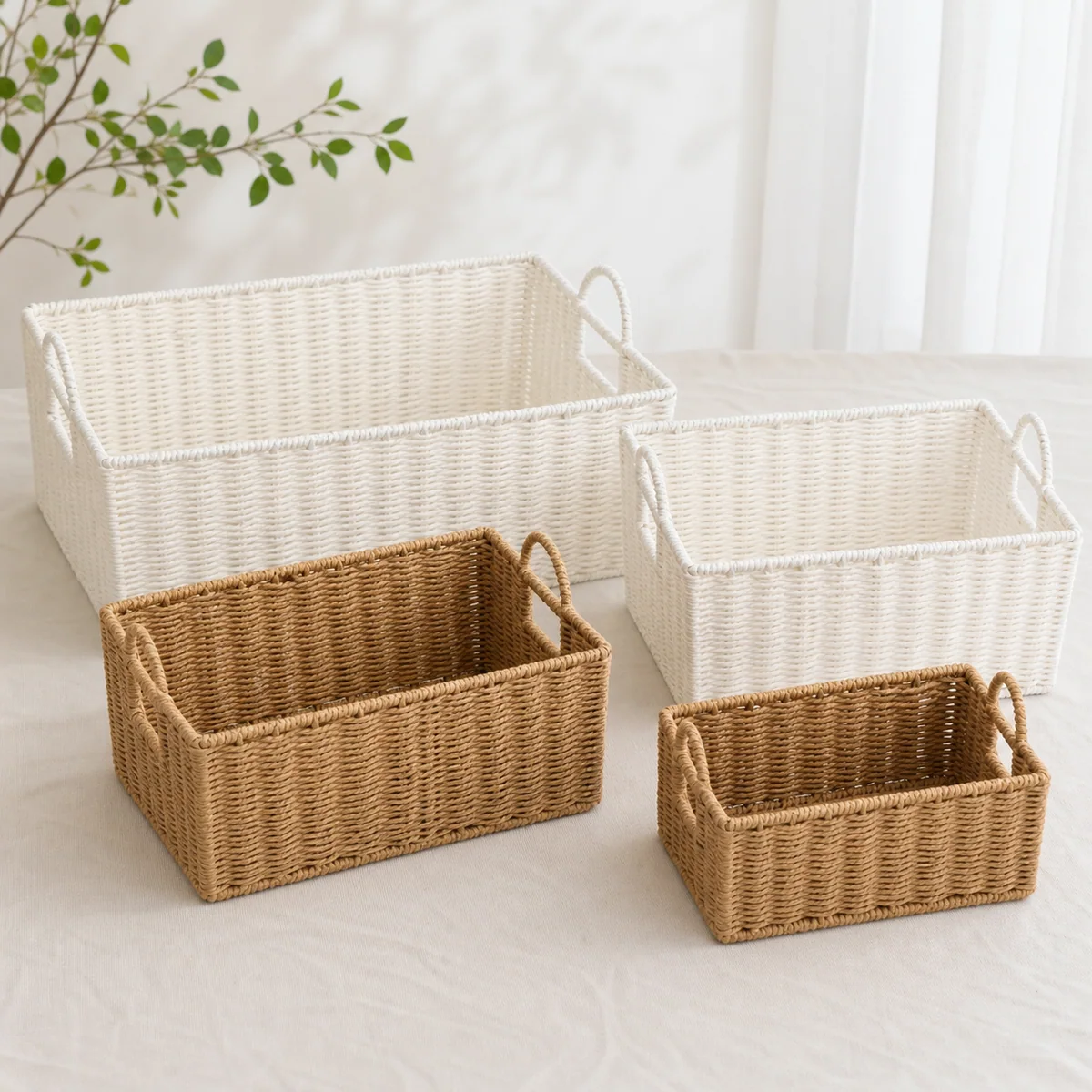
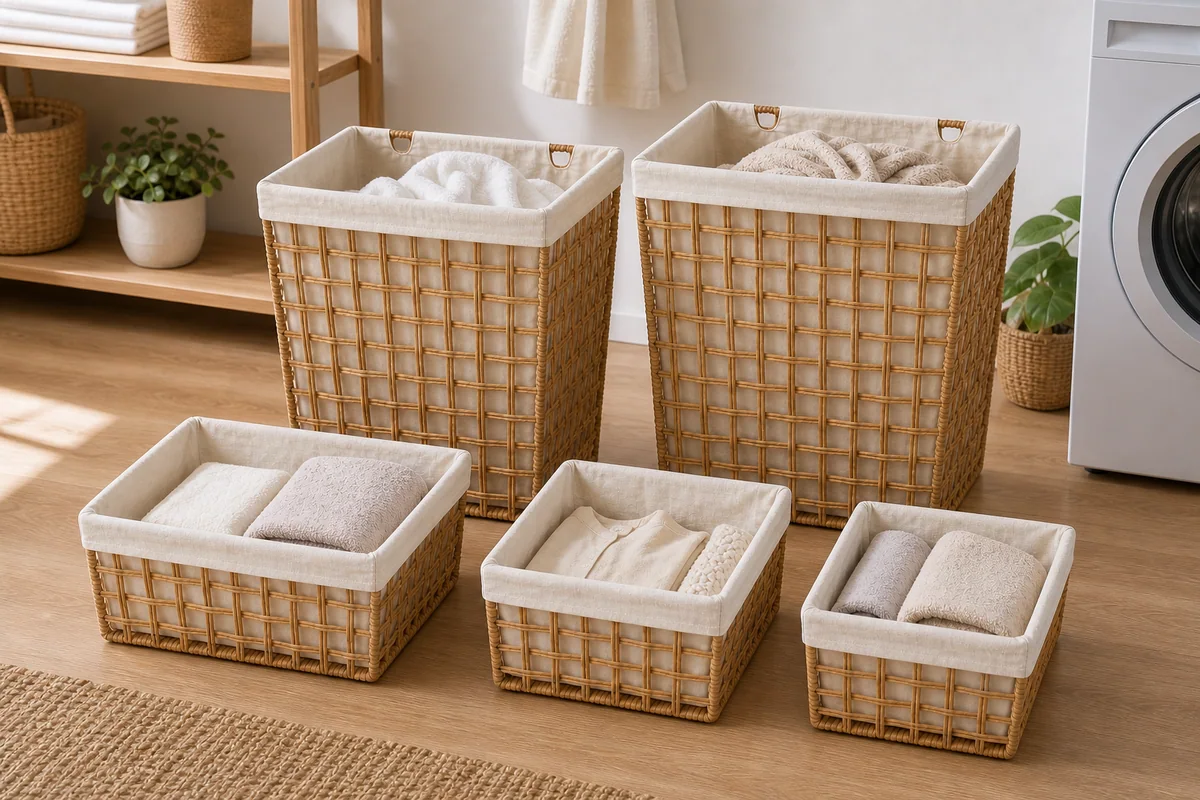
- The current catalog shows why the matrix is SKU-specific. A four-piece decorative-accent set, a five-piece laundry hamper set, and a black round three-piece set differ in set, color, construction, zones, and pack even though each name includes paper rope.
Prevent material-name and finish overclaims
- A common failure is one BOM row called paper rope covering every visible and hidden component. This hides frame, supports, thread, adhesive, coating, hardware, liner, and labels. Another is naming a weave from a marketing image without controlling the corners, rim, base, joints, and transitions that determine the finished appearance.
- Claim failures include treating brown color as proof of recycled content, paper as proof of sustainability or biodegradability, coating as proof of waterproofing, and a product title as proof of tariff classification. Each conclusion needs a defined claim, complete product and transaction facts where relevant, competent review, and evidence suited to that claim.
- Change failures occur when a supplier substitutes base paper, strand form, support, finish, adhesive, liner, or packaging-contact material while preserving a similar photograph. The change process should identify affected BOM rows, reasons, old and new evidence, appearance and function impact, claim impact, sample status, buyer approval, and effective production lot.
Assemble the paper-rope specification evidence
- The controlled package should include the BOM, zone map, construction drawing, strand and weave definitions, frame and support details, joint map, finish schedule, adhesive locations, accessory and liner specifications, color references, physical approval sample, packaging-contact plan, required declarations, tests, deviations, and change history.
- ISO 10013 supports documented information tailored to organizational needs. GS1 standards support controlled identification and data-sharing context when applicable. Neither source supplies these basket fields, proves composition or environmental claims, assigns a buyer identifier, establishes compliance, or certifies JINZHAO CRAFT.
- Keep evidence boundaries visible. A first-party product page is an observation of currently displayed naming and appearance, not independent verification. A supplier declaration is not automatically a laboratory result. A report covers only the named material or finished-product revision, method, sample, and result. Link evidence to the exact BOM row and zone it supports.
Separate construction identity from claims and tariff results
- A complete construction specification improves purchasing and change control, but it does not answer every compliance or customs question. The responsible buyer teams still need destination, intended use, contact, labeling, claim, and channel review. Performance requirements need methods and criteria for the finished product, not an inference from the word paper.
- The USITC HTS search for 4602900000 can support tariff research for a described provision and material form. It does not issue a binding classification for an unspecified basket. Product construction, material facts, function, origin, destination, and transaction context should be provided to the responsible customs professional, with a ruling considered where appropriate.
- Discuss manufacturability through the factory route, but request project-specific confirmation. No source here establishes waterproofing, environmental superiority, universal tolerance, load capacity, MOQ, lead time, compliance, certification, or market leadership. Approve the exact component, zone, evidence, and revision needed for the order.
Buyer comparison table
JINZHAO CRAFT factory recommendation
For a practical factory quote, share a reference image, target dimensions, material direction, expected order quantity, logo or label needs, retail/export packaging requirements and destination market. JINZHAO CRAFT can then discuss material feasibility, sample direction, MOQ, production timing and export carton planning for the woven storage product.
Primary sources
These references support the defined standards, regulatory context, or buyer process described above. Product-specific obligations and commercial terms still require confirmation for the actual order.
- ISO 10013:2021 Quality management systems - Guidance for documented information — International Organization for Standardization
Supports tailored documented information and is under review at access; it does not prescribe this BOM, prove composition, compliance, or certification.
- SI Units — National Institute of Standards and Technology
Supports consistent quantity and unit communication; it does not define paper-rope dimensions, tolerances, composition methods, or performance.
- GS1 standards — GS1
Supports identification and data-sharing context when applicable; it does not allocate identifiers, verify materials, or certify this specification.
- Harmonized Tariff Schedule search for 4602900000 — United States International Trade Commission
Supports tariff research for the searched provision and material-form context; it is not a binding classification for an unspecified basket.
FAQ
What does paper rope mean in a basket specification?
It should identify the supplier-declared visible paper form and construction, then be supplemented by component, frame, weave, joint, finish, adhesive, accessory, and liner data. The phrase alone is not a complete BOM.
Does brown paper rope prove recycled content?
No. Color and paper appearance do not prove recycled percentage, post-consumer content, fiber source, bleaching history, additives, or environmental impact. Approve the exact claim and obtain traceable supporting evidence.
Does a coating make a paper-rope basket waterproof?
Not automatically. A finish may change appearance or surface response, but waterproof, washable, stain-proof, or humid-use claims require a defined scope, finished-product method, acceptance criteria, representative sample, and evidence.
Why should adhesive be listed when it is not visible?
Adhesive can affect construction, process, change control, contact, claims, odor, appearance residue, and evidence needs even when concealed. Record its location and function instead of inferring absence from a photograph.
Can HTS 4602900000 classify every paper-rope basket?
No. The official search result is a research reference, not a binding conclusion for an unspecified product. Provide full construction, material, function, origin, destination, and transaction facts to the responsible customs professional.
Products relevant to this guide
Review current factory product examples, then send target dimensions, quantity and customization requirements for an exact quotation.

Continue learning
Paper Rope, Water Hyacinth, Seagrass and Cotton Rope: Buyer Comparison
Compare 8 real matched basket designs in paper rope and water hyacinth. See weave and texture differences, with clear limits on what the photos can prove.
Read guide →OEM/ODM & SourcingWoven Product RFQ Data Dictionary and Minimum Input Standard
Define RFQ fields, ownership, applicability, completion, revision control, and a conditional data-completeness measure for comparable woven product quotations.
Read guide →Factory & QualityWoven Basket Visual Defect Classification and Disposition Standard
Classify woven-basket observations, natural variation, defects, zones, severity, boundary references, records, and lot dispositions without inventing a universal AQL.
Read guide →Product SpecificationsGeneral Storage Basket Functional Specification Matrix
Translate intended storage use into controlled fields for usable space, access, handles, contact surfaces, closure, liner, nesting, and pack verification.
Read guide →