Direct answer
A kids storage basket project should not begin with a motif or an age label. It needs an intended-use intake covering target and foreseeable users, handling, placement, contents, interaction, components, decoration, packaging, promotion, channel, destination, and claims. For US classification, CPSC describes a children's product as designed or intended primarily for children 12 years of age or younger and considers the manufacturer's reasonable intended-use statement, packaging or promotion, common consumer recognition, and the CPSC Age Determination Guidelines. A label alone cannot decide classification. The responsible business, including an importer where applicable, must record an internal classification assessment, determine the compliance plan and market placement decision, and escalate uncertainty. That internal record is not an official CPSC determination: the Commission retains final classification authority, and a staff ruling may be superseded.
Direct answer: complete intended-use intake before approving the design
- Kids storage is a commercial theme, not a complete product classification or safety specification. Before design approval, record who is expected to use or interact with the basket, who moves it, where it is placed, what it stores, how it is marketed, and which product, component, packaging, test, certificate, traceability, and label responsibilities belong to each party. Do not wait until final artwork to ask these questions.
- This intake organizes design and responsibility information. It does not decide whether a basket is a children's product, general-use product, toy, child-care article, furniture item, or another category. It does not identify every applicable CPSC rule, EU requirement, chemical restriction, small-parts provision, flammability rule, labeling requirement, retailer protocol, or test for a particular product.
- The responsible business, including the importer where applicable, must document its internal classification assessment from the exact product and facts, determine a market-specific compliance plan, and make the market placement decision. Those are internal business controls, not an official CPSC classification. The Commission retains final determination authority. The supplier confirms actual materials, construction, dimensions, components, decoration, packaging, production changes, and available evidence without replacing that internal review or representing the product as compliant without approved scope.
Record user, interaction, environment, contents, and exclusions
- Identify target user age range proposed by the buyer, other likely users, purchaser, supervising adult, person expected to fill or move the basket, and reasonably foreseeable interaction. State whether a child is expected only to see the product, retrieve contents, carry it, open a lid, remove a liner, move components, or engage with decorative features. Record room theme separately from direct product use.
- Describe placement, access, storage contents, movement, height, floor or shelf interface, nearby furniture, and expected supervision. Identify contents by size, mass range, edges, small objects, cords, liquids, food, craft items, clothing, or toys as applicable. The contents can affect access and foreseeable interaction but do not automatically classify the basket itself.
- Write excluded uses and assumptions, such as no seating, climbing, riding, hiding, sleeping, infant containment, pet transport, food contact, wet storage, or play function, only when they match the real design and marketing. An exclusion label cannot contradict obvious features, size, imagery, promotion, or expected use. The buyer must make the product, packaging, listing, and instructions internally consistent.
Capture the CPSC four-factor classification inputs
- CPSC describes a children's product as a consumer product designed or intended primarily for children 12 years of age or younger. For a US intake, document the first factor: the manufacturer's statement about intended use, including a reasonable label. Preserve draft and final statements, product rationale, intended and foreseeable use, and the person approving the statement. Do not treat the statement as conclusive by itself.
- Document the second factor: whether the product is represented in packaging, display, promotion, or advertising as appropriate for children 12 and under. Review text, age references, imagery, models, room scenes, colors, motifs, characters, typography, instructions, online listings, category placement, store context, social content, and promotional customization. The finished offer matters, not just the undecorated factory sample.
- Document the third factor: whether the product is commonly recognized by consumers as intended for children 12 years of age or younger. Record the buyer's market analysis, comparable products, likely perception, product size, decoration, play value, and other evidence without inventing survey results. Document the fourth factor: the CPSC staff Age Determination Guidelines and any successor, with the reviewed version, relevant developmental considerations, reviewer, and conclusion. Apply all four factors together.
Map components, decoration, packaging, and production change
- Create a component list for woven body, frame, rope or strip, stitching, adhesive, coating, paint, liner, drawstring, zipper, handle, lid, hinge, pom-pom, tassel, ear, face element, patch, label, insert, hardware, and packaging as applicable. Record material, attachment, dimensions, accessibility, supplier, lot or batch reference, evidence, and proposed change controls. Do not infer safety from soft appearance or natural-material wording.
- CPSC promotional-product guidance explains that decoration or marketing can change the classification implications of an otherwise generic item and that responsibilities depend on the facts and supply-chain arrangements. Treat artwork, added parts, labels, packaging, and channel placement as product changes requiring review. A blank basket decision should not be silently carried to a decorated kids offer.
- The buyer identifies which components, rules, tests, certificates, tracking information, warnings, and records are applicable after classification and market review. The supplier confirms the exact build and supports samples and production trace. GS1 traceability context can inform identify-capture-share records if adopted, but it does not decide US classification, assign legal responsibility, or substitute for any required product marking.
Use the intended-use intake and escalation decision flow
- The intake should contain product identity, target and foreseeable users, interactions, placement, contents, dimensions, features, component map, decoration, packaging, promotion, channel, destination, claims, four-factor US inputs, other-market questions, responsible parties, evidence, open issues, and revision. Use independent fields for applicability, status, owner, reviewer, and decision so incomplete data remains visible.
- A practical flow is: collect facts; compare product, packaging, listing, and promotion for consistency; flag child-directed characteristics and uncertain interactions; record the responsible business's internal classification assessment; identify applicable requirements and approve the compliance plan; make and record the market placement decision for the exact revision; and repeat the impact review after any design, component, artwork, packaging, age, channel, or market change. The internal assessment supports business control but is not an official CPSC determination.
- Disposition states can be Information complete, Buyer decision required, Supplier evidence required, Compliance review required, Test plan required, Conditional, Rejected, or Approved for the named stage. Approval for concept or sampling is not approval for production or market placement. Any conflict among the four factors, unclear age appeal, added child-directed decoration, or disputed responsibility should trigger escalation to competent review rather than a guessed classification.
Reject label-only classification and child-theme shortcuts
- A common failure is writing not a toy, adult supervision required, decorative use only, or age 13+ and treating that label alone as decisive. CPSC states that a label is only one factor and must be reasonably consistent with expected use patterns. A contradictory product size, motif, packaging, promotion, store context, or foreseeable interaction can make the label unreliable.
- Another failure is assessing an undecorated generic basket while approving animal faces, ears, bright child-directed graphics, small accessories, or nursery imagery later. CPSC guidance notes that decorations and marketing can influence whether a product is regarded as child-directed. Review the finished product and offer, including modifications directed by distributors, brands, or customers.
- Evidence failures include copying a classification from a different SKU, assuming every nursery product is a children's product, assuming every general-use storage product used by a child is child-directed, and listing tests before identifying applicable requirements. Do not invent customer studies, age-grading conclusions, test results, certificates, or compliant status. Preserve uncertainty and assign it to a responsible reviewer.
Build a revision-specific classification and design record
- The controlled file should contain product and pack identifiers, intended-use statement, foreseeable-use analysis, target users, placement, contents, dimensions, drawings, component bill, attachment details, decoration and artwork, labels, instructions, packaging, online listing, channel, four-factor analysis, reviewer rationale, applicable-requirement list, evidence plan, sample and test records, certificates if actually required and valid, production controls, deviations, approvals, and revision history.
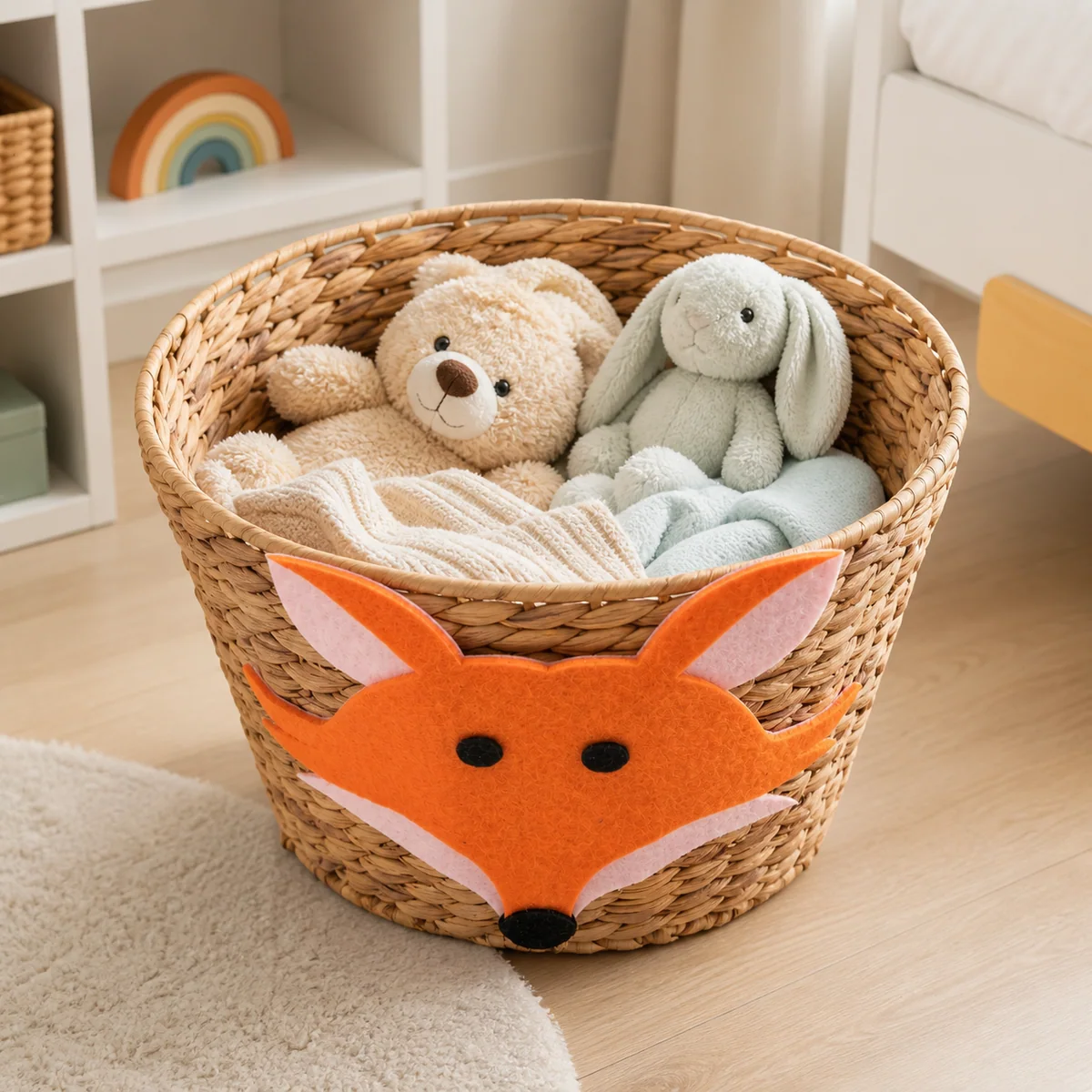
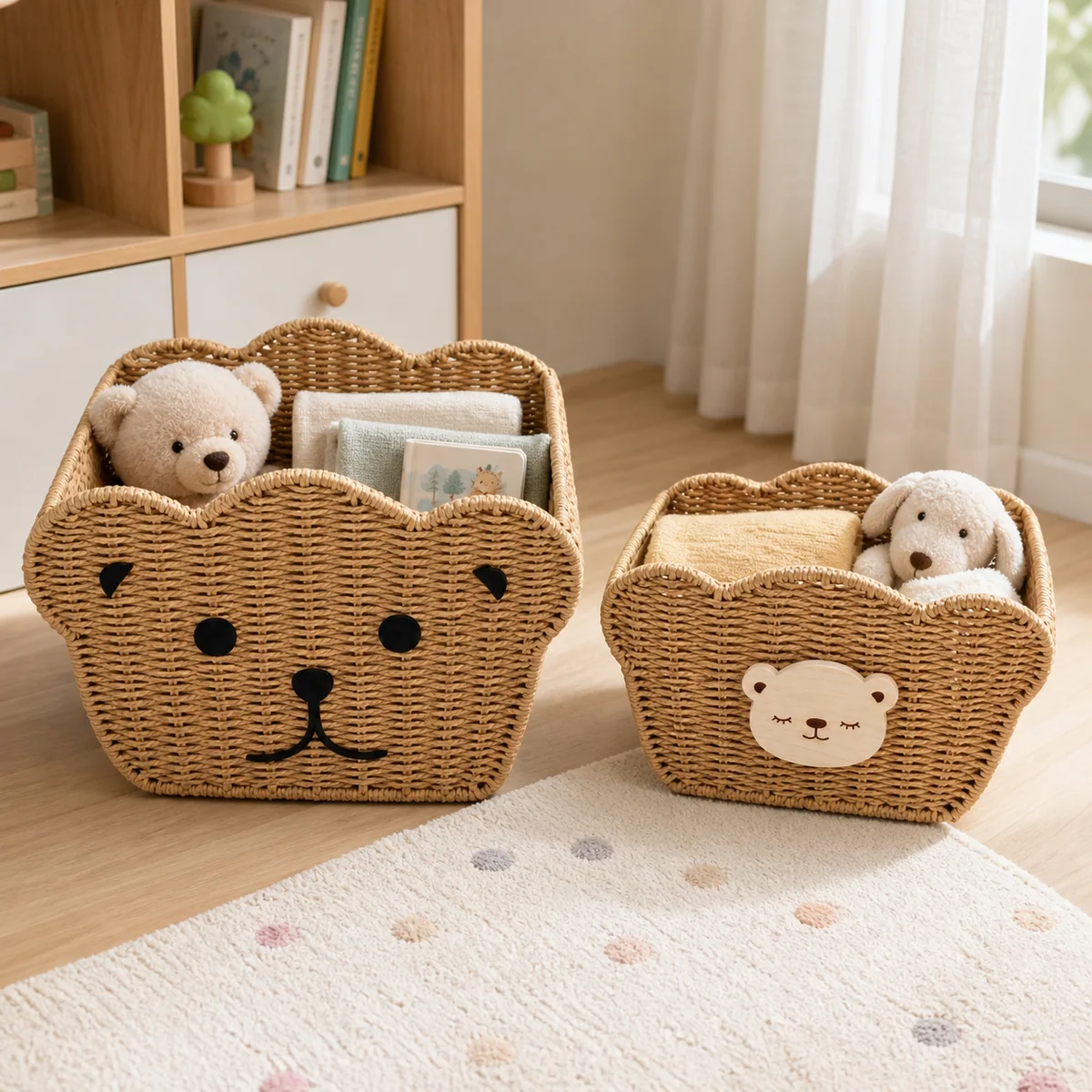
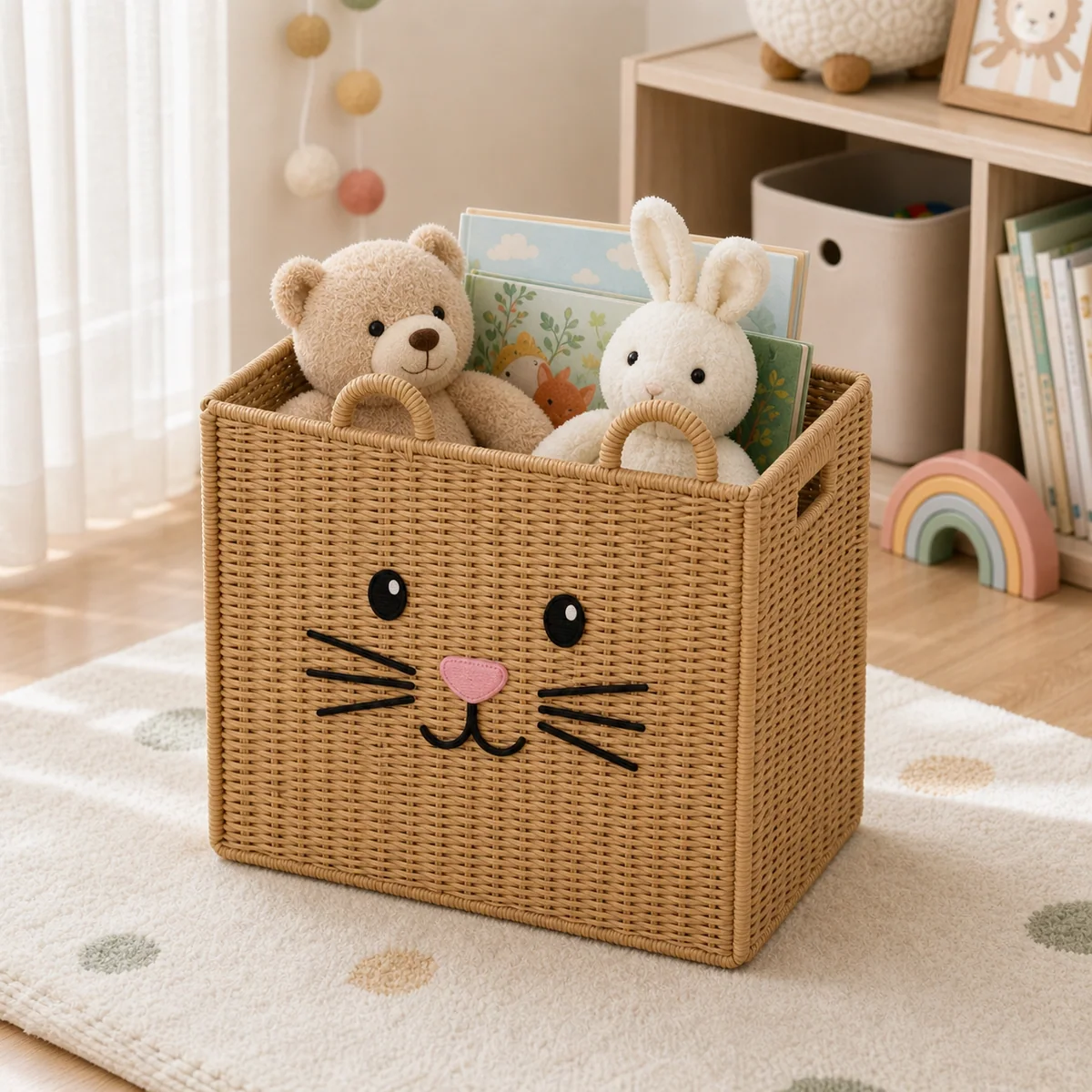
- The current catalog includes a water-hyacinth fox-face basket, a paper-rope bear-face two-piece set, and a foldable cat-face basket. These first-party pages show motifs and formats requiring review; they do not establish classification, testing, safety, compliance, or suitability.
- ISO 10013 supports controlled documented information and is published with review activity shown; NIST supports clear units for dimensions and component records; GS1 provides traceability-data context. None supplies a CPSC classification or certifies the product. Evidence should name issuer, subject product, revision, market, rule or method, result, date, limitation, and link to the approved offer.
Keep classification, compliance, and supplier responsibility distinct
- CPSC classification is fact-specific and determines which sets of requirements may apply. This intake does not provide legal advice or an official CPSC determination. In an uncertain case, a business may contact the CPSC Office of Compliance for a staff ruling on how the product would likely be classified. That staff ruling is not a permanent or final determination because the Commission retains authority to supersede a staff determination at any time.
- A children's-product classification does not itself list every applicable rule, and a general-use conclusion does not mean no consumer-product requirements apply. The responsible party must identify requirements for exact materials, accessible components, age, intended use, claims, destination, and channel. EU and other markets require separate analysis rather than importing a US conclusion.
- Use the RFQ route to submit the intake and the OEM/ODM route to control changes. The supplier confirms accurate construction and production evidence. The responsible business or importer records its internal classification rationale, approves the compliance plan, and makes the market placement decision; none of those records binds the Commission or transfers non-transferable statutory responsibility.
Buyer comparison table
JINZHAO CRAFT factory recommendation
For a practical factory quote, share a reference image, target dimensions, material direction, expected order quantity, logo or label needs, retail/export packaging requirements and destination market. JINZHAO CRAFT can then discuss material feasibility, sample direction, MOQ, production timing and export carton planning for the woven storage product.
Primary sources
These references support the defined standards, regulatory context, or buyer process described above. Product-specific obligations and commercial terms still require confirmation for the actual order.
- Children's Products — U.S. Consumer Product Safety Commission
Supports the 12-years-or-younger definition, four-factor analysis, general-use distinction, label limitation, foreseeable-use context, and classification responsibility; it does not classify a specific basket.
- Promotional Products — U.S. Consumer Product Safety Commission
Supports that decoration and marketing can affect classification and that supply-chain responsibilities depend on facts; it does not provide an automatic conclusion for a basket.
- ISO 10013:2021 Quality management systems - Guidance for documented information — International Organization for Standardization
Supports tailored documented-information control and is published with review activity shown; it does not establish classification, product safety, testing, compliance, or certification.
- SI Units — National Institute of Standards and Technology
Supports clear quantity and unit communication for dimensions and component records; it does not establish age grading, hazards, safety, or compliance.
- GS1 Global Traceability Standard — GS1
Supports identify-capture-share and traceability-data framework context; it does not assign identifiers, determine CPSC classification, or replace required markings.
FAQ
Does calling a basket kids storage make it a US children's product?
The wording is relevant but not conclusive. The responsible importer or manufacturer must review the exact product using the CPSC four factors, foreseeable use, finished packaging, promotion, consumer recognition, and current guidance.
Can an age 13 plus or not-a-toy label guarantee general-use classification?
No. CPSC states that labeling is only one factor and must be reasonably consistent with expected use. Product size, features, decoration, packaging, promotion, channel, and consumer recognition also matter.
What are the four CPSC factors to record for a storage basket?
Record the manufacturer's reasonable intended-use statement, representations in packaging, display, promotion or advertising, common consumer recognition, and the CPSC Age Determination Guidelines, then document a product-specific responsible review.
Can adding an animal face or child-directed artwork change the review?
Yes. CPSC guidance explains that decoration and marketing can affect child-directed classification analysis. Treat artwork, added features, packaging, promotion, and channel changes as triggers for a new impact review.
How should a business record its decision, and can it seek CPSC staff input?
The responsible business or importer should record its internal classification assessment, compliance plan, and market placement decision using current guidance and competent review. In uncertainty it may seek a CPSC staff ruling, but that is not a permanent or final determination: the Commission can supersede staff and retains final classification authority.
Products relevant to this guide
Review current factory product examples, then send target dimensions, quantity and customization requirements for an exact quotation.
Continue learning
US Children's vs General-Use Basket Classification and Tracking-Label Intake
A four-factor CPSC intake for documenting children's-product versus general-use analysis, applicable rules, testing, CPC or GCC responsibility, tracking labels, and eFiling.
Read guide →Compliance & ClaimsEU and US Product Safety Buyer Checklist for Woven Baskets
Classify woven baskets, assign EU GPSR and US CPSC responsibilities, and build traceability, test, listing, and recall evidence.
Read guide →Compliance & ClaimsRetailer Requirement Intake Checklist for Woven Basket Orders
Collect retailer, marketplace, label, routing, data, and evidence requirements before quoting or producing woven basket orders.
Read guide →Product SpecificationsGeneral Storage Basket Functional Specification Matrix
Translate intended storage use into controlled fields for usable space, access, handles, contact surfaces, closure, liner, nesting, and pack verification.
Read guide →