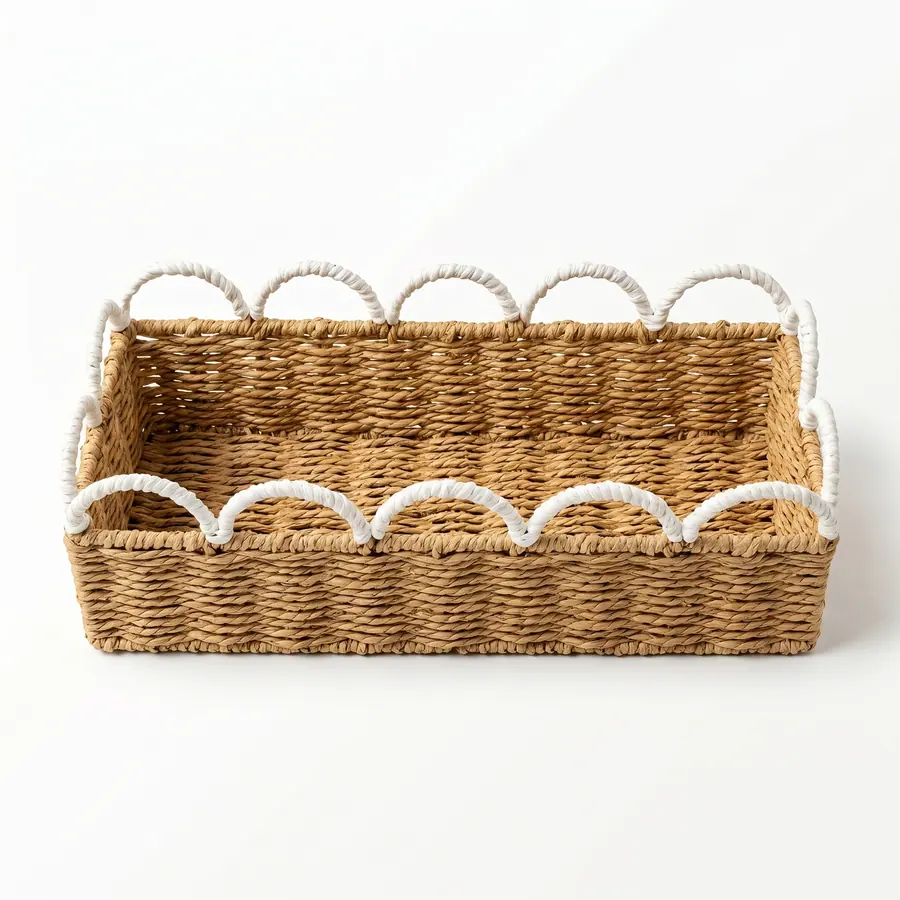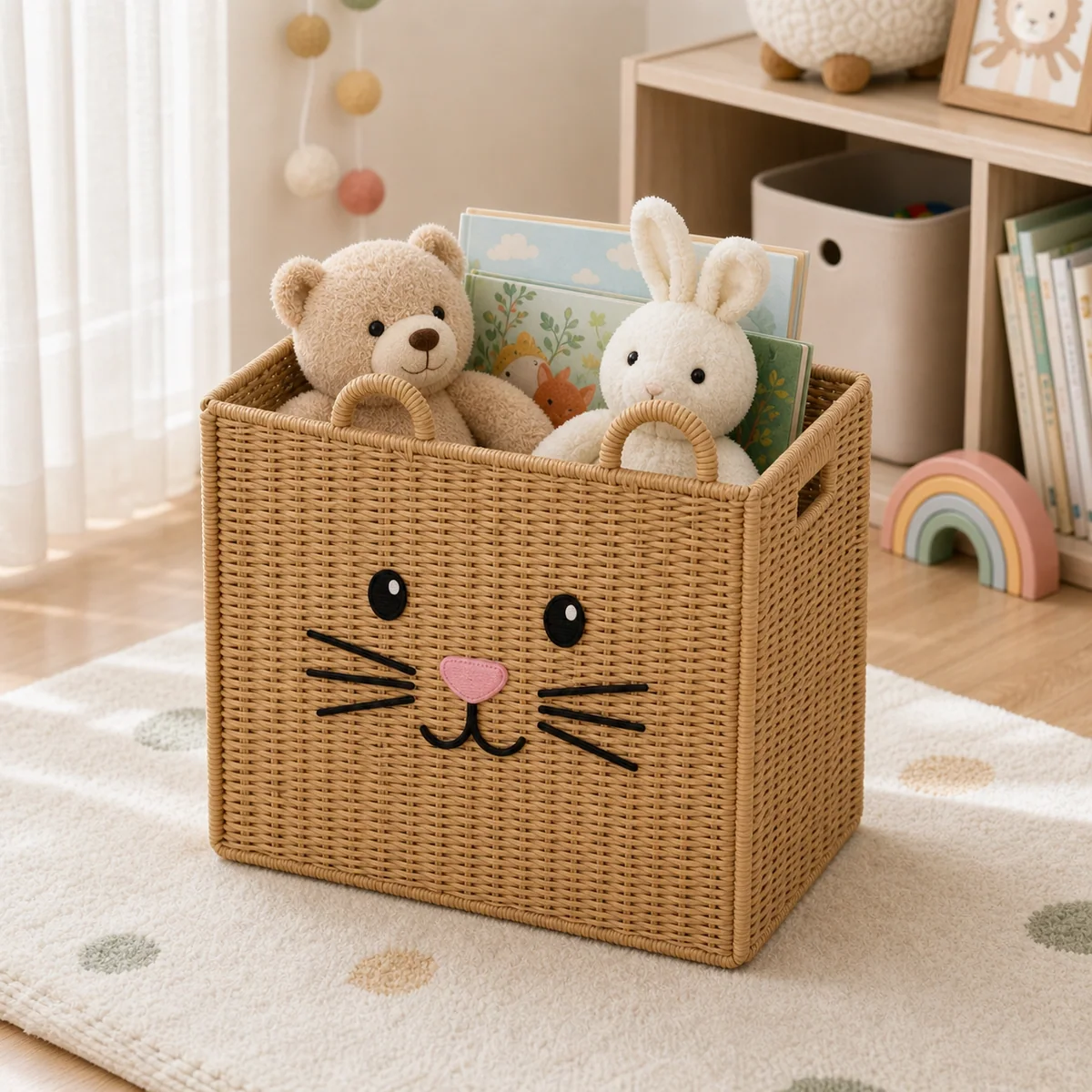
Wholesale buyers should approve a foldable kids storage basket in two controlled states: the agreed shipping state and the fully opened selling state. Define the fold sequence, outside dimensions, rim and base shape, handle clearance, reopening method, rest time before measurement, packaging, and acceptance evidence. A scene photo or the word "foldable" alone does not prove recovery, durability, load capacity, safety, or carton efficiency.
1. What exactly is the buyer approving?
Treat foldability as a controlled product-and-pack system, not a marketing adjective. The RFQ should identify the basket revision, material description, finished shape, intended contents, selling channel, shipping state, reopening instructions, and the evidence used for approval. A quotation based only on an open product photograph leaves the fold direction, compressed profile, packing components, restoration steps, and acceptance criteria undefined.
Start with the current kids storage basket category, then tell the supplier which reference form is relevant and which attributes must change. The buyer should separate three records: the fully opened product specification, the approved folded or collapsed pack specification, and the reopening procedure. Each record needs a revision and an owner. If one changes, the buyer should review its effect on samples, labels, carton quantity, inspection, and marketplace content.
JINZHAO CRAFT currently lists JZ10049, a rectangular paper rope cat-face kids storage basket. Its CMS record classifies the item as foldable and records two loop handles. The approved scene image shows the basket opened, but it does not show the folding mechanism, folded dimensions, recovery time, internal support, test result, or packed quantity. Those fields therefore belong in the project brief and sample evidence rather than being inferred from the image.
2. Which dimensions and datums must be defined in both states?
An open-state size is not enough to price or inspect a foldable program. Identify the top opening length and width, bottom footprint, body height, total height including handles, rim profile, base profile, and handle opening. State where each measurement begins and ends, whether the product is empty, and how it is positioned. Use annotated front, side, top, and base views so the factory and inspection team measure the same points.
Use the JZ10049 catalog measurements only as reference inputs: 35 cm long, 25 cm wide and 42 cm high for the body, with 47 cm recorded to the top of the handles. The record supplies no folded profile or permissible variation. It also says nothing about internal volume or carrying performance. Sampling must establish the datums, readings and limits for the new specification.
For the shipping state, add maximum folded length, width, and thickness; fold direction; handle position; any removable or movable component; required insert, board, tissue, bag, or strap; and the allowed relationship between decorative details and pressure points. If the product is nested, stacked, or placed with accessories, document that complete arrangement. Measure an actual approved pack rather than calculating carton quantity from open dimensions.
3. How should the fold-and-reopen sequence be specified?
Ask the supplier to document the sequence without assuming a particular construction. The record should show the starting orientation, which panels or edges move, whether components are removed, how handles are positioned, which surfaces may contact, and how the folded unit is secured. The reverse sequence should explain how a warehouse, retailer, fulfillment center, or consumer returns the item to its intended selling shape.
Define the observation points after reopening. Useful observations may include whether the base sits as approved, the rim follows the approved outline, side panels reach the agreed position, handles remain accessible, decorative components face the correct direction, and the product fits the intended shelf, insert, or content set. Record actual findings and photographs. Do not convert a visual sample observation into an unsupported durability, safety, or load claim.
If the product needs time, manual shaping, an insert, or another step before measurement, state that process. Avoid vague instructions such as "reshape if necessary." Specify who performs the step, the allowed tools or components, the sequence, and when the item is measured. The buyer can then decide whether the procedure fits the real receiving and selling operation.
4. What should a foldability approval matrix contain?
| Approval field | Open selling state | Folded shipping state | Evidence to retain |
|---|---|---|---|
| Product identity | Finished SKU, revision, material terminology, color and artwork | Same SKU and revision on the folded unit and pack | Controlled specification and labeled sample |
| Geometry | Opening, base, body height, total height, rim, panels and handles | Folded length, width, thickness, direction and secured profile | Annotated measurement sheets with actual readings |
| Components | Basket body, handles, rim, base, decorative pieces and any support | Removed, moved, compressed or protected components | Component list and step photographs |
| Reopening | Required finished shape and presentation | Reverse sequence, responsible operator and permitted shaping steps | Dated sequence and reopened sample views |
| Pack-out | Selling unit, labels, inserts and presentation | Bag, tissue, separator, strap, carton orientation and quantity basis | Approved packed sample and carton record |
| Release | Agreed observations, exceptions and disposition | Pack identity, protection and receiving instructions | Inspection findings and written release |
Use the matrix during quotation, sampling, pre-production review, inspection, and repeat ordering. A supplier should list assumptions where a field is open. A buyer should not release production while the folded state or reopening method exists only in an email description that conflicts with the drawing, sample, or pack record.
5. How should handles, rims, bases, and artwork be reviewed?
Foldable constructions concentrate buyer attention on interfaces. Review where the side panels meet the rim and base, how the handles sit in both states, and whether decorative elements contact other products or packing materials. The objective is not to prescribe an unverified construction; it is to make the actual construction visible and comparable before the order is released.
For handles, record count, position, clear opening, orientation, and relationship to the total-height measurement. Confirm whether they remain upright, move during folding, or require protection. If carrying performance matters, the responsible parties must define the intended use, method, sample basis, acceptance rule, and evidence for that project. A loop visible in a photograph is not proof of a load result.
Before accepting a kids-room SKU, route its merchandising brief through the kids storage intended-use intake. Record the expected contents, likely handlers, sales region and channel, label language, and proposed listing claims. The intake is a question log, not a compliance conclusion. The business placing the product on its market must decide what assessment and substantiation the final specification requires.
6. Which sample evidence makes approval reproducible?
Request a labeled sample in the approved open state and retain evidence of the approved folded state. Photograph the product before folding, each material change in the sequence, the secured shipping state, unpacking, each reopening step, and the final observation views. Include scale references where dimensions are judged. Record sample code, revision, date, operator, environment if relevant, and every actual reading.
Use the golden-sample change-control standard to connect the physical sample, drawing, photographs, pack specification, label files, and inspection version. Approval should state whether the sample is approved, conditionally approved, or rejected and list every open condition. If the bulk construction, fold method, support component, handle, artwork, label, or pack changes, reopen the affected approval rather than relying on the old result.
For production inspection, identify units in their received pack state before opening them. Sample the approved unpacking and reopening procedure, record actual observations, and keep failures or exceptions visible. A generic "shape passed" note is not enough. The report should show what was checked, how many units were observed, what readings or conditions were found, which quantity may be affected, and who decided release, rework, sorting, or reinspection.
7. How should retail and ecommerce pack-out be locked?
Define the selling unit first. State whether the basket ships individually, in a set, with an insert, or inside another basket. Identify label, barcode, hangtag, instruction, protective material, carton orientation, and presentation after unpacking. If a marketplace listing shows the basket open while fulfillment receives it folded, the reopening instruction and final presentation responsibility must be explicit.
Approve pack contact points. Handles, rims, corners, decorative pieces, labels, and inserts may occupy different positions in the folded state, so the pack drawing should show where pressure or rubbing can occur. Record the real packed dimensions and weight from the approved packed sample. Use those verified values for carton planning and logistics decisions; do not derive them from the product scene image or nominal open size.
Private-label buyers can review OEM and ODM development options when defining color, logo, size, and packaging changes. Each change needs an impact review against fold sequence, open geometry, SKU data, sample approval, pack-out, and inspection. A new label or insert can alter the folded profile even if the woven basket body remains unchanged.
8. What belongs in the commercial RFQ and release checklist?
Make each supplier expose its price assumptions instead of hiding them in one total. The response should identify the quoted revision and selling unit, sampling deliverables, included revision work, production start condition, payment basis, pack configuration, and delivery term with named place. MOQ and timing must be current quotation values. Also ask suppliers to flag unpriced supports, inserts, labeling work, reopening labor, or carton tests.
- Identify the finished SKU, revision, intended use, destination, selling channel, and responsible approval owner.
- Attach annotated open-state and folded-state views with measurement datums and project-specific acceptance rules.
- Define fold direction, component movement, secured shipping profile, reopening sequence, shaping steps, and observation timing.
- Match handles, rim, base, panels, artwork, labels, inserts, protective materials, and carton orientation to the approved records.
- Retain actual sample readings, sequence photographs, pack dimensions, inspection findings, exceptions, disposition, and release.
- Reopen approval when construction, dimensions, handle position, artwork, SKU data, claim, label, instruction, or packing changes.
Send this controlled scope through the RFQ form. Suppliers can then quote the same product and pack assumptions, while buyers can compare exceptions instead of discovering them after sampling or shipment.
Frequently asked questions
Is an open product photo enough to approve a foldable basket?
No. An open photo can support product identity and visible appearance, but it does not show the fold sequence, folded dimensions, supports, protection, reopening steps, observation timing, recovery result, packed quantity, durability, safety, or load capacity. Retain controlled evidence for both open and shipping states.
Should folded dimensions be calculated from the open size?
No. Measure the actual approved folded and packed sample, including any insert, board, bag, strap, label, handle position, or protective material. Open outside dimensions do not establish compressed thickness, carton quantity, packed weight, or contact points.
What should buyers check after reopening a foldable kids storage basket?
Check the agreed opening, base, body height, rim, panels, handle position and clearance, artwork orientation, label presentation, and fit with the intended selling or content setup. Record actual observations against project-specific rules rather than using a generic shape claim.
Can one approved sample cover a new color, artwork, or packaging version?
Only after a documented impact review shows which evidence remains applicable. Color, artwork, labels, inserts, protection, and carton arrangement can affect SKU identity, contact points, folded profile, reopening presentation, and inspection. Reapprove every affected record.
Does the word "kids" prove a safety or compliance status?
No. It may describe merchandising, artwork, room placement, intended user, or another buyer-defined context. The responsible business must determine the actual product classification, destination requirements, labeling, testing, traceability, and claim evidence for its program.