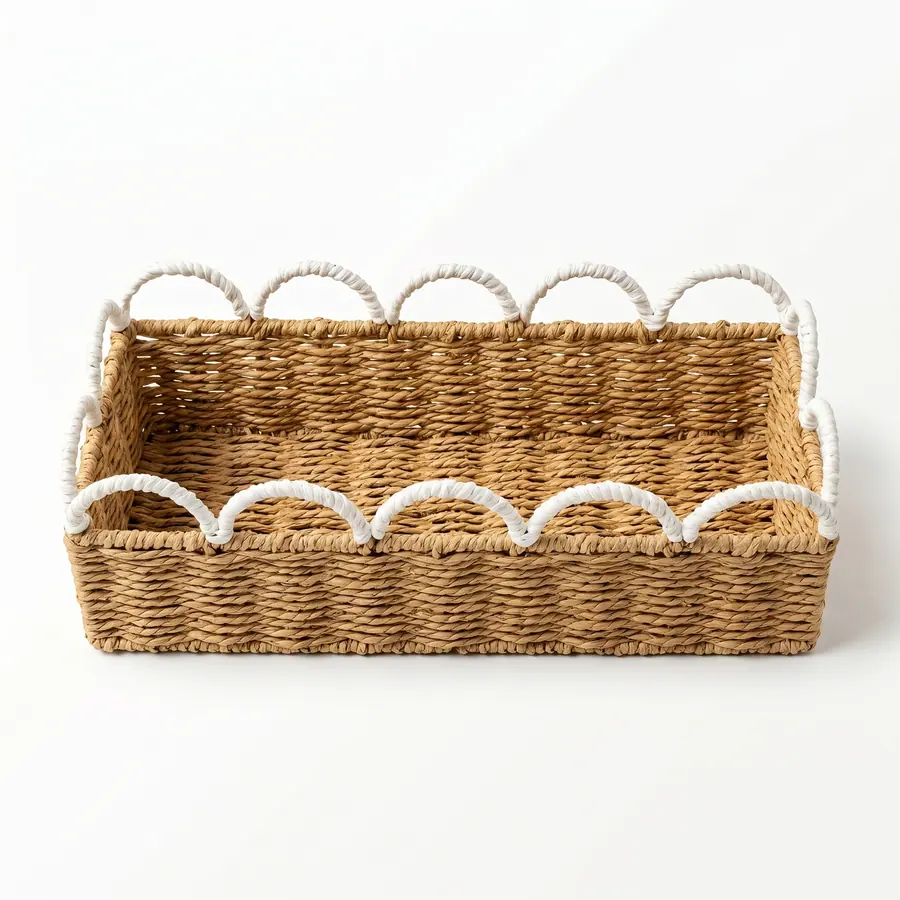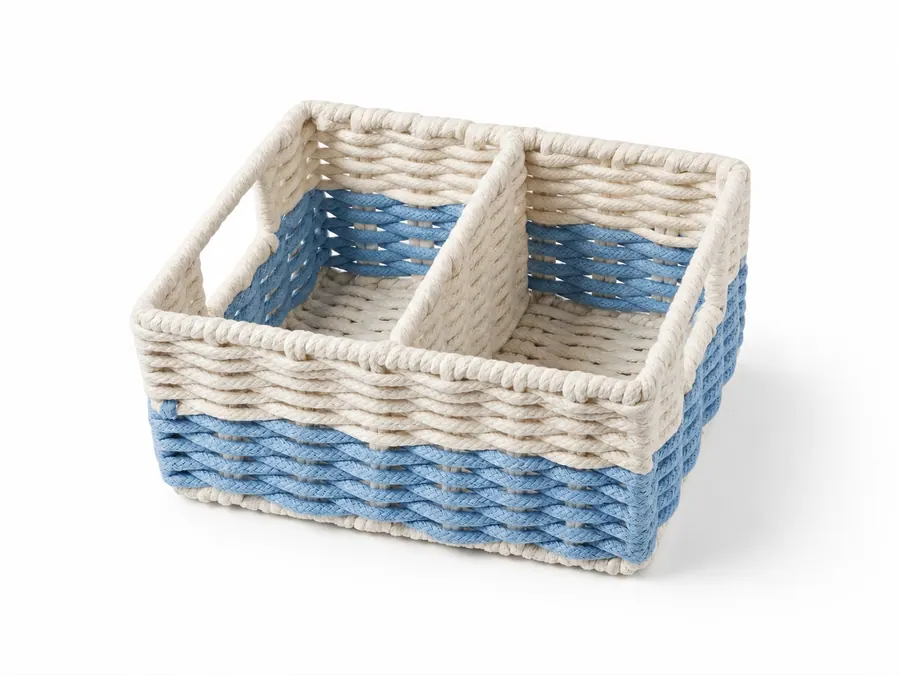
Substitute paper rope, water hyacinth, or cotton rope only when the existing design has a clearly defined gap and the proposed material can be evaluated against the same requirement. A material change is not a simple color edit. It can alter strand scale, weave geometry, frame needs, dimensions, hand feel, surface contact, recovery after packing, label language, and quotation assumptions. Treat it as controlled redevelopment.
The correct first question is “What must improve?” rather than “Which material is better?” A buyer may need a different visual texture, a softer contact surface, a more defined basket shape, a different color direction, a revised pack-out, or a solution to an availability or development issue. Write that objective and protect the design features that cannot change. If the problem is not defined, substitution creates more variables without providing a measurable decision.
1. Identify a real trigger before opening the material choice
A substitution review is justified when the current sample misses a critical requirement, when a component cannot be sourced as specified, when the intended use has changed, or when the program has a new retail or packing constraint. It may also be appropriate when the buyer intentionally wants a new surface character or assortment architecture. In each case, record the trigger and the evidence that will show whether the change worked.
Price alone is an incomplete trigger unless quotations are normalized. A lower material line can be offset by a different frame, more hand adjustment, revised packaging, lower nesting efficiency, new labels, or another sample round. Ask for the old and proposed constructions on the same quantity, packing, delivery, and approval basis. Do not compare an approved complete product with an alternative that still contains unstated assumptions.
Do not substitute simply because two materials look similar in a cropped image. Paper rope, water hyacinth, and cotton rope can be worked into related forms, but the finished result depends on the strand, preparation, weave, support, rim, base, handles, and finishing. The paper rope category can provide visual reference points; it does not prove that an existing design can switch material without redevelopment.
2. Freeze the approved baseline before changing anything
A buyer cannot evaluate a substitution if the original design is moving at the same time. Freeze the current sample revision, annotated dimensions, material board, color reference, construction notes, functional checks, labels, and pack-out. Mark which features are fixed and which may be redesigned. This baseline becomes the control for the alternative sample.
Photograph the baseline from the same views that will be used for comparison: front, side, base, rim, interior, handle, lid, and packed condition. Record outside and usable dimensions, weight if commercially relevant, nesting arrangement, and all open issues. If the baseline itself is not approved, say so. The substitution can then be judged as an alternative development path rather than falsely presented as equivalent to an approved product.
Create one change request with a revision number. It should name the original material, proposed material, reason for change, target improvement, protected features, acceptable redesign areas, evidence required, owner, and decision deadline. Verbal approval such as “try cotton rope instead” is too weak for a change that can affect the entire product.
3. Compare material directions by design consequence
The comparison should describe likely design questions, not universal rankings. Paper rope may be explored when the brief prioritizes a defined woven look and controlled color direction, but the exact rope, frame, and exposure conditions still require approval. Water hyacinth may be explored when a visibly varied plant-fiber texture is central to the concept, while strand range, surface contact, support, and moisture controls become key questions. Cotton rope may be explored when a softer textile-like hand is desired, while shape support, deformation, soil visibility, color, seam construction, and care language need review.
These are starting points for sampling, not promises. The same material can behave differently when diameter, braid, twist, density, frame, basket size, or finish changes. Use actual proposed samples rather than a generic swatch to make the final decision.
| Proposed direction | Reason to explore it | Questions reopened by the change |
|---|---|---|
| Paper rope | Defined woven surface, color or collection direction | Rope reference, frame, edge finish, exposure, abrasion and pack-out |
| Water hyacinth | Pronounced natural texture and visible strand character | Texture range, contact surface, support, rim pressure and moisture plan |
| Cotton rope | Softer textile-like hand or a sewn-rope construction direction | Shape retention, seam, soil visibility, color, care and compression recovery |
If the project is still deciding whether paper rope fits at all, resolve that in the paper rope suitability and caution guide. If a water hyacinth option is proposed, use the dedicated texture, structure, and moisture verification guide. Those evaluations feed the substitution decision but should not be collapsed into a generic material score.
4. Run an impact review before requesting the new sample
For every proposed change, review six impact areas. First is geometry: strand scale and weave may change wall thickness, opening, inside capacity, corners, rim, and nesting clearance. Second is structure: the frame, base, handles, lid, lining, and attachments may need redesign. Third is appearance: color, sheen, texture range, weave spacing, transitions, and branding contrast may move.
Fourth is use: contact surface, stability, carrying, lid operation, shelf fit, and any buyer-defined functional check must be reconsidered. Fifth is packing: nesting, separators, compression, abrasion, moisture controls, carton dimensions, and recovery after unpacking may change. Sixth is commercial scope: material preparation, labor, sample work, unit packing, carton utilization, quantity basis, and timing assumptions may need a new quote.
Use a simple impact status for each item: unchanged with evidence, changed and accepted, changed and pending, or not applicable. “Same as before” is not evidence when the component or method has changed. If the supplier proposes retaining a prior approval, ask what comparison supports that decision.
5. Build the alternative sample as a controlled comparison
Send the supplier the frozen baseline and the numbered change request. Ask for an alternative sample that identifies every construction change, not just the visible material. Where possible, keep protected features constant so the buyer can isolate the effect of the substitution. Where the material makes that impossible, require the supplier to explain the redesign and its consequences.
Review samples side by side using the same conditions and camera views. Compare complete appearance, internal capacity, critical dimensions, base stability, rim, handles, lid, lining, contact surfaces, and the agreed use checks. Evaluate both products in their proposed packing. A material that looks better unpacked may perform worse after nesting or may require a carton change that affects the commercial decision.
Do not approve from a small swatch if the question concerns basket shape or packing. A swatch can confirm a color or surface direction, but it cannot show the interaction among material, weave, frame, size, and finish. The decision evidence should match the reason for substitution.
6. Reset approval points that the material touches
Material substitution should automatically reopen material identity, color, texture, weave, dimensions, and finished appearance. It should also reopen any structural, functional, labeling, or packing item affected by the change. A full restart is not necessary when an item is demonstrably unchanged, but the record should state why its approval remains valid.
Use this re-approval matrix:
| Approval item | Reopen? | Evidence |
|---|---|---|
| Material and color | Always | Proposed material reference and finished sample |
| Weave and finished texture | Always | Full and detail comparison views |
| Dimensions and usable space | Always | Annotated measurements on the alternative |
| Frame, base, rim, handles, lid | If construction or behavior changes | Updated construction notes and sample checks |
| Functional checks | If load path, contact, shape, or use changes | Repeated method with recorded result |
| Retail label and care text | If composition or handling wording changes | Revised artwork and market review |
| Packing and carton | If nesting, compression, abrasion, moisture, or volume changes | Full pack-out and carton data |
| Price and timing | Always | Revised quote with assumptions and start conditions |
Approval emails should name the chosen option and superseded revision. Retain the rejected alternative record if it explains why the program returned to the original material; that history can prevent the same unsupported proposal from resurfacing during production or repeat ordering.
7. Keep environmental and compliance claims outside the material shortcut
Changing to a plant-based or cotton material does not by itself establish that the finished basket has a lower environmental impact, is recyclable, biodegradable, compostable, certified, or compliant in a destination market. The Federal Trade Commission’s Green Guides advise against broad, unqualified environmental benefit claims and call for clear, specific qualifications. Buyers should review the exact claim, product scope, evidence, market, and current legal requirements separately.
The same rule applies to composition. Identify every relevant component, including frame, stitching, lining, adhesive, coating, label, and packaging before making a whole-product statement. If only one component changed, do not write language that implies the entire product changed. Route proposed claims through the dedicated natural woven basket sustainability-claims guide and qualified market review.
Compliance should also be treated as a buyer-market variable. The destination, intended user, product category, label text, and required testing can determine what documents are needed. A material name is not a compliance result.
8. Requote the complete product, not only the new material
Ask the supplier to return a complete revised quotation against the alternative sample. It should state currency, quantity by SKU and color, unit-price scope, material and construction, retail and export packing, carton data, sample or development charges where applicable, payment terms, quote validity, delivery basis, and timing start conditions. Ask for a bridge explaining major differences from the baseline.
MOQ and timing must be reconfirmed rather than inherited. A new material, color, frame, sewing or weaving method, or packaging component can change the workable quantity and sequence. No universal number applies across all substitutions. If the alternative is not feasible at the requested assortment, compare explicit adjustments such as fewer colors, shared components, or a different size mix.
The commercial decision should include the cost of approval and risk, not just the unit price. Consider additional samples, artwork changes, carton revisions, inspection methods, and possible launch impact. The chosen option should be the one that meets the defined requirement on an accepted total basis.
9. Release a substitution RFQ with a decision record
Before asking for an alternative, provide:
- the baseline revision, sample views, dimensions, construction, checks, and pack-out;
- the exact problem to solve and target improvement;
- protected features and permitted redesign areas;
- proposed material direction and any known constraints;
- required comparison views, measurements, checks, and packing trial;
- label, claim, artwork, and destination-market review needs;
- quantity by SKU and color, commercial basis, and decision date;
- the rule for approving, rejecting, or requesting another revision.
Ask the supplier to return the alternative construction, impact review, sample plan, complete quotation, assumptions, exceptions, and evidence. Use the OEM and ODM development path to organize redesign responsibility, then submit the controlled package through the RFQ form.
A successful substitution is not the one that merely looks acceptable in a new photograph. It is the one that solves the stated problem, preserves or deliberately revises the protected requirements, passes the reopened approval gates, and leaves a clear record for production and repeat orders.