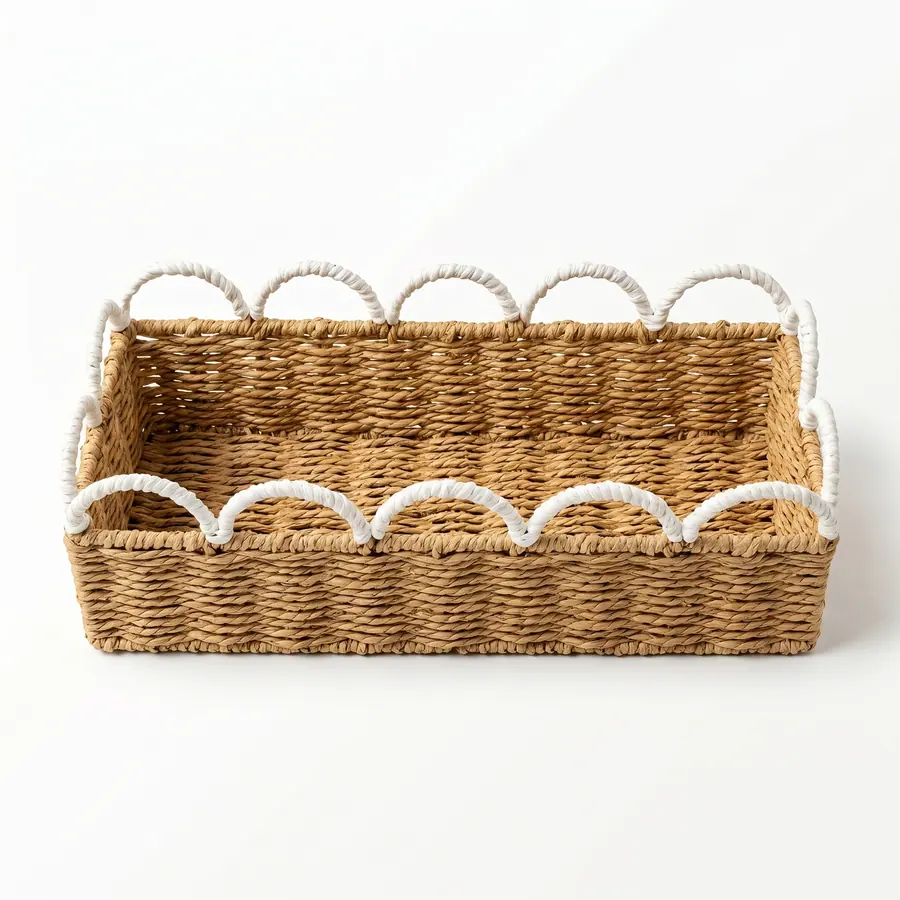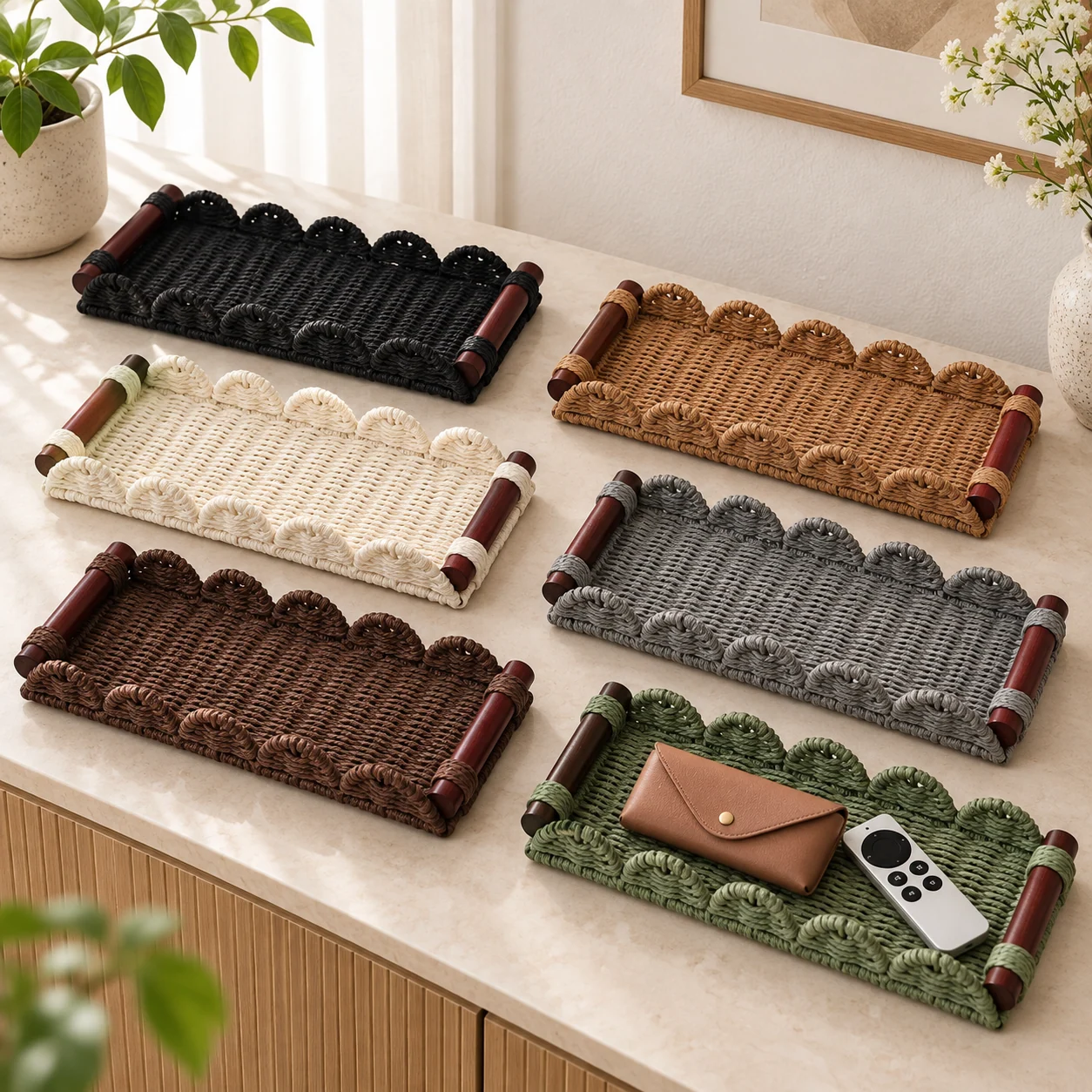
Choose your first sample colors by the shelf and packaging they need to join. Compare the six JZ10185 versions with the same merchandise, lighting and viewing angle. Judge each paper rope body together with its dark reddish-brown wooden rods, then shortlist colors that serve a clear purpose in your collection.
The JZ10185 scalloped paper rope tray collection includes Black, Warm Brown, Ivory, Gray, Dark Brown and Green. Each color is sold as an individual tray. The shared shallow rectangular form lets buyers compare color choices while keeping the main design consistent.
Define the palette the tray needs to join
Start with the merchandise and presentation already planned for the range. Gather the actual packaging, one representative display surface and any textile or printed material that will appear beside the tray. These become your reference palette.
Write a short description of the tray's role. For example: “The tray groups our boxed products on a pale shelf, with the package labels remaining easy to read.” That gives the color decision a practical purpose.
Then identify the visual relationship you want: the body might repeat a packaging color, connect two existing materials or create a clear outline around the contents. An attractive color on its own may not fulfill that role. Keep the reference objects nearby throughout selection so each candidate is assessed against the same brief.
Put all six color SKUs on the same shortlist
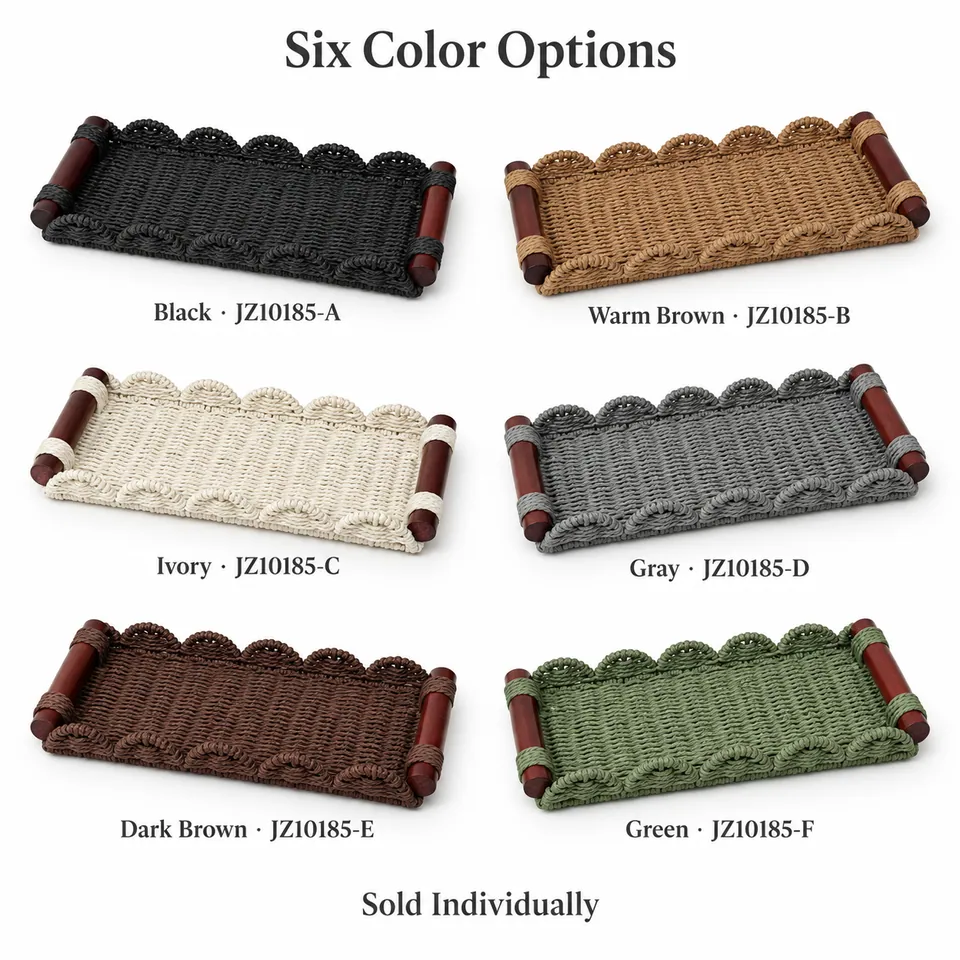 Six body colors share the dark reddish-brown wooden end rods. Each selected color is sold as an individual tray.
Begin with the complete series before narrowing the choice. This prevents a familiar color name from deciding the selection before you have compared the products.
| Color SKU | Published color | A useful comparison in your display |
|---|---|---|
| JZ10185-A | Black | Check how the dark body frames light packaging and relates to dark printed details. |
| JZ10185-B | Warm Brown | Compare it with your actual brown packaging, wood surfaces or tan textiles. |
| JZ10185-C | Ivory | Check whether the outline stays clear beside pale packaging and display surfaces. |
| JZ10185-D | Gray | Compare the gray body and warm-colored rods together against your packaging. |
| JZ10185-E | Dark Brown | Check the visual separation between the deeper brown body, rods and contents. |
| JZ10185-F | Green | Place it beside the actual green accents or printed motifs in your range. |
These prompts describe visual comparisons, not sales performance or demand. Every color starts with the same opportunity to answer your brief; none is presented as the best seller or the default choice.
Evaluate the body and wooden rods as one product
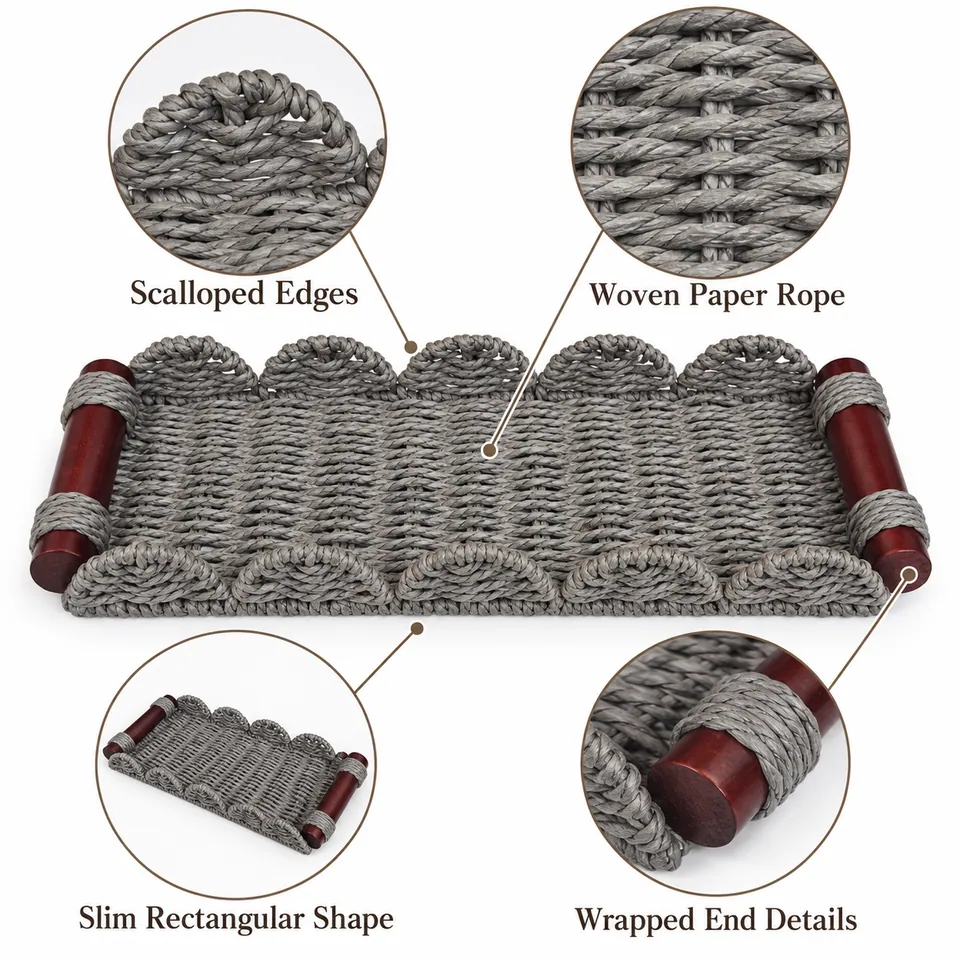 The body, scalloped rim and wrapped wooden rods form one visual composition. Illustration from the published collection.
Across the six listed versions, the wooden end rods remain dark reddish-brown while the paper rope body changes color. Include the rods when judging the palette. Cropping them out removes an important part of the finished product.
Check the tray empty first. Look at the relationship between the body, the rods and the five filled scalloped units on each long side. Then add the intended contents and inspect the combination again. Merchandise may cover much of the base, changing which parts of the tray carry the most visible color.
An overhead view helps compare the body around the contents. An angled view shows the rods and scalloped profile more clearly. Keep both views in your selection record, particularly when colleagues or suppliers will review the choice without having the sample in front of them.
Run one consistent comparison for every candidate
Use product images for an initial shortlist, then carry the comparison onto physical samples. A manageable exercise is to repeat one arrangement for every shortlisted color.
- Fix the scene. Use the same surface, merchandise and background. Keep the objects in the same positions relative to the tray.
- Keep the light consistent. Compare in one session where possible. Avoid judging one candidate in direct sunlight and another under a warm lamp.
- Repeat the camera position. Photograph each tray from the same overhead and angled positions, with the rods fully visible. Keep the camera's exposure and white-balance settings consistent where possible.
- Review the complete arrangement. Check whether the package labels remain clear, whether the tray's edge is visible and whether the rods connect comfortably with the rest of the palette.
- Record the reason to continue. Write what each candidate contributes, or the specific uncertainty a physical sample still needs to resolve.
When a close color match matters, compare physical references. A shared color name or a screen image cannot fully describe that relationship. Our guide to communicating color requirements for handmade woven products explains how to make that discussion more precise.
Keep size and product placement consistent
The collection lists maximum outside dimensions of 36 × 16 × 4 cm, including the end rods and the highest scalloped points. Those measurements describe the outer envelope; they do not establish the usable base area. The 4 cm maximum is also not a continuous retaining wall around the contents.
Try the actual merchandise on the sample, using its intended packaging. Check support beneath corners, contact with the rods and room to place or remove each item. Observe whether rounded objects move and whether placement causes rubbing or marks. If an insert is needed, repeat the arrangement with it present.
Use this same accepted layout across the color comparison. Otherwise, a better arrangement may be mistaken for a better color. For a fuller measurement brief, refer to the woven desktop organizer and tray specification guide.
Give each selected SKU a reason to stay
Turn the comparison into a short buying record. This worksheet can be copied into a sample request or shared with the team approving the range.
| Selection field | What to record |
|---|---|
| Display brief | Shelf or packaging palette, intended merchandise and the tray's visual role |
| Candidate | Exact JZ10185 color SKU and sample reference |
| Comparison setup | Surface, lighting and the overhead and angled photographs used |
| Whole-product result | How the body, wooden rods and contents work together |
| Placement result | Item positions, contact points and any insert used |
| Reason to sample or retain | One distinct purpose the color serves, or one specific question still to resolve |
For example, “Ivory keeps the dark carton labels clear against our pale display” is more useful than “Ivory looks nice.” It records a judgment your team can review against the photograph. Treat this as an example of wording, not a result established for your products.
Prioritize the color that best answers the existing display brief. Add another when it serves a different presentation or resolves a meaningful comparison. If two candidates serve the same purpose, compare them directly before expanding the sample request. This creates a reasoned starting assortment without inventing a universal color ratio.
Questions buyers often ask
How many JZ10185 colors should I sample first?
Let the number follow the display briefs you need to evaluate. Prioritize a color for the main presentation, then add candidates that serve another role or resolve a specific comparison. The six-color range does not imply that every buyer needs all six samples.
Do the wooden rods change color with the tray body?
Across the six listed JZ10185 versions, the rods are dark reddish-brown. The paper rope body changes between Black, Warm Brown, Ivory, Gray, Dark Brown and Green. Assess the rods and body together when comparing each SKU.
Is JZ10185 supplied as a six-piece set?
No. The published collection describes individual trays sold by color. Identify the color SKU and the number of trays required, then confirm packing. A photograph showing six colors is a range overview, not a six-piece set description.
Can I discuss colors or other specifications for my brand?
Yes. JINZHAO CRAFT invites discussion of color, size, logo, material and packaging requirements through its OEM/ODM process. Share the intended result and references so feasibility and order details can be confirmed. MOQ, price and lead time are confirmed through an inquiry.
Send a sample request that explains the choice
Include the selected color SKUs, your display brief, merchandise dimensions and the comparison images. State the sample quantities and packing needs, and distinguish the published options from any proposed changes. Send your JZ10185 sample requirements to confirm the next steps. Once the colors are selected, use the mixed-SKU assortment and carton guide to record quantities and packing relationships. Selecting colors and confirming an order breakdown are separate decisions.
Source: JINZHAO CRAFT's JZ10185 collection page, reviewed on 2026-10-06. The comparison workflow above is a buyer selection method, not a claim of completed product performance testing.