Direct answer
Do not use one care label for every woven basket. Confirm the woven material, frame, dye, coating, adhesive, liner, trim, intended environment, and tested cleaning method. A conservative default for untested plant-fiber or paper-rope products is dry indoor use, gentle dust removal, no soaking, prompt drying after minor accidental dampness, base-supported handling, and avoidance of unverified washability, waterproof, mold-resistant, or load claims. Care wording should be approved against a representative finished sample and revised whenever material, finish, liner, intended use, or packaging conditions change.
Approve care copy from the finished construction
- Care wording should be treated as part of the product specification, not as generic packaging filler. Start with a component list for the approved sample: woven material, supporting frame, coatings or dyes, adhesives, sewing thread, liner, handles, trim, labels, and any removable parts. Record intended use and foreseeable exposure. A paper-rope basket with a metal frame, a water-hyacinth tray with dyed trim, and a cotton-rope organizer with a sewn label can react differently to moisture, friction, heat, light, and cleaning.
- Separate three evidence levels. Verified product facts are visible or documented for the approved SKU, such as material identity supplied in the product file or a removable liner shown on the sample. Conditional capabilities are options the supplier can review, such as alternate labels or packing. Claims not established include washable, waterproof, colorfast, stain resistant, mold resistant, load bearing, child safe, or suitable for constant bathroom humidity. Only the first level belongs in care copy without further qualification.
- The Canadian Conservation Institute publishes detailed care guidance for historic basketry and plant materials. It supports conservative principles such as limiting water exposure, using gentle dust removal, testing cleaning in a hidden area, avoiding immersion, and supporting structures during handling. Museum conservation and new retail use are different scopes, so this guide uses those principles as cautionary evidence rather than claiming that museum environmental thresholds are mandatory consumer instructions.
Use a conservative baseline for paper rope
- Paper rope should not be described as washable merely because a cloth can touch its surface. Unless the finished product has an approved cleaning method, use dry indoor storage as the baseline. Remove loose dust with a clean, soft, dry brush or cloth using light pressure. Avoid soaking, running water, wet wiping over large areas, steam, bleach, household solvent, or abrasive scrubbing. Water can change paper-based surfaces, color, adhesive joints, frame finish, and shape in ways that a visual sample alone cannot predict.
- For a minor accidental splash, the buyer may approve wording that instructs users to blot promptly with a clean absorbent cloth, avoid rubbing, reshape gently if necessary, and allow the item to dry completely in a well-ventilated area away from concentrated heat. That wording still needs review against the actual dye, coating, adhesive, frame, liner, and trim. Do not promise recovery, no staining, or no deformation after wetting unless a defined product test supports it.
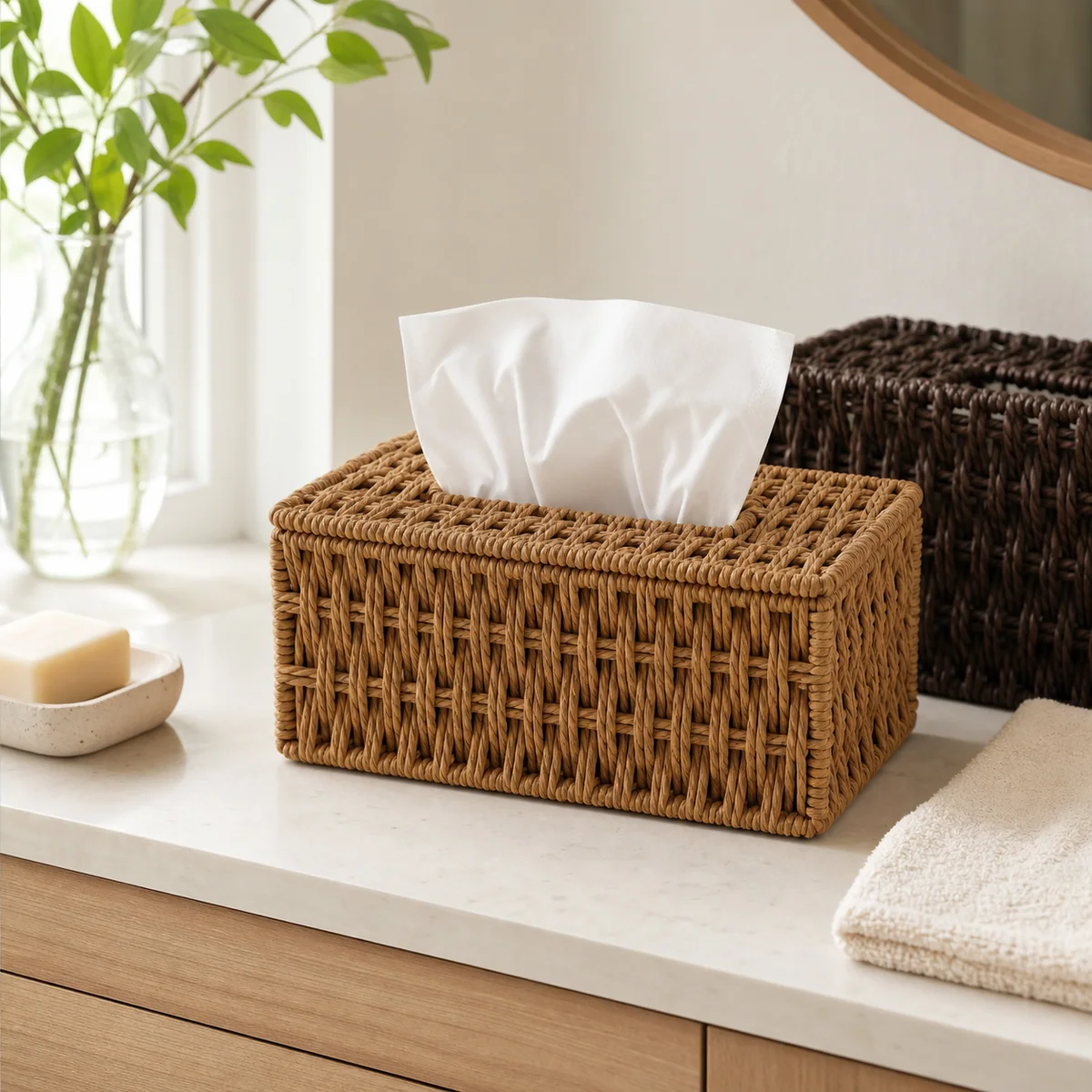
- JINZHAO CRAFT's site currently presents paper-rope storage categories and a paper-rope tissue box cover, and its factory page shows paper-rope preparation and woven production media. These observations support the existence of a paper-rope product direction, not a universal care outcome. Care instructions for each SKU must follow its approved bill of materials and sample, especially where the rope is colored, braided, coated, stitched, combined with fabric, or wrapped around a frame.
Treat water hyacinth and other plant-fiber basketry as moisture sensitive unless proven otherwise
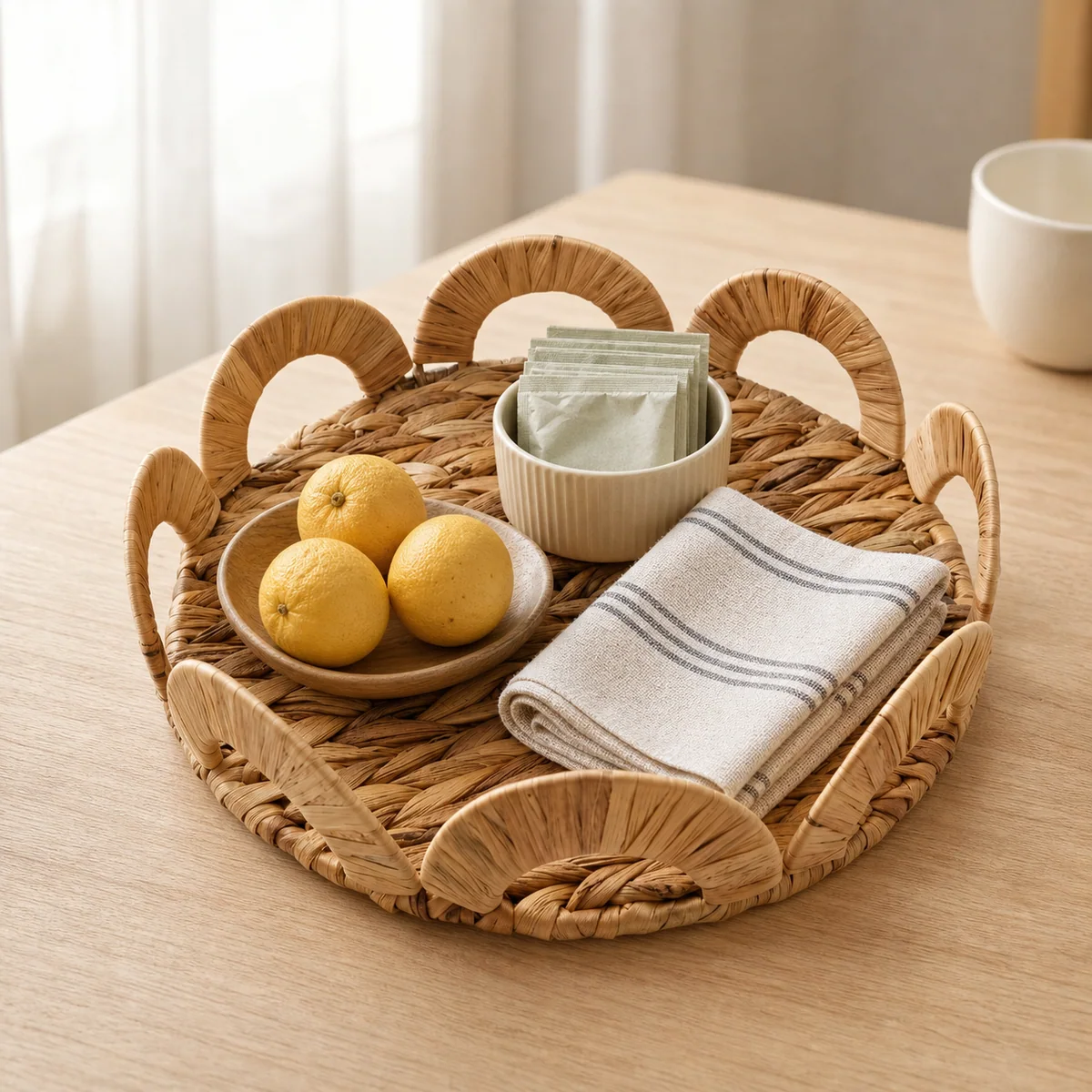
- Water hyacinth, seagrass, rattan, willow, bamboo, and other plant-derived woven structures should not share an unqualified 'natural fiber' care sentence when their construction and finish differ. The Canadian Conservation Institute explains that plant materials can absorb and release water, swell and shrink by fiber direction, distort when wet, and develop damage under physical force or unsuitable humidity. Those mechanisms justify cautious copy, but they do not establish a product-specific failure threshold for a new retail basket.
- A conservative plant-fiber instruction can recommend dry indoor use, protection from standing water and prolonged dampness, gentle removal of loose dust, and complete ventilation after minor accidental dampness. It can advise users to lift from the base rather than relying only on decorative rims or handles when the approved design does not carry a verified handle-load claim. Avoid numerical humidity limits on a retail label unless the product program has a justified requirement and the buyer has decided how consumers can interpret it.
- Visible mold, persistent odor, major water saturation, broken fibers, or structural distortion should not be addressed with an improvised cleaning recipe. The buyer can direct consumers to stop use, isolate the item from clean products where appropriate, and follow the brand's customer-service process. Do not tell consumers to bleach, heat, pressure wash, or seal a natural-fiber basket without product-specific evidence. Remediation, disposal, and health wording may require qualified local guidance.
Do not assume cotton rope is machine washable
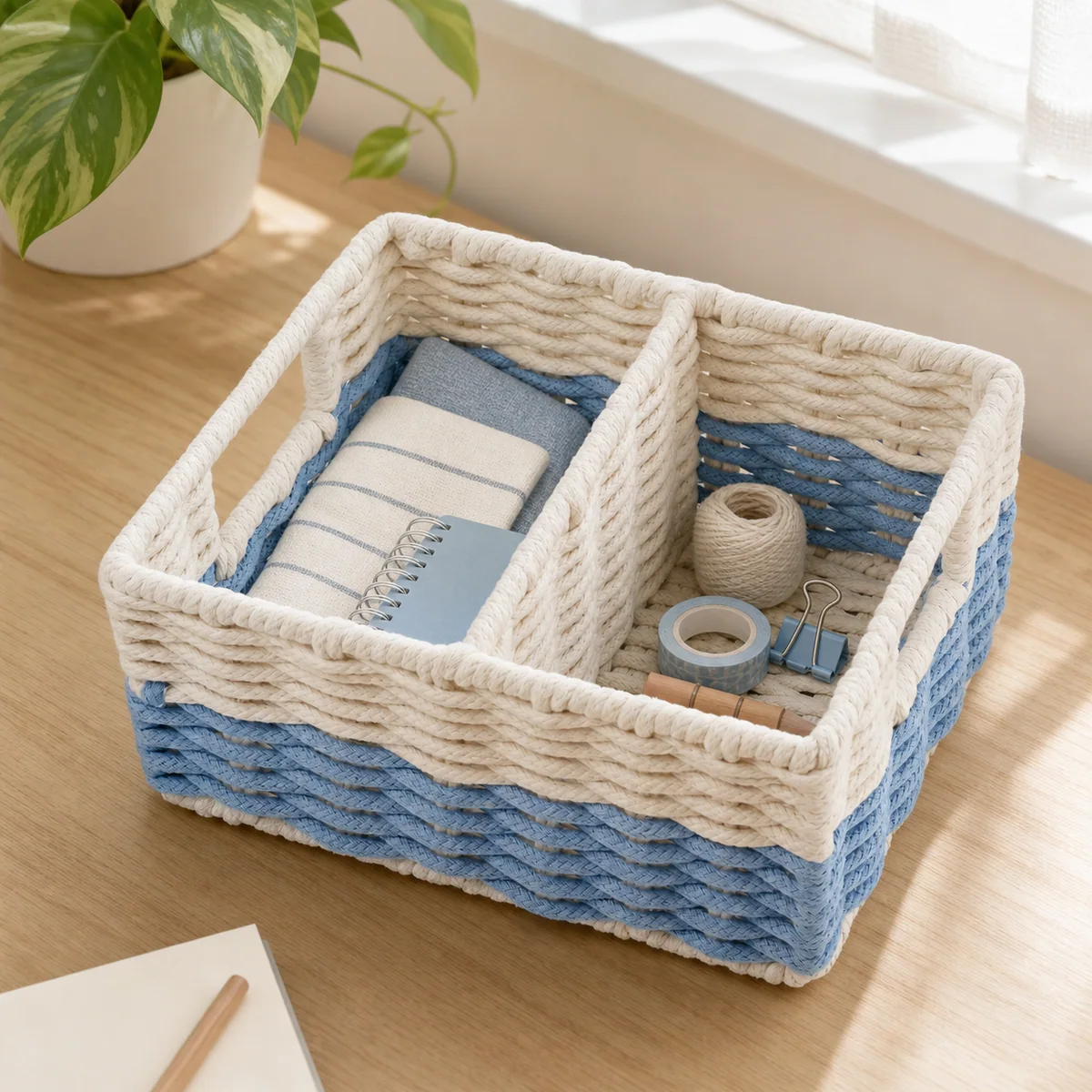
- Cotton fiber may be washable in some textile products, but a cotton-rope basket is an assembled structure. It may contain a hidden frame, interfacing, stitches, adhesive, label, decorative component, blended fiber, dyed rope, or base reinforcement. Water and mechanical action can affect shape, shrinkage, color, seams, and attached parts. Therefore, '100% cotton' or a soft hand feel does not prove that the finished basket can be machine washed, soaked, tumble dried, ironed, or treated with bleach.
- If a buyer wants a washable claim, define the exact finished product and cleaning cycle: water temperature, detergent, machine or hand method, agitation, spin, drying position, reshaping, number of cycles, and acceptance checks for dimensions, color, surface, seam condition, label, odor, and function. Use representative samples from the intended construction. A pass for one color, size, or unframed sample should not be generalized to every variation without an approved rationale.
- When washability is not established, approve a lower-risk instruction such as gentle removal of loose dust and spot treatment only according to a buyer-approved method tested on the finished sample. Even 'spot clean' needs detail: cleaning agent, amount of moisture, color test, blotting rather than rubbing, drying method, and prohibited treatments. Avoid telling consumers to use a damp cloth as a universal solution when dyes, printed labels, paper components, or adhesives have not been reviewed.
Write separate instructions for liners, frames, handles, and trim
- A removable fabric liner can have its own care direction only when it is genuinely removable without damaging the basket and its fiber, dye, stitching, print, fastening, and label have been reviewed. State that the liner should be removed before cleaning and completely dry before replacement if that behavior is approved. Do not imply that the basket body shares the liner's wash method. A fixed liner should be treated as part of the complete product, with special attention to trapped moisture and seam access.
- Metal frames, wood handles, paint, coating, leather-like trim, paper labels, adhesives, and printed parts can limit the cleaning method. Ask whether metal is exposed, whether a finish can be rubbed, whether trim can transfer color, whether adhesive softens, and whether a label must remain legible. These are buyer variables until supported by component documents or finished-product observations. Care copy should name important prohibitions without listing chemical guarantees that have not been tested.
- Handling language must match structural evidence. If the basket has decorative handles but no agreed load check, avoid 'carry heavy loads' or a numeric capacity. A conservative instruction can say to distribute contents evenly, avoid overloading, support the base when moving the basket, and stop using it if the handle, rim, frame, or weave becomes damaged. If the buyer needs a capacity statement, define contents, loading method, repetitions, sample conditioning, failure criteria, and labeling basis.
Control light, heat, storage, and shape without overclaiming
- Plant materials and dyes can change under light, heat, moisture, and repeated handling. The Canadian Conservation Institute notes light sensitivity and dimensional response in basketry and plant materials, but conservation display limits should not be copied automatically onto consumer packaging. Retail wording can stay practical: avoid prolonged direct sunlight where color change is a concern, keep away from open flame and concentrated heat, store dry, and avoid crushing under heavier objects.
- Nested baskets save space in distribution, yet prolonged tight nesting or unprotected contact can compress rims and surfaces. For consumer storage, advise users not to force one basket into another and to separate pieces if the approved product shows a risk of abrasion or deformation. For collapsible cotton-rope designs, any reshaping instruction should be sampled and photographed. Do not promise that creases will disappear within a fixed time unless verified under stated conditions.
- If a basket arrives misshapen, wet, stained, or with an unusual odor, the care insert should not encourage aggressive home repair. Direct the consumer to the brand's support process and preserve order information. The brand can distinguish normal handmade character from shipping damage using the approved appearance range. This protects the user from unsupported treatment advice and gives the supplier better evidence for corrective action.
Convert evidence into concise retail wording
- A retail insert should state material-specific allowed actions, prohibited actions, drying or storage instructions, handling limits, and a support path. Keep it short enough to be read, but do not remove conditions that prevent misuse. A conservative plant-fiber example is: 'For dry indoor use. Remove loose dust gently with a soft dry cloth or brush. Do not soak or immerse. Blot minor accidental dampness promptly and allow to dry fully with ventilation. Support the base when moving. Keep away from concentrated heat.' The buyer must still adapt it to the actual SKU.
- A conservative unverified cotton-rope example is different: 'Remove loose dust gently. Do not machine wash, soak, bleach, tumble dry, or iron unless the product label expressly permits it. For marks, follow the brand-approved spot-treatment method and test color in a hidden area. Reshape only as directed and dry completely before use.' Do not use this exact language if the product contains a paper label, fixed board, adhesive, frame, or finish that requires stricter instructions.
- Use claims review before artwork release. Check every care verb against the sample evidence and source file. Check every prohibited claim against ecommerce copy, hangtag, carton, marketplace data, and customer-service script. Ensure translations preserve limits such as 'minor,' 'gently,' 'if approved,' and 'do not immerse.' A shorter translation that deletes these qualifiers can create a different product promise.
Maintain a care approval and revision record
- The care file should identify SKU and revision, all materials and finishes, intended environment, reviewed cleaning methods, test or observation record, approved wording by language, artwork version, and responsible approvers. Link it to the approved sample and product specification. If the rope, dye, coating, frame, liner, trim, label, adhesive, supplier, intended use, or destination changes, review whether the care wording and evidence remain valid.
- After sale, classify complaints by observed condition and use context: staining, color transfer, deformation, broken handle, loose fiber, odor, moisture exposure, failed wash attempt, or unclear instruction. Do not treat every complaint as proof of a material defect, and do not dismiss repeated patterns as consumer misuse without investigation. Feed verified findings into the next sample, packaging, care copy, and quality plan.
- JINZHAO CRAFT can discuss care-card content as part of a private-label product and packaging brief, but final wording belongs to the buyer's approved product file. Send the material, structure, destination, intended environment, label languages, cleaning expectation, and any required claim through the RFQ. Exact cleaning performance, load, colorfastness, moisture behavior, compliance, MOQ, tolerance, and timing remain conditional until supported for the specific construction.
Buyer comparison table
JINZHAO CRAFT factory recommendation
For a practical factory quote, share a reference image, target dimensions, material direction, expected order quantity, logo or label needs, retail/export packaging requirements and destination market. JINZHAO CRAFT can then discuss material feasibility, sample direction, MOQ, production timing and export carton planning for the woven storage product.
Primary sources
These references support the defined standards, regulatory context, or buyer process described above. Product-specific obligations and commercial terms still require confirmation for the actual order.
- Care of Basketry - Canadian Conservation Institute Notes 6/2 — Canadian Conservation Institute, Government of Canada
Supports conservative basketry handling, dust removal, hidden-area testing, limited moisture, and no-immersion principles; heritage conservation guidance is not presented as a retail performance standard.
- Caring for basketry and plant materials — Canadian Conservation Institute, Government of Canada
Supports factual explanations of plant-material response to water, physical forces, light, temperature, and relative humidity while preserving the distinction between collection care and consumer labeling.
- Basic care - Textiles — Canadian Conservation Institute, Government of Canada
Supports the boundary that textile cleaning depends on fiber, construction, color, condition, and method; it does not establish washability for an assembled cotton-rope basket.
FAQ
Can woven baskets be washed with water?
Not as a general rule. A finished basket may combine paper, plant fiber, cotton rope, frame, dye, coating, adhesive, liner, and trim. Washing can affect shape, color, seams, surface, and hidden components. Use only a method approved for the exact SKU. For untested paper-rope or plant-fiber baskets, conservative copy should avoid soaking or immersion.
How should a paper rope basket be cleaned?
Unless a product-specific method proves otherwise, recommend dry indoor use and gentle removal of loose dust with a clean soft dry cloth or brush. Do not promise that wet cleaning is harmless. Any instruction for minor accidental dampness should address blotting, ventilation, complete drying, and the actual dye, coating, adhesive, frame, and trim.
Is a cotton rope basket machine washable?
Cotton fiber alone does not establish washability of the assembled basket. Hidden frames, interfacing, labels, dyes, adhesives, reinforcement, and stitching can change the result. A machine-wash claim needs a defined cycle and finished-product acceptance checks. Otherwise, prohibit machine washing and use only a buyer-approved dust or spot-treatment method.
What should care instructions say about water hyacinth baskets?
Use wording specific to the approved finish and intended environment. A cautious baseline is dry indoor use, avoidance of standing water and prolonged dampness, gentle dust removal, ventilation after minor accidental dampness, and base-supported handling. Do not claim waterproof, mold resistant, bathroom safe, or a universal humidity limit without appropriate finished-product evidence.
Can museum basket-care guidance be copied onto a retail label?
No. Conservation guidance provides useful evidence about plant-fiber sensitivity, water, handling, light, and gentle cleaning, but it addresses heritage collections. Retail instructions must be adapted to a new product's materials, intended use, tested cleaning method, destination, and consumer context. Museum environmental thresholds should not be presented as universal legal or performance requirements.
Which care claims should buyers avoid without testing or documentation?
Avoid washable, machine washable, waterproof, water resistant, stain resistant, colorfast, mold resistant, antimicrobial, odor free, fade proof, child safe, food safe, heavy duty, and numeric load claims unless the exact finished product and claim scope are supported. Also avoid fixed drying or shape-recovery promises that were not observed under defined conditions.
Products relevant to this guide
Review current factory product examples, then send target dimensions, quantity and customization requirements for an exact quotation.
Continue learning
Paper Rope, Water Hyacinth, Seagrass and Cotton Rope: Buyer Comparison
Compare 8 real matched basket designs in paper rope and water hyacinth. See weave and texture differences, with clear limits on what the photos can prove.
Read guide →Compliance & ClaimsNatural Fiber Basket Terminology, Customs and Claim Evidence Notes
A buyer reference for naming woven materials, documenting composition, reviewing customs descriptions and controlling environmental claims.
Read guide →Compliance & ClaimsEU and US Product Safety Buyer Checklist for Woven Baskets
Classify woven baskets, assign EU GPSR and US CPSC responsibilities, and build traceability, test, listing, and recall evidence.
Read guide →Materials & ConstructionPaper Rope Construction and Finish Specification Reference
Define paper form, support, frame, weave, joints, finish, adhesive, accessories, liner, zones, evidence, and change control for paper-rope baskets.
Read guide →