Direct answer
Use the narrowest verified description. Name the actual visible material, disclose frames and mixed components, and treat wicker as an incomplete construction term rather than a composition statement. Customs classification depends on the finished product and destination schedule. Natural, renewable, recyclable, biodegradable, non-toxic and sustainable claims require separate evidence; a plant name or handmade process does not prove those outcomes. Maintain a component-level bill of materials, supplier declarations, product photographs, and dated claim substantiation so descriptions remain traceable across RFQs, labels, customs records, and sales listings.
Authority rule: separate identity, construction, origin and claim
- A reliable basket description answers four different questions without blending them. Identity asks what each material is. Construction asks how those materials form the finished article. Origin asks where relevant inputs or the finished product come from and what documentation supports that statement. A marketing claim asks what benefit or attribute is being communicated and what evidence substantiates it. Saying natural wicker basket can leave all four questions unresolved: natural may be an environmental implication, wicker may not identify the fiber, basket says little about the frame, and no origin is stated.
- Build product language from records, not from a preferred search term. Start with the bill of materials or supplier declaration, compare it with the approved sample, and identify visible and hidden components. Record the principal plaiting or rope material, supporting frame, base, rim, handles, stitching, lining, coating, adhesive, label and packaging where they matter to the statement. Then decide which wording is needed for specification, customs, retail labeling, care instructions and marketing. Those documents serve different purposes, so one short catalog phrase should not be copied into every field without review.
Rattan, wicker, willow and bamboo are not interchangeable terms
- Rattan names a group of climbing palms used as a raw material category; Kew's Plants of the World Online, for example, places Calamus rotang in the palm family Arecaceae and records rattan among its common names. That botanical reference does not establish that an offered basket contains Calamus rotang or any rattan species. A supplier that offers rattan should provide the commercial material description and any species or origin evidence required for the buyer's intended claim. Do not infer rattan from a brown woven appearance, and do not use a product photograph as the sole composition record.
- Wicker is commonly used in commerce for woven basketware or a woven appearance, but it is not sufficiently precise for a material specification. The World Customs Organization Chapter 46 title itself refers to basketware and wickerwork while its legal note separately lists examples of plaiting materials, including willow, bamboo, rattans, vegetable strips and paper strips. The purchasing implication is practical: write wicker only as a style or product-category aid, then name the verified material and construction. Willow, bamboo and rattan should not be substituted for one another in documents merely because each can appear in woven goods.
Water hyacinth and seagrass require exact offered-material records
- Water hyacinth is associated with Pontederia crassipes; Kew records Eichhornia crassipes within the synonym data for that accepted species. Use the botanical reference only when it is relevant and supported by the offered material record. It does not verify the contents of a finished basket or its geographic origin. A product specification should still describe the prepared fiber or stalk form, any braid, the frame and mixed components. If a retailer wants a botanical name on packaging, the buyer should obtain traceability appropriate to that wording rather than adding the name from a general reference page.
- Seagrass can function as a broad trade description and may not, by itself, establish one species or one supply source. Ask what material the supplier uses under that term and what evidence is available. If the buyer only needs an internal design label, a controlled material board and commercial name may be enough. If customs, origin, regulated-material or environmental statements depend on exact identity, the evidence threshold is higher. Avoid phrases such as wild harvested, rapidly renewable or ecosystem beneficial unless the relevant source, chain and measurable basis are documented for the actual goods.
Paper rope and cotton rope need form and composition details
- Paper rope should be described as the actual offered paper form rather than grouped automatically with unprocessed plant fibers. The Harmonized Tariff Schedule Chapter 46 note includes strips of paper among materials in a state or form suitable for plaiting, while excluding textile rovings or yarns. That distinction is relevant to document preparation but is not a classification decision for every paper-rope product. Specify whether the visible material is twisted paper rope, flat paper strip, braid or another form, and identify frames, wire, board, adhesive, coatings, textile stitching and linings separately.
- Cotton rope wording also needs verification. A soft woven or coiled appearance does not prove one hundred percent cotton, and the visible sheath may not describe an internal core, stitching thread, reinforcement or accessories. Obtain composition records suitable for the intended use of the statement. If the offered rope is blended, use the verified blend description rather than shortening it to cotton for convenience. Do not extend a component statement to the whole basket. A basket with cotton rope walls and a non-cotton frame, base, thread or label cannot be described accurately by a whole-product claim unless the qualification makes the scope clear.
Customs descriptions: record facts first, classify second
- The World Customs Organization's Harmonized System Chapter 46 covers basketware made directly to shape from plaiting materials, and its note identifies included and excluded material forms. National schedules add subdivisions, legal notes, rates and administrative practice. A mixed-material article can require analysis beyond its retail name. The buyer should therefore give the customs professional a factual packet: photographs, intended use, dimensions, material breakdown, component locations, construction method, frame, lining and any relevant surface-area or weight data requested for the classification method.
- Do not present a supplier's suggested HS code as a guaranteed destination classification. The importer generally needs to review the current schedule and may seek a binding ruling or other formal guidance where uncertainty is commercially significant. Use plain invoice language that matches the goods and the approved specification, but keep marketing adjectives out of the factual material description when they obscure composition. This page does not provide legal advice or assign a code. Its purpose is to prevent a weak source phrase such as wicker organizer from becoming the only information available to the broker.
Environmental wording: every claim needs a defined subject and evidence
- Natural is not a complete environmental conclusion. It can describe origin or appearance, but consumers may read broader implications depending on context. The United States Federal Trade Commission advises marketers not to make broad, unqualified general environmental benefit claims such as green or eco-friendly, and it calls for clear, prominent and specific qualifications. The United Kingdom Competition and Markets Authority similarly says claims should be accurate, clear, supported by up-to-date credible evidence, and should not hide important life-cycle information or conditions. Market requirements must be checked for the destination and publication date.
- Apply a claim worksheet before approving packaging or ecommerce copy. Name the exact subject: whole product, visible weave, one component, package or process. Write the proposed statement, implied meanings, geographic market, evidence owner, method, result, date and expiry or review trigger. Check whether mixed materials, coatings, transport, disposal conditions or limited collection systems alter the implication. Terms such as renewable, recycled, recyclable, biodegradable, compostable, non-toxic, plastic-free, carbon neutral and sustainably sourced each raise different evidence questions. A single supplier letter rarely proves every implied meaning.
Certification, compliance and safety language require current documents
- Do not convert capability discussions into held-status statements. Certified, audited, compliant, tested, approved and passes are high-risk words because readers may understand them as current results for a company, facility or product. Before publication, identify the certificate or report owner, issuing body, scope, product or site covered, standard or method, result, issue date, expiry date and permission to disclose it. A test report for one material or sample does not automatically cover another size, color, construction, factory batch or destination requirement.
- The same restraint applies to intended use. Children's storage, food contact, bathroom use, outdoor use and load-bearing applications can trigger different design and legal questions. A natural fiber name does not demonstrate safety, hygiene, mold resistance, fire behavior, chemical compliance or suitability. Ask the buyer or qualified adviser to define applicable requirements, then collect the necessary supplier records and product evidence. Care wording should reflect the approved product and realistic limits; it should not quietly make a performance guarantee that was never evaluated.
Release checklist for specification, label and citation copy
- Before release, reconcile five records: signed specification, approved sample, current bill of materials or supplier declaration, customs packet and approved marketing or care copy. Confirm that each material term points to the same component in every record. Mark broader retail keywords as search aids rather than composition facts. For each claim, retain the exact final wording and the evidence that supports it. Record the market and effective date of any regulatory guidance used. Establish a review trigger for material substitution, supplier change, new coating, revised packaging, new destination or expired documentation.
- A useful description follows this pattern: product type, verified visible material, supporting construction and qualification. For example, paper-rope storage basket woven over a specified frame is more informative than eco wicker basket. Water-hyacinth weave with a separately identified frame is clearer than natural basket when that matches the records. These are structural examples, not approved copy for an unknown item. Final wording must be built from the product file. When evidence is absent, say pending confirmation or omit the claim; do not fill the gap with a plausible industry assumption.
Buyer comparison table
JINZHAO CRAFT factory recommendation
For a practical factory quote, share a reference image, target dimensions, material direction, expected order quantity, logo or label needs, retail/export packaging requirements and destination market. JINZHAO CRAFT can then discuss material feasibility, sample direction, MOQ, production timing and export carton planning for the woven storage product.
Primary sources
These references support the defined standards, regulatory context, or buyer process described above. Product-specific obligations and commercial terms still require confirmation for the actual order.
- HS Nomenclature 2022 Edition — World Customs Organization
International Harmonized System structure and Chapter 46 reference; national classification and current legal treatment must be confirmed for the destination.
- Calamus rotang L. — Royal Botanic Gardens, Kew
Botanical reference showing one accepted rattan species in Arecaceae; not proof that a specific basket contains this species.
- Pontederia crassipes Mart. — Royal Botanic Gardens, Kew
Botanical identity and synonym reference for water hyacinth; not product traceability or sustainability evidence.
- Environmental Claims: Summary of the Green Guides — Federal Trade Commission
United States environmental marketing guidance, including general-benefit, renewable-material, recyclable and non-toxic claim boundaries.
- The Green Claims Code Checklist — United Kingdom Competition and Markets Authority
United Kingdom business checklist for clear, accurate and substantiated environmental claims; it is guidance, not legal advice for every market.
FAQ
Is wicker a material?
Wicker alone is not precise enough for a procurement composition. Use it as a woven-product or style term only when helpful, then identify the actual material, frame and other components from the product record.
Are rattan and water hyacinth the same material?
No. Rattan refers to climbing palms, while water hyacinth is associated with Pontederia crassipes. A finished-product claim still needs evidence that the offered basket contains the named material.
Can a supplier choose the HS code for an importer?
A supplier can provide composition, construction and a suggested code, but the importer should confirm classification under the current destination schedule with a qualified customs professional. Mixed-material goods may need detailed analysis.
Does natural fiber mean biodegradable or recyclable?
No. Those claims concern the complete product, disposal conditions, collection systems and supporting evidence. Frames, coatings, adhesives, linings and mixed fibers can change the scope, and market guidance may require explicit qualifications.
What evidence supports a one hundred percent cotton claim?
Use current composition documentation appropriate to the product and market, and verify the scope. If only the rope is cotton, the wording should not imply that the frame, thread, base, labels and other components are also cotton.
What should change when a material is substituted?
Update the material and component record, sample approval, customs packet, care text, environmental-claim review and any affected tests or quotations. Do not carry the old evidence forward without confirming that its scope still applies.
Products relevant to this guide
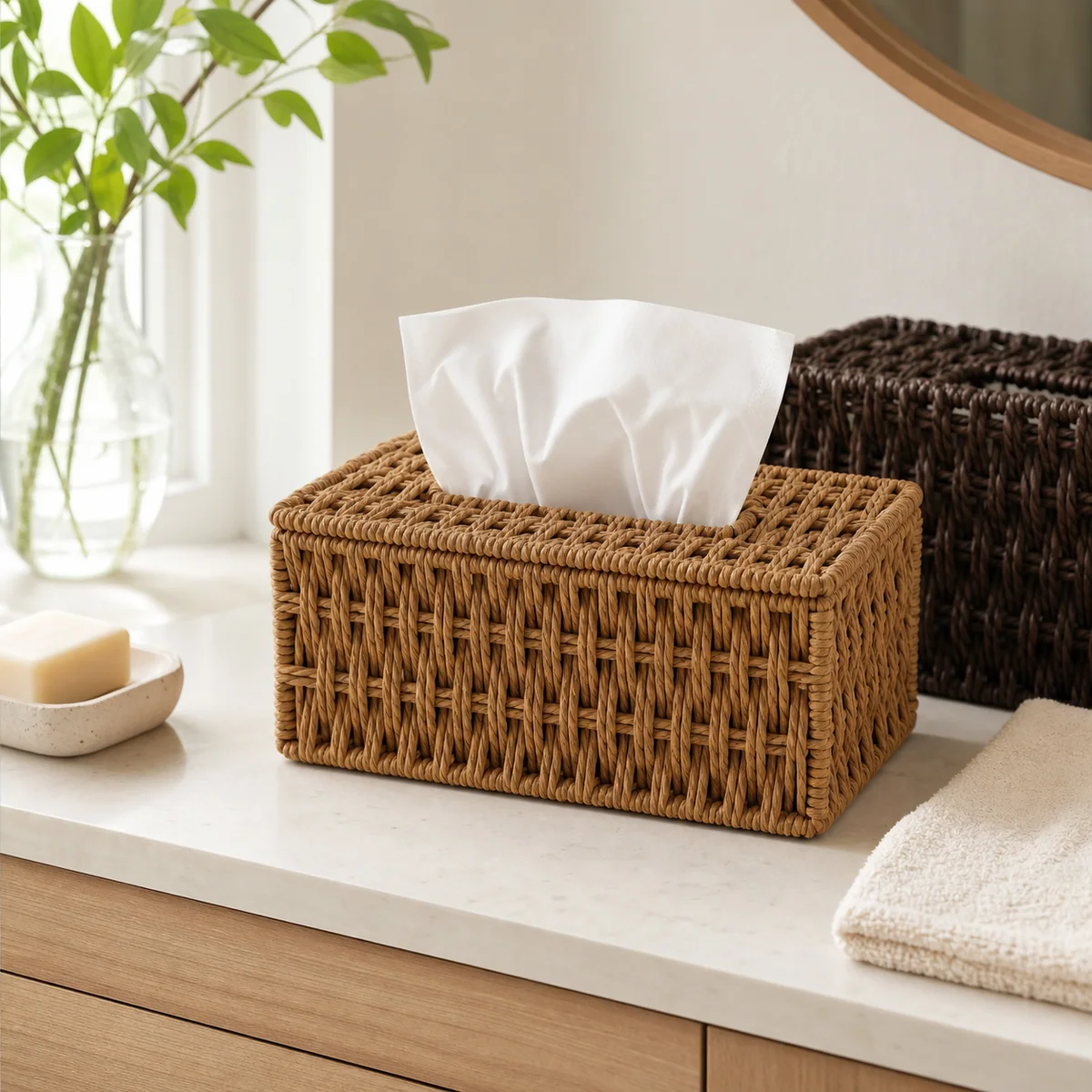
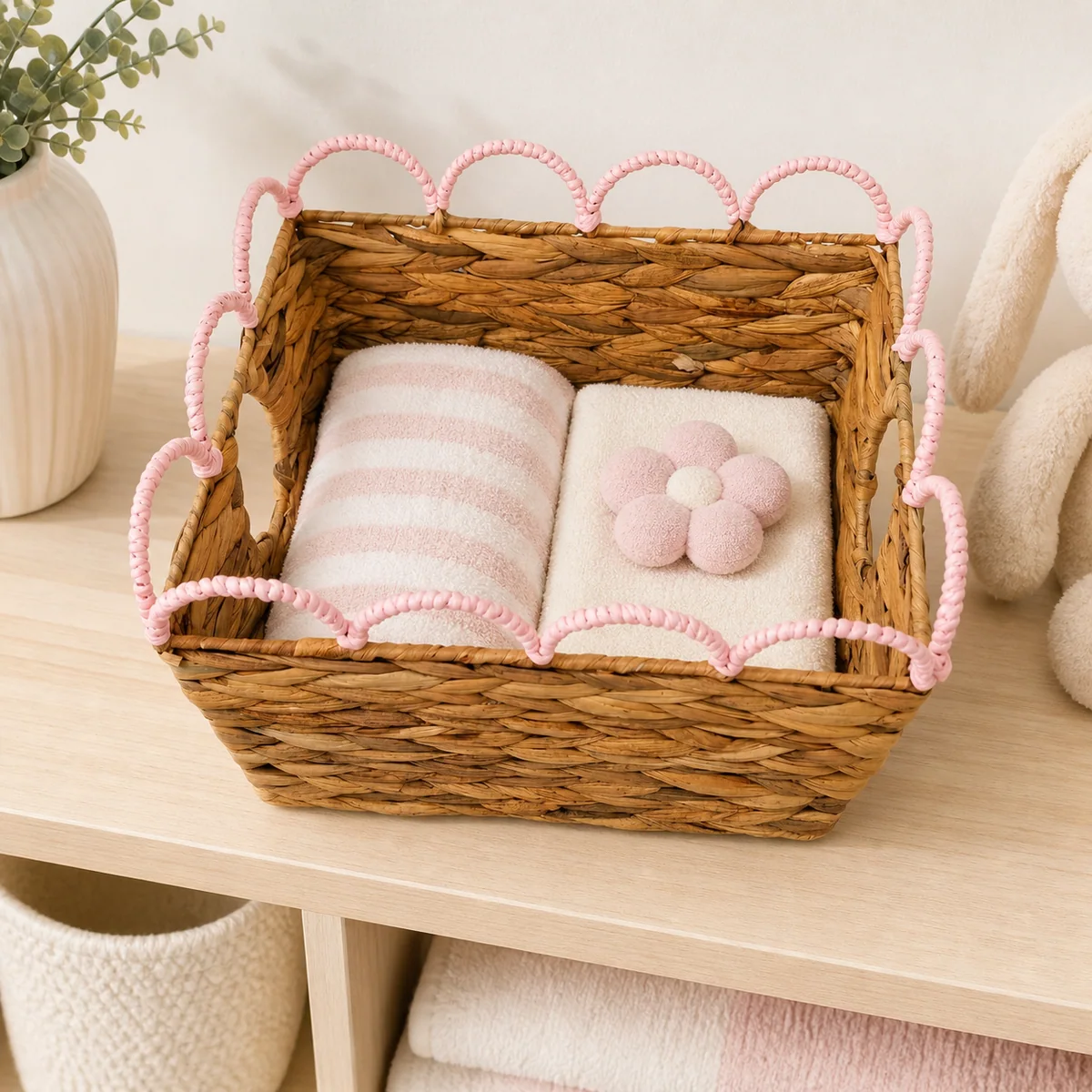
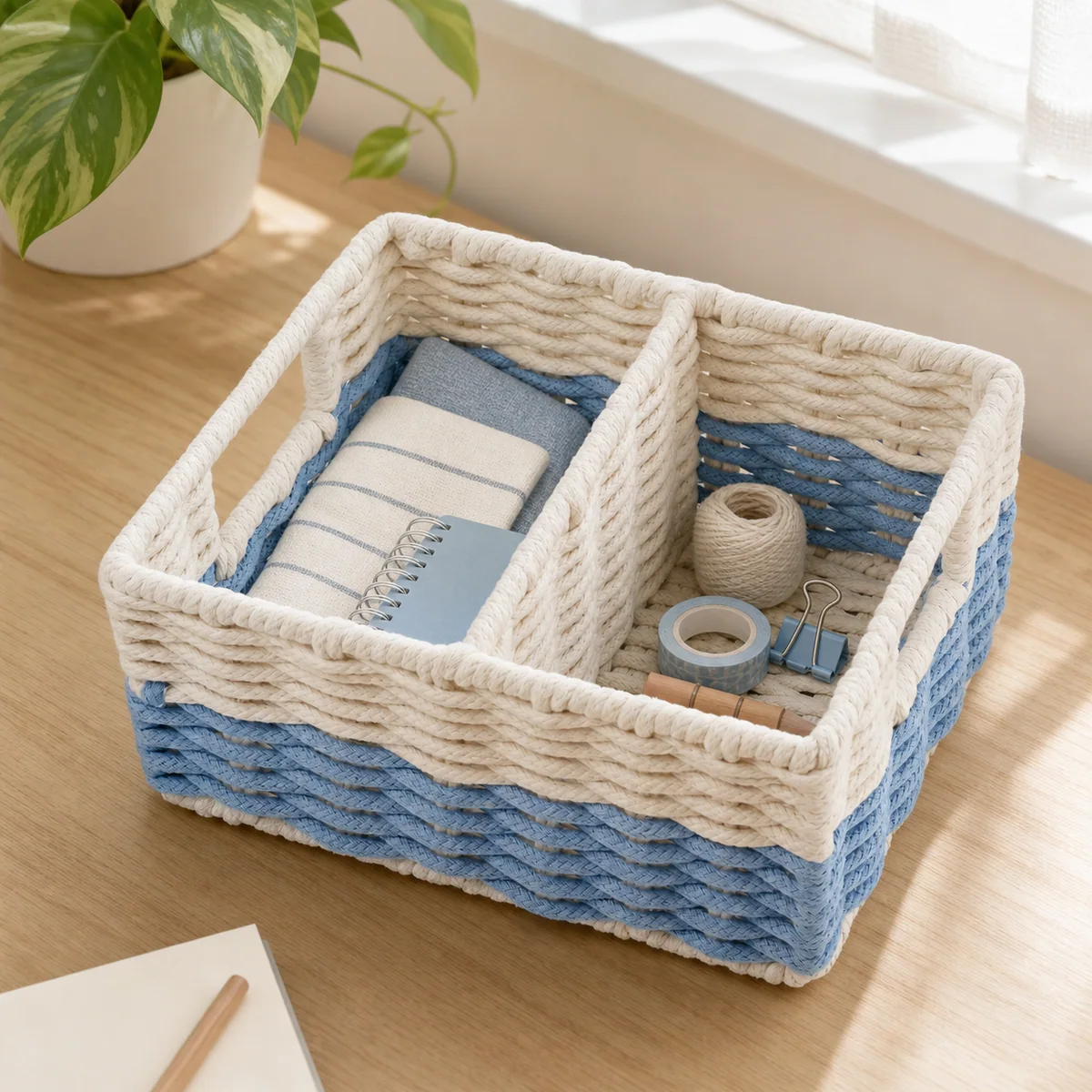
Review current factory product examples, then send target dimensions, quantity and customization requirements for an exact quotation.
Continue learning
Paper Rope, Water Hyacinth, Seagrass and Cotton Rope: Buyer Comparison
Compare 8 real matched basket designs in paper rope and water hyacinth. See weave and texture differences, with clear limits on what the photos can prove.
Read guide →Packaging & LogisticsMoisture-Control, Desiccant, Liner and Ventilation Decision Framework
A route-based framework for choosing and documenting moisture-source controls, packaging barriers, desiccants, ventilation, monitoring, and shipment responsibilities for woven baskets.
Read guide →Materials & ConstructionMaterial-Aware Care and Use Guide for Woven Baskets
Create accurate care instructions for paper rope, water hyacinth and cotton rope baskets. Check material, frame, finish and cleaning evidence for each SKU.
Read guide →Compliance & ClaimsEU and US Product Safety Buyer Checklist for Woven Baskets
Classify woven baskets, assign EU GPSR and US CPSC responsibilities, and build traceability, test, listing, and recall evidence.
Read guide →