Direct answer
A laundry-hamper specification should begin with intended contents, usable capacity, access, placement, movement, and excluded uses, then control the lid, liner, ventilation pattern, handles, base, labels, nesting, and pack state as connected interfaces. Outside dimensions or a nominal litre value cannot prove usable capacity because taper, frame, liner, lid, and fill line reduce the usable envelope. Ventilation openings do not establish drying, odor, mold, or wet-laundry performance, and a handle does not prove a universal load. Buyers must define representative contents, measurement and trial methods, project-specific criteria, destination and claims; suppliers must confirm construction, feasibility, samples, production checkpoints, and evidence for the approved revision. No generic capacity, airflow, load, or durability threshold applies.
Direct answer: define the laundry task before selecting hamper features
- A laundry hamper is not specified by room label, outside dimensions, or decorative style. Begin with intended dry or otherwise approved contents, typical item sizes, expected quantity or mass range, user, placement, access frequency, movement path, storage duration assumption, retail presentation, and excluded uses. State whether the product is a stationary receptacle, a carried basket, a nested set, or a combination, because each creates different interfaces.
- This reference covers usable capacity, opening, lid, liner, ventilation pattern, handles, base contact, stability questions, labels, set relationships, and packaging. It does not establish a universal litre capacity, maximum load, handle strength, ventilation area, airflow, drying rate, odor control, mold resistance, moisture resistance, washability, stability limit, durability cycle, or child-safety value.
- The buyer defines intended use, representative contents, destination, channel, claims, methods, and project-specific acceptance criteria. The supplier confirms dimensions, construction, proposed materials, manufacturing controls, pack feasibility, and results for the exact sample or lot. A catalog name or visual feature does not transfer claim, product-safety, or importer responsibility.
Build the contents, placement, access, and exclusion envelope
- Describe contents by condition and physical attributes rather than saying laundry. Record whether items are dry, damp, or another buyer-approved condition; approximate item mix; largest item; expected mass range; edges or fasteners that may snag; cleanliness and odor assumptions; and whether a bag or liner separates contents from the weave. Do not assume wet-use or moisture resistance from the category name.
- Describe placement: floor, shelf, cabinet, closet, corner, or other approved setting; available footprint and height; wall and furniture clearances; lid-opening clearance; ventilation around the product; base surface; heat or moisture exposure; and whether the product remains visible in a retail or home environment. Describe interaction: fill direction, retrieval, one-hand or two-hand lid use, liner removal, carrying mode, movement frequency, stairs or obstacles, and set use.
- Write exclusions explicitly. Depending on the program, they can include no child-care function, no toy use, no seating, no climbing, no pet transport, no food contact, no standing water, no unverified wet-laundry claim, and no movement above an approved content condition. Examples do not decide the final list. The buyer's product and compliance owners approve the exact use and exclusions.
Measure usable capacity and the loading envelope
- Outside dimensions protect placement and carton fit; usable capacity protects the storage task. Define a fill boundary and measure the limiting internal envelope after accounting for taper, frame, base, rim, handle attachments, liner, lid intrusion, and local construction. If a volume value is needed, state whether it comes from geometric calculation, a controlled fill method, representative contents, or another approved method and preserve the assumptions.
- A variable framework may express usable volume as V_usable = sum(V_zone) only when the approved zones are mutually non-overlapping and collectively provide complete coverage of the approved fill boundary. Document each zone's geometry, units, exclusions, interfaces, and fill boundary, and demonstrate both the non-overlap and coverage conditions. If either condition cannot be demonstrated, do not add the zone volumes. For tapered bodies, flexible liners, and irregular woven structures, a geometric estimate and a controlled fill method are different methods with different assumptions; their results cannot be equated, averaged, substituted, or mixed. The buyer selects one reporting basis and rounding rule, and the supplier provides its raw inputs. The formula does not create a guaranteed capacity.
- Use representative-content trials when access and compressibility matter. Record contents, condition, loading order, target fill boundary, lid state, liner state, retrieval, and observations. A nominal litre value cannot show whether garments pass through the opening, whether the lid closes without interference, whether handles remain usable, or whether the product stays within its approved shape.
Control lid, liner, ventilation, handles, and base interfaces
- For the lid, record attached or separate construction, orientation, fit, overlap, opening arc, hinge or tether, handle or grip, retention, contact points, closed position, edge treatment, interference with contents or liner, and pack state. Define whether closed means visual alignment, retained position, dust-reduction intent, or another buyer-approved function. Do not infer sealing or moisture protection.
- For the liner, record material declaration, dimensions, coverage, seam and edge construction, attachment, removability, closure, label, care wording, installed orientation, effect on usable volume, and replacement or set relationship. Confirm whether it is decorative, protects contents from the weave, supports removal, or has another function. A fabric name does not prove composition, washability, strength, colorfastness, or compliance.
- For ventilation, map opening locations, nominal geometry, covered or blocked zones, liner interaction, lid state, product placement, and intended rationale. Visible openings do not prove airflow, drying, odor, or mold performance. For handles and base, define grip envelope, attachment, movement mode, representative contents, base contact zones, floor or shelf interface, and buyer-selected trials. Do not assign an arbitrary universal load or non-marking claim.
Apply the hamper interface and evidence matrix
- Create rows for contents, placement, usable envelope, opening, fill boundary, lid, liner, ventilation, handles, base, labels, set, retail pack, master carton, and exclusions. Columns should include control level, requirement, method, representative condition, project criterion, evidence, supplier response, owner, approver, status, revision, and open issue. Keep product-piece, set, retail-pack, and shipment-level decisions distinct.
- Review dependencies in order. Contents and placement govern usable space and access. Access governs opening, lid, liner, and handle questions. Intended movement governs handle and base trials. Liner and lid state affect ventilation and capacity. Set format governs nesting. Retail and export pack affect product shape and recovery. When one input changes, reopen all dependent rows through a written impact assessment.
- Use release states such as Confirmed, Conditional, Supplier to propose, Buyer decision, Trial required, Specialist review, and Rejected. Release only when every applicable high-consequence interface has approved evidence and every remaining open item has an owner and blocked decision. A matrix completion score cannot compensate for one unresolved intended-use, movement, liner, or claim boundary.
Identify false capacity, ventilation, and handling assumptions
- Capacity failures include calculating from outside dimensions, ignoring taper and liner, changing the fill line, rounding without a rule, or comparing a geometric value with a fill-test value as though they were identical. A large nominal volume can still fail because the opening is narrow, the lid intrudes, garments catch on an edge, or the liner cannot be removed when filled.
- Lid and liner failures include approving a lid before final liner installation, allowing an attachment to obstruct opening, changing seam allowance without checking fit, or using care language unsupported by material and method evidence. Ventilation failures include counting visible holes while ignoring the liner, wall placement, lid, contents, or pack state and then making odor, drying, or mold claims.
- Handling failures include calling a decorative opening a carry handle, testing an unspecified weight, lifting in a different direction from use, or transferring results across sizes and attachments. Pack failures occur when nesting, compression, wrapping, or carton pressure changes the rim, lid, liner, or base. Record the observation and investigate; do not convert it into a universal causal or performance conclusion.
Create a traceable hamper function and pack record
- The controlled file should include intended-use and exclusion brief, representative contents, placement drawing, outside and usable dimension map, fill boundary, capacity method and raw inputs, lid and liner specifications, ventilation map, handle and base construction, label and care decisions, set relationships, retail and export pack, trial instructions, raw observations, deviations, corrective actions, approvals, and revision history.
- GS1's Global Traceability Standard provides identify-capture-share context for traceable objects and data, but it does not assign a product identifier, prove function, or certify this hamper. If the buyer uses product, lot, pack, or location identifiers, connect them consistently to the approved evidence. ISO 10013, ISO 10012, and NIST support documentation, measurement management, and unit expression without defining hamper values.
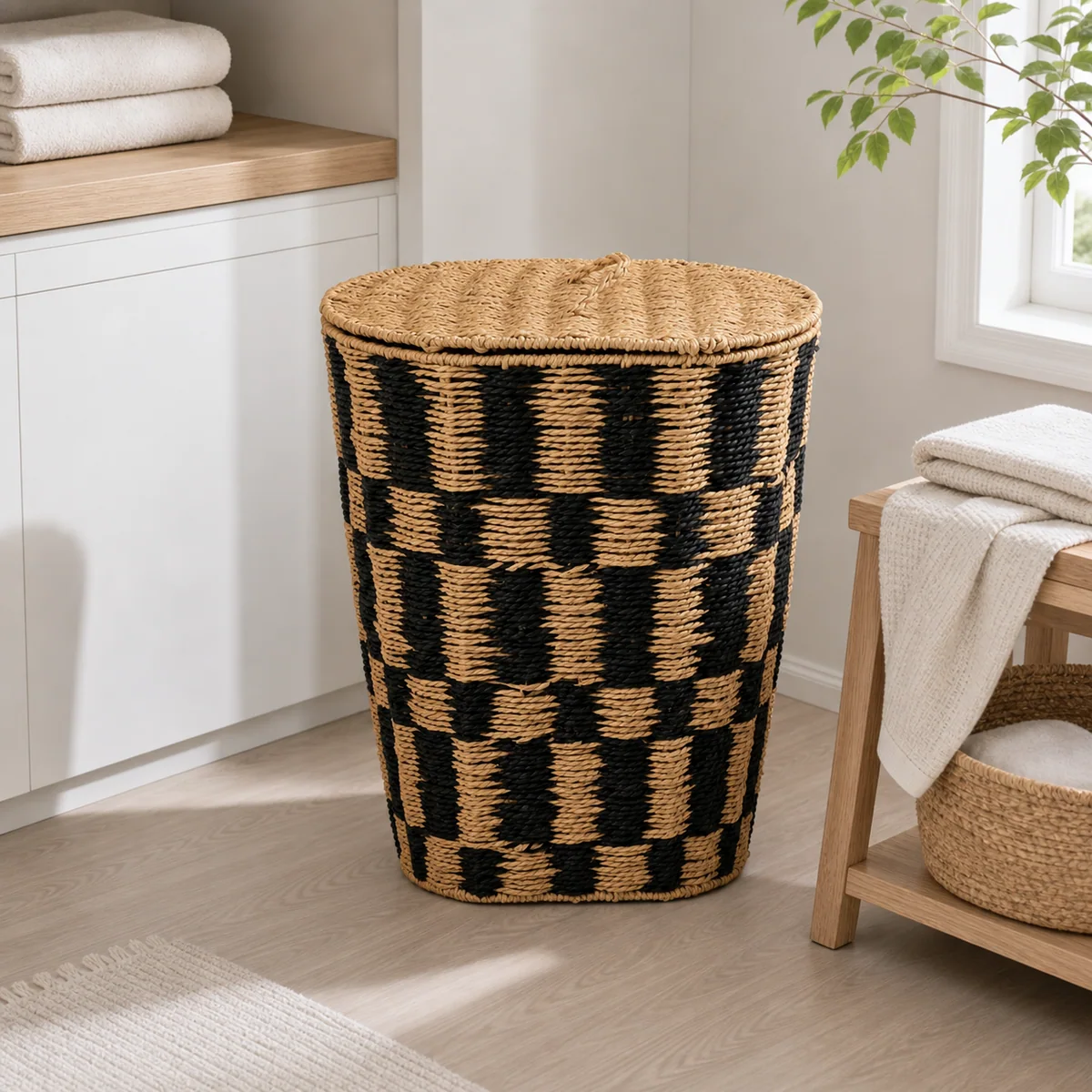
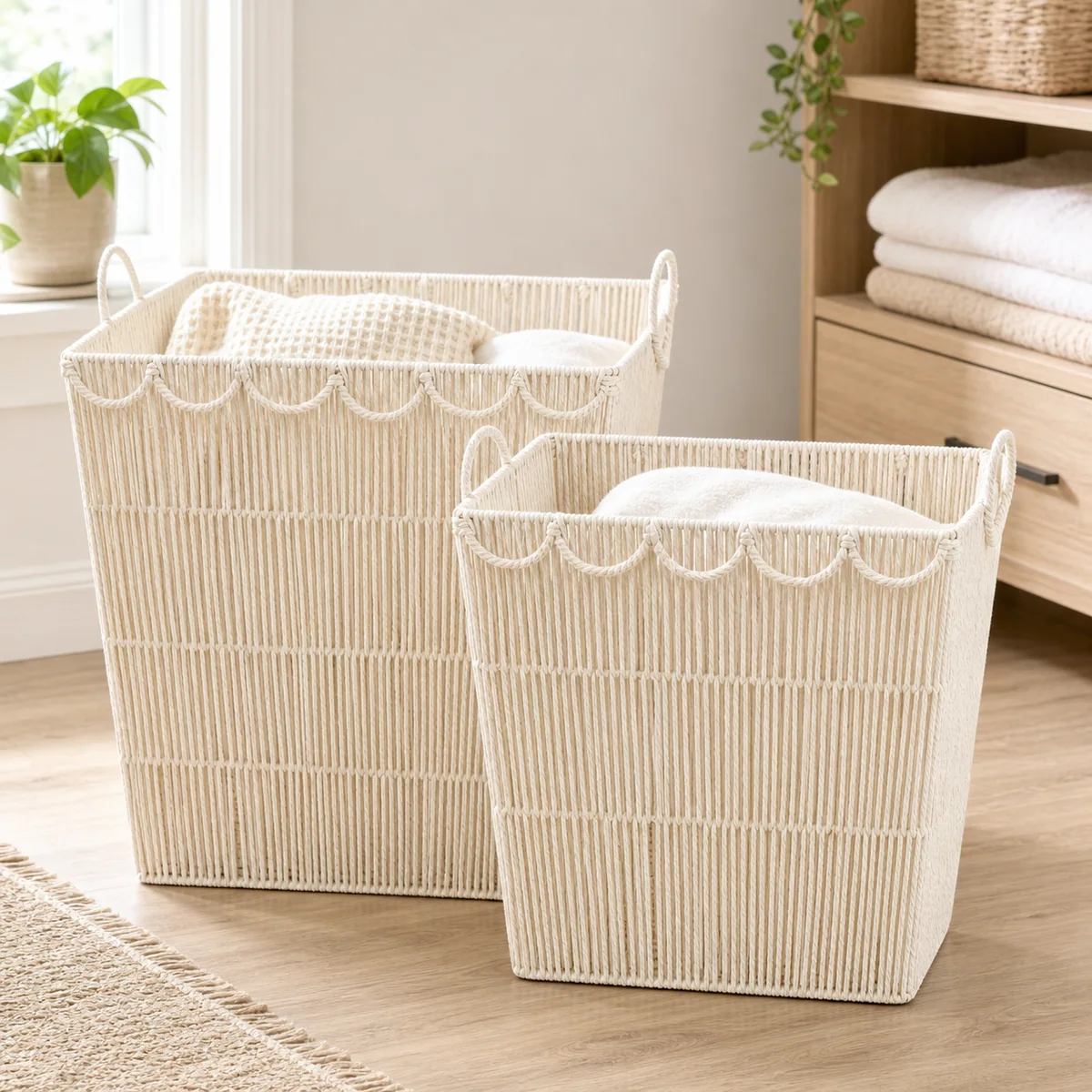
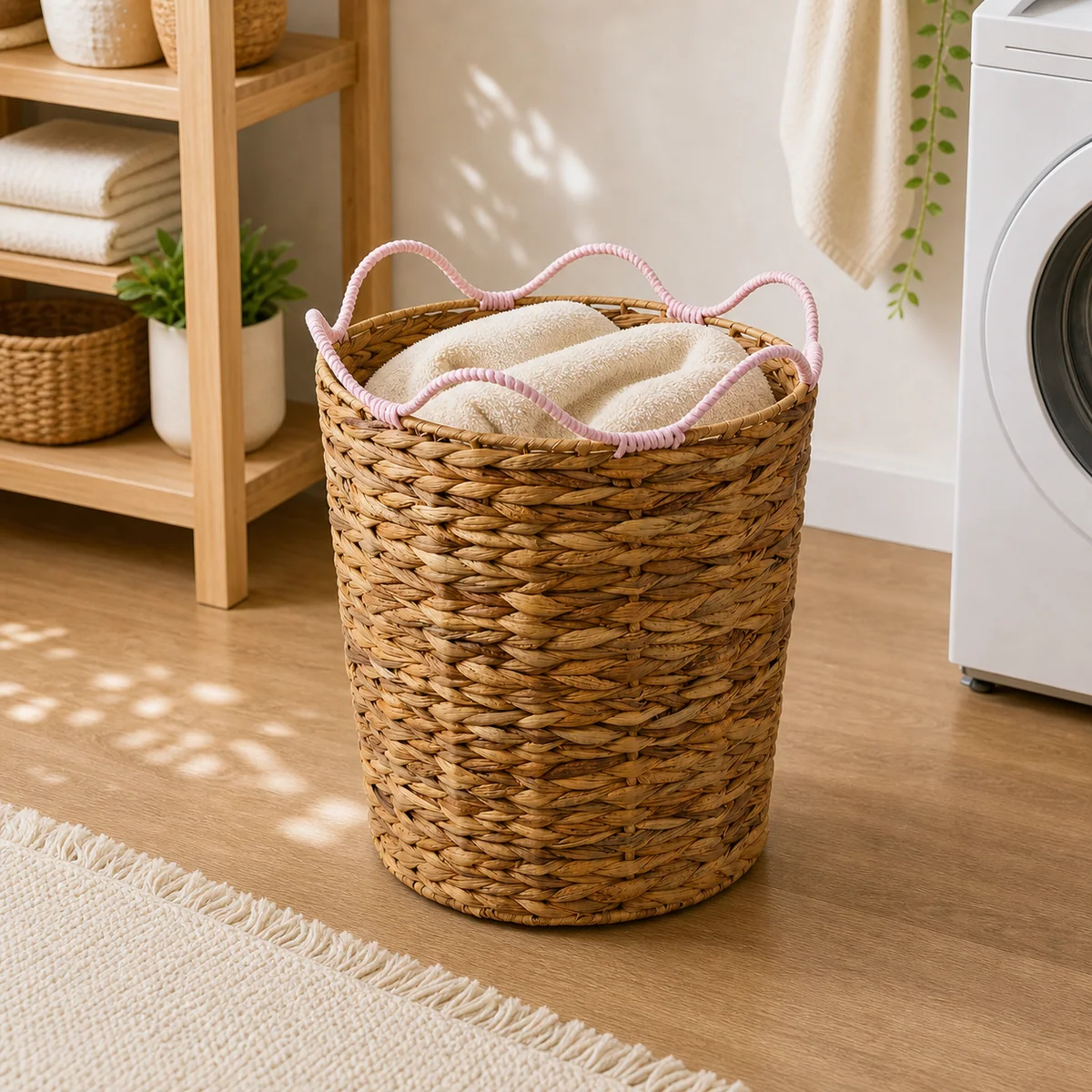
- The current catalog includes an oval lidded hamper, a two-piece nested laundry-basket set, and a water-hyacinth round hamper. These pages show different formats only; they do not prove usable capacity, load, ventilation, durability, suitability, or compliance.
Separate functional approval from regulated and unsupported claims
- This framework does not identify every consumer-product, children's-product, textile, chemical, flammability, packaging, labeling, or retailer requirement. A kids motif, bedroom placement, liner, lid, or ventilation opening can change questions but does not supply the legal answer. The brand owner or importer identifies applicable requirements from exact product, intended users, market, claims, channel, and components.
- Do not describe the product as safe, child safe, breathable, ventilated for wet laundry, odor resistant, mold resistant, waterproof, washable, non-marking, stable, heavy duty, or tested unless the claim has a defined scope and approved evidence. Describing an opening pattern as ventilation geometry is different from making a verified airflow or drying-performance claim.
- Use the RFQ route to submit the interface matrix and factory route for production-evidence discussion. Final purchase records should name intended and excluded use, approved revision, method, project criteria, identifiers, responsibilities, deviations, and change control. Supplier evidence supports the exact build; buyer approval and market responsibility remain explicit.
Buyer comparison table
JINZHAO CRAFT factory recommendation
For a practical factory quote, share a reference image, target dimensions, material direction, expected order quantity, logo or label needs, retail/export packaging requirements and destination market. JINZHAO CRAFT can then discuss material feasibility, sample direction, MOQ, production timing and export carton planning for the woven storage product.
Primary sources
These references support the defined standards, regulatory context, or buyer process described above. Product-specific obligations and commercial terms still require confirmation for the actual order.
- ISO 10013:2021 Quality management systems - Guidance for documented information — International Organization for Standardization
Supports tailored documented-information control and is published with review activity shown; it does not prescribe hamper functions, values, tests, compliance, or certification.
- ISO 10012:2026 Quality management - Requirements for measurement management systems — International Organization for Standardization
Supports measurement-management confidence; it does not define capacity, ventilation, load, measurement points, methods, samples, or acceptance criteria.
- SI Units — National Institute of Standards and Technology
Supports clear quantity values and unit symbols for dimensions, volume, mass, and time; it does not establish hamper performance or acceptance.
- GS1 Global Traceability Standard — GS1
Supports identify-capture-share and traceability-data framework context; it does not assign identifiers, prove hamper function, set retention, or certify a product.
FAQ
Are outside dimensions enough to state laundry-hamper capacity?
No. Taper, frame, base, rim, handle attachments, liner, lid intrusion, and the chosen fill boundary affect usable capacity. State the method, product condition, units, assumptions, and representative-content evidence.
Do ventilation openings prove that damp laundry will dry?
No. Opening geometry alone does not establish airflow, drying rate, odor control, or mold resistance. Liner, lid, placement, contents, environment, and an approved project method all matter.
How should a removable hamper liner be specified?
Record material declaration, dimensions, coverage, seams, edges, attachment, removal method, closure, label, care wording, orientation, effect on capacity, product revision, evidence, and approval responsibility.
Does a visible handle prove a safe carrying load?
No. Define whether the feature is decorative or functional, grip, attachment, carrying direction, representative contents, product state, movement path, method, project criteria, sample, result, and limitations.
Can one hamper trial cover a different size, liner, lid, or carton?
Not automatically. Assess how the change affects capacity, access, construction, ventilation, handling, nesting, pack pressure, recovery, labels, and claims, then repeat affected approvals with exact evidence.
Products relevant to this guide
Review current factory product examples, then send target dimensions, quantity and customization requirements for an exact quotation.
Continue learning
General Storage Basket Functional Specification Matrix
Translate intended storage use into controlled fields for usable space, access, handles, contact surfaces, closure, liner, nesting, and pack verification.
Read guide →Factory & QualityHandmade Basket Dimensional Measurement and Tolerance Framework
Define measurement condition, points, tools, raw readings, project-specific limits, deviation, conformance, and nesting clearance for handmade baskets.
Read guide →Factory & QualityWoven Basket Visual Defect Classification and Disposition Standard
Classify woven-basket observations, natural variation, defects, zones, severity, boundary references, records, and lot dispositions without inventing a universal AQL.
Read guide →Materials & ConstructionMaterial-Aware Care and Use Guide for Woven Baskets
Create accurate care instructions for paper rope, water hyacinth and cotton rope baskets. Check material, frame, finish and cleaning evidence for each SKU.
Read guide →